President Ferdinand Marcos Jr has signalled unwavering confidence in the Armed Forces of the Philippines despite mounting scrutiny over potential conspirators within the military's ranks. The reaffirmation comes after National Bureau of Investigation Director Melvin Matibag disclosed during the impeachment proceedings of Vice President Sara Duterte that active uniformed personnel are being investigated as persons of interest in connection with an alleged plot to kill the President. The development marks a delicate moment for the administration, which must navigate the competing demands of national security oversight and institutional loyalty to the military establishment that underpins state authority.
Matibag's revelations, made public during the Vice President's impeachment trial on July 22, extended beyond military personnel. The NBI director also identified a member of the Vice President's own security detail as another person of interest, suggesting that the alleged plot may involve connections within Duterte's protective circle. This detail proved particularly significant given the existing political tensions between Marcos and Duterte, whose relationship has deteriorated substantially since they jointly won the 2022 elections. The involvement of someone from Duterte's security apparatus raised questions about the nature and direction of the alleged conspiracy, lending complexity to what might otherwise appear to be a straightforward internal military security concern.
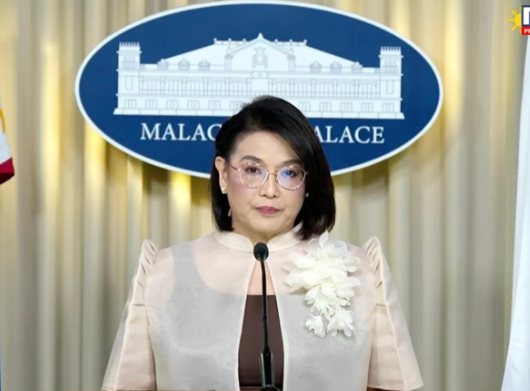
Palace Press Officer Claire Castro addressed the situation during a media briefing, emphasising that the President maintains complete confidence in the armed forces as an institution. Rather than viewing the allegations as a wholesale indictment of military loyalty, the presidential office framed any potential wrongdoing as isolated instances of individuals straying from their constitutional mandate. This approach allowed Marcos to signal both strength and discernment—demonstrating that he is not naively trusting but rather selective in his confidence, placing it in the institution while acknowledging that individual members might act against national interests. The careful messaging suggested an administration aware of the need to balance institutional continuity with the demands of accountability.
Castro made clear that responsibility for identifying and addressing any wayward military personnel rested squarely with the security sector and the armed forces' own leadership rather than with presidential directives. This delegation of responsibility reflected a deliberate choice to avoid the appearance of executive interference in military matters, a sensitive issue in Philippine governance given historical instances of military involvement in political power struggles. By positioning the vetting of personnel as an internal armed forces matter, Marcos avoided triggering concerns about a potential loyalty purge that could destabilise civil-military relations at a critical juncture. The statement implicitly suggested that the military's senior leadership bears responsibility for maintaining discipline and ensuring that personnel remain committed to constitutionally mandated duties rather than factional political interests.
The Palace further elaborated that those who might contemplate violating the law to serve individual political figures or advance narrow factional interests would be identified and dealt with accordingly. This language, while seemingly directed at potential conspirators generally, carried particular weight given the ongoing political conflict between Marcos and Duterte. The administration appeared to be signalling that it would not tolerate any attempt by actors affiliated with the Vice President to undermine the President's security or stability, even as it avoided direct public accusation of Duterte's involvement in any plot. The rhetorical strategy walked a fine line between assertiveness and restraint.
Notably, Castro explicitly stated that no loyalty checks or vetting procedures were currently being conducted across the armed forces. This reassurance addressed potential concerns among military personnel that a witch hunt might be underway, which could have generated internal resentment or instability. For an armed forces already dealing with counterinsurgency commitments in the southern Philippines and other operational demands, widespread institutional anxiety would have been counterproductive. The statement essentially signalled to the military hierarchy that the President's trust, while conditional on adherence to constitutional duty, remained fundamentally intact at the institutional level.
The alleged assassination plot and its investigation must be understood within the broader context of Philippine political instability. Vice President Duterte has become increasingly antagonistic toward the Marcos administration, publicly criticising presidential family members and defending her own political record. Her impeachment trial itself, which prompted Matibag's revelations, represents an escalation in executive-level conflict that extends well beyond typical political disagreement. The potential involvement of security personnel in any conspiracy therefore carries implications not merely for presidential safety but for the stability of the entire political system. For Malaysian observers, the situation illustrates the challenges that emerge when executive office holders lack prior working relationships and shared institutional roots—a concern relevant to any political system with sharp leadership transitions.
The subpoena that the NBI subsequently issued to Duterte herself went unheeded, adding another dimension to the unfolding crisis. Her apparent non-compliance raised questions about whether the Vice President's office might believe it possessed independent standing to resist investigative authority, or whether the subpoena was strategically ignored as part of broader institutional positioning. Duterte's public statement—in which she claimed to have left instructions regarding her own assassination should it occur, naming Marcos, businesswoman Liza Araneta, and Speaker Martin Romualdez—suggested a heightened state of alarm and possibly mutual suspicion between the executive and vice-executive branches. These remarks indicated that tensions had moved well beyond private disagreement into public expressions of concern about personal safety.
For Southeast Asia more broadly, the situation underscores the vulnerability that emerges when checks and balances remain underdeveloped or when political leadership lacks consensus on fundamental institutional arrangements. The Philippines' presidential system, similar in structure to those in Indonesia and other regional democracies, depends heavily on the personal relationships and mutual forbearance of top officials. When those relationships break down entirely, as appears to be occurring between Marcos and Duterte, the system's capacity to maintain stability comes under genuine strain. The alleged involvement of active military and security personnel in any assassination plot, whether ultimately confirmed or not, represents the most serious manifestation of that strain possible—the prospect of organised violence replacing electoral or constitutional processes as the arena for political resolution.

