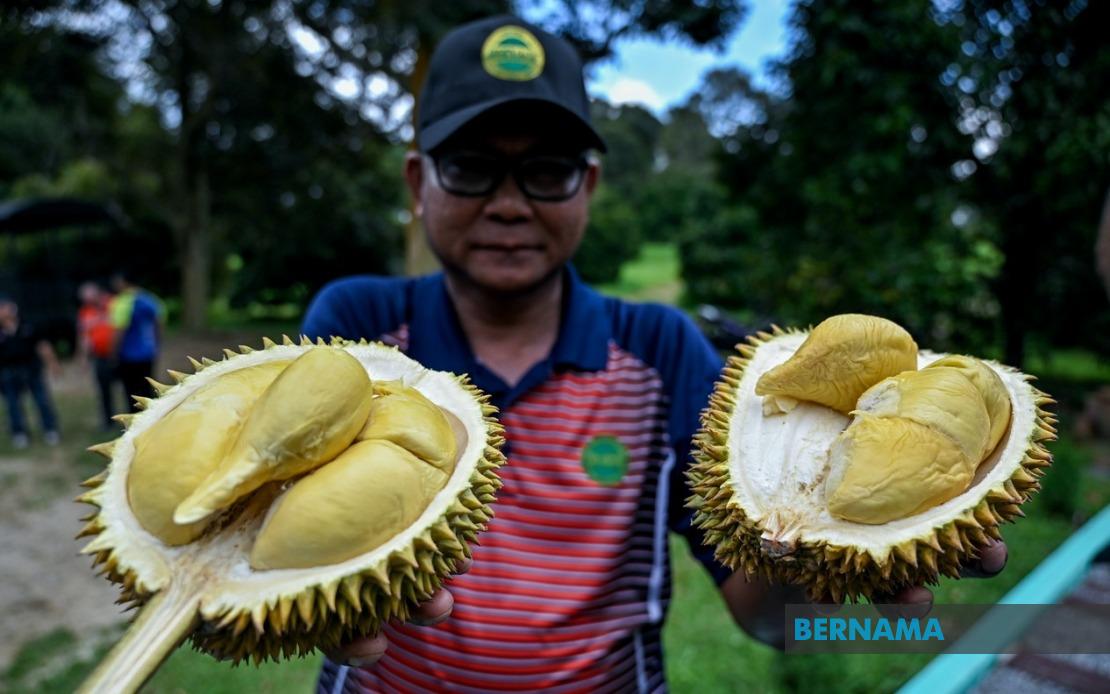
The Malaysian Agricultural Research and Development Institute (MARDI) has made significant progress in expanding its MS88 hybrid durian cultivation programme, with approximately 25,000 trees now planted across the nation. According to Datuk Dr Mohamad Zabawi Abdul Ghani, the institute's director-general, this substantial deployment spans roughly 242 hectares of agricultural land, with the concentration of plantings heavily focused on Selangor and the various east coast states. The announcement came during the Duriotourism MARDI Kuala Kangsar initiative, reflecting the institution's broader commitment to positioning premium durian varieties as a cornerstone of Malaysia's horticultural export strategy.
The MS88 represents one of three distinguished hybrid durian cultivars that MARDI has methodically developed since the early 2000s, joining the earlier MDUR78 and MDUR79 varieties in the institute's portfolio of superior selections. These predecessors have maintained considerable appeal among durian connoisseurs and commercial cultivators alike, establishing a proven track record for quality and consumer satisfaction. The strategic rollout of MS88 varieties signals MARDI's recognition that Malaysia's durian sector requires continuous innovation to maintain competitive advantage in increasingly discerning regional and international markets.
Beyond the established MS88 programme, MARDI is actively engaged in identifying and refining three additional hybrid durian varieties with compelling commercial prospects. These experimental cultivars are currently undergoing rigorous evaluation protocols designed to assess multiple critical dimensions of agricultural viability and market acceptability. The assessment framework encompasses detailed examination of fruit quality characteristics, direct measurement of consumer preference through tasting panels and market surveys, and practical evaluation of cultivation suitability for farm-level implementation. This multifaceted approach reflects a sophisticated understanding that premium varieties must simultaneously satisfy aesthetic and flavour expectations whilst remaining economically viable for farmers to produce.
The deliberate withholding of nomenclature for these forthcoming varieties underscores MARDI's strategic marketing philosophy and harvest timing considerations. By reserving the formal introduction and naming of new cultivars until the peak durian season, the institute creates a coordinated public unveiling opportunity that permits potential consumers and agricultural stakeholders to experience the fruits firsthand. This seasonal alignment allows simultaneous tasting demonstrations, visual assessment, and informed purchasing decisions, maximising market impact and generating concentrated media attention within a culturally significant consumption period. The approach acknowledges that durian purchasing decisions remain deeply experiential and seasonal in nature across Malaysia and the region.
From a broader agricultural policy perspective, MARDI's durian development initiative addresses critical structural imperatives facing Malaysia's horticultural sector. As regional competitors in Thailand, Vietnam, and Indonesia expand their own durian cultivation and breeding programmes, maintaining Malaysia's reputation for premium fruit quality requires continuous varietal innovation and yield improvement. The MS88 and successor varieties represent institutional investment in sustaining the nation's competitive position within the high-value durian market, where differentiation through superior flavour profile, appearance, and consistency commands significant price premiums over commodity-grade alternatives.
The geographical distribution of the 25,000 planted trees reveals deliberate spatial strategy aligned with existing agroclimatic suitability and agricultural infrastructure. Selangor's dominance as a planting location reflects proximity to major consumer markets, established horticultural supply chains, and access to research extension services. The east coast states, including Terengganu, Pahang, and Kelantan, possess climatic conditions traditionally favourable for durian cultivation, with existing farmer communities possessing substantial experiential knowledge of variety management and harvesting practices. This geographic bifurcation balances accessibility to urban markets with utilisation of established regional agricultural expertise and natural growing conditions.
The evaluation criteria guiding selection of the three experimental varieties demonstrate MARDI's evidence-based approach to varietal development. Fruit quality assessment likely encompasses measurements of flesh texture, sweetness profiles, aroma characteristics, and disease resistance—attributes that fundamentally determine commercial viability and consumer preference. Consumer acceptance testing through structured tasting panels and market surveys provides empirical data on which flavour and appearance characteristics resonate with target demographics across different regions. Agricultural suitability assessment addresses equally critical practical concerns: yield consistency, disease susceptibility, soil requirement specificity, water management demands, and harvesting labour intensity. These considerations directly influence whether new varieties can achieve economic returns sufficient to justify replanting and management costs.
The trajectory of MARDI's durian programme carries particular significance for Malaysian farmers contemplating long-term orchard investments. Durian cultivation requires substantial upfront capital expenditure and produces returns only after trees reach productive maturity, typically requiring five to seven years. Farmers making such investments inherently need confidence in varietal choice, market demand stability, and price sustainability. MARDI's commitment to systematic variety evaluation and market validation provides essential risk mitigation, offering farmers evidence-based guidance rather than mere speculation. The gradual scaling of successful varieties like MS88 reduces agricultural risk by building a track record of market acceptance before encouraging widespread farmer adoption.
The durian sector's expansion also intersects with broader Malaysian agricultural diversification objectives and rural economic development initiatives. Durian cultivation provides income opportunities particularly suitable for small and medium-scale farmers possessing limited land holdings, as orchards generate high per-hectare returns compared to traditional commodity crops. The premium positioning of MARDI-developed varieties aligns with government objectives to move agricultural production toward higher-value, differentiated output rather than competing on commodity price basis with lower-cost regional producers. Successfully established durian varieties thus function as economic anchors for rural communities, supporting associated downstream industries including processing, packaging, logistics, and agritourism.
Looking forward, the timeline for releasing the three experimental varieties remains strategically ambiguous, permitting MARDI flexibility to extend evaluation periods if additional refinement proves necessary or to accelerate introduction if evaluation data strongly supports commercial readiness. This deliberate pacing reflects lessons learned from previous agricultural technology adoption failures across the region, where premature release of incompletely tested varieties has generated farmer dissatisfaction and damaged institutional credibility. The institute's willingness to sustain evaluation protocols demonstrates organisational maturity and commitment to sustainable sector development rather than pursuing short-term promotional objectives.
The MS88 planting expansion and parallel development of successor varieties position Malaysia to capitalise on sustained regional demand for premium durian varieties. As Thailand and other competitors intensify their breeding programmes, Malaysia's maintenance of superior cultivars with distinctive organoleptic characteristics and reliable productivity remains critical for preserving market differentiation. MARDI's institutional capacity to continuously evaluate and refine its varietal portfolio provides competitive advantage that extends beyond any individual variety. The systematic approach to durian development—combining scientific evaluation with market validation and farmer engagement—establishes a sustainable framework for maintaining Malaysia's position as a producer of exceptionally high-quality durian destined for both domestic consumption and expanding regional export markets.

