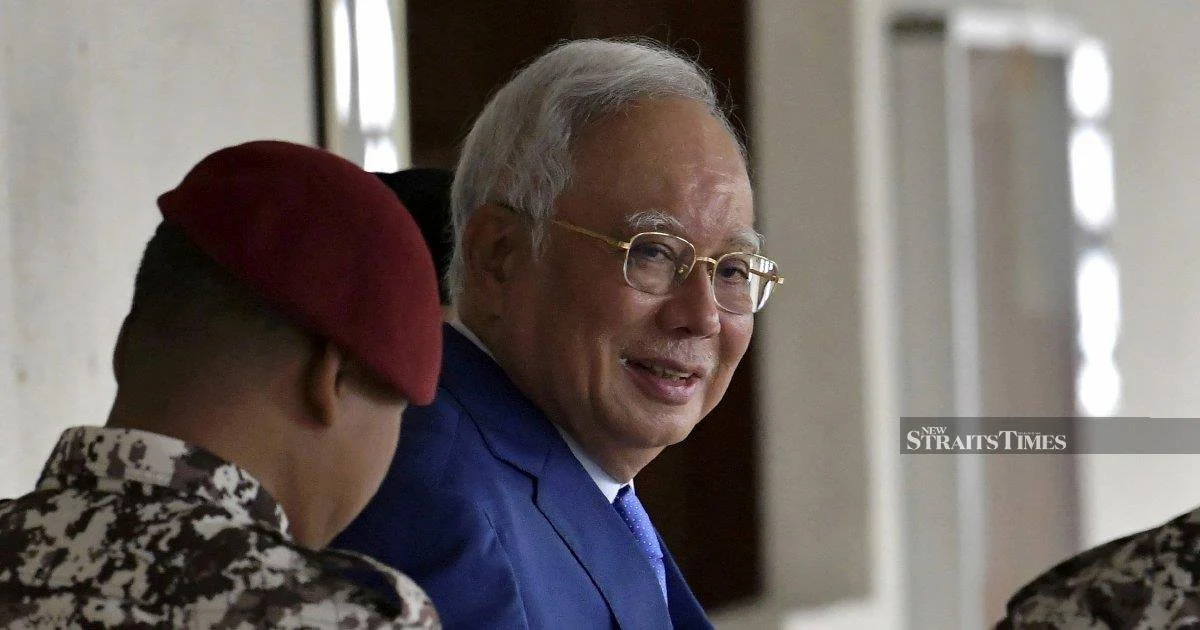
Marina Ibrahim, the former Skudai state representative, has publicly challenged the Democratic Action Party's consistency on matters relating to former prime minister Datuk Seri Najib Razak's legal situation, claiming that a DAP leader privately entertained proposals that would have provided him substantial relief from his court-imposed sentence.
Speaking in Johor Baru, Ibrahim asserted that the DAP official had indicated openness to the prospect of granting Najib a royal pardon, as well as permitting him to serve his remaining sentence through house arrest rather than continuing incarceration in a prison facility. The allegation strikes at the heart of the Democratic Action Party's public positioning on accountability for high-profile corruption cases that dominated national discourse during the post-2018 period.
The claim represents a significant challenge to the party's credibility, particularly given its prominent role in the Pakatan Harapan coalition that campaigned on anti-corruption principles and pursued legal action against Najib following the 2018 general election. Marina's assertions suggest potential inconsistency between the party's stated commitment to justice and accountability and what she characterises as more pragmatic behind-the-scenes discussions among certain party members.
Najib's legal trajectory has remained central to Malaysian political discourse since his 2020 conviction on charges related to the misappropriation of funds from 1Malaysia Development Berhad (1MDB), a sovereign wealth fund whose mismanagement emerged as one of the defining scandals of his premiership. His conviction resulted in a substantial prison sentence alongside financial penalties, though his legal team has pursued various avenues of appeal and review through the judicial system.
The distinction between a royal pardon and house arrest carries significant political weight in Malaysia's constitutional framework. A royal pardon would represent a fundamental intervention in the judicial process, potentially erasing conviction records and demonstrating executive clemency, while house arrest would allow a convict to avoid the social stigma and physical hardship of incarceration while technically serving their sentence within the prison system. Both options would signal a departure from the accountability framework that underpinned post-2018 governance narratives.
Marina Ibrahim's decision to voice these allegations publicly reflects ongoing tensions within Malaysian opposition politics concerning how to balance pragmatic governance with principled opposition to corruption. As a former state legislator with direct experience in Johor's political ecosystem, her statements carry particular weight among voters in that state, where both the DAP and figures associated with Najib's political network maintain significant influence.
The timing of these allegations also intersects with broader shifts in Malaysian political alignments. Coalition arrangements between various political parties continue to evolve, and accusations of double standards on matters of principle frequently feature in intra-opposition disputes and challenges to party credibility. The DAP, as one of Malaysia's most visible non-Malay majority parties, faces particular scrutiny regarding consistency on governance and anti-corruption messaging.
If substantiated, such allegations could complicate the DAP's positioning ahead of future electoral contests, potentially undermining its ability to mobilise anti-corruption sentiment as a strategic advantage. Malaysian voters have increasingly demonstrated appetite for accountability measures and genuine consequences for political wrongdoing, making accusations of selective application of principles particularly damaging to parties that have built electoral appeals around governance reform.
The broader context of criminal justice and royal prerogatives in Malaysia remains constitutionally complex. While Yang di-Pertuan Agong possesses constitutional authority to exercise mercy through pardons or sentence reductions, public expectations and political discourse have increasingly held elected officials accountable for the exercise of such powers. Any suggestion that senior opposition figures might have privately encouraged such interventions contradicts the explicit public stances many parties adopted following 2018.
For DAP leadership, responding to Marina's allegations will require either categorical denial with supporting evidence, or nuanced explanation of whether any private discussions occurred and under what circumstances. The party's capacity to address such claims effectively will significantly influence perceptions of its political integrity, particularly among voters who prioritise genuine commitment to anti-corruption principles over short-term political expediency.
These accusations also highlight the persistent challenge facing Malaysian opposition coalitions in maintaining unified messaging and accountability frameworks when constituent parties harbour different internal perspectives on complex issues. The question of how to address convictions arising from the previous administration's tenure remains politically sensitive, touching on wider questions about reconciliation, political healing, and the role of law in post-transition governance.
As Malaysian politics continues navigating post-2018 dynamics and shifting coalitional arrangements, credibility on anti-corruption messaging remains a valuable political asset. Allegations of inconsistency, whether substantiated or ultimately disputed, contribute to voter uncertainty about which parties genuinely prioritise accountability over tactical advantage. For the DAP specifically, managing such challenges will require transparent engagement with its public and demonstrated consistency between public positions and internal discussions on matters affecting public confidence in the justice system.

