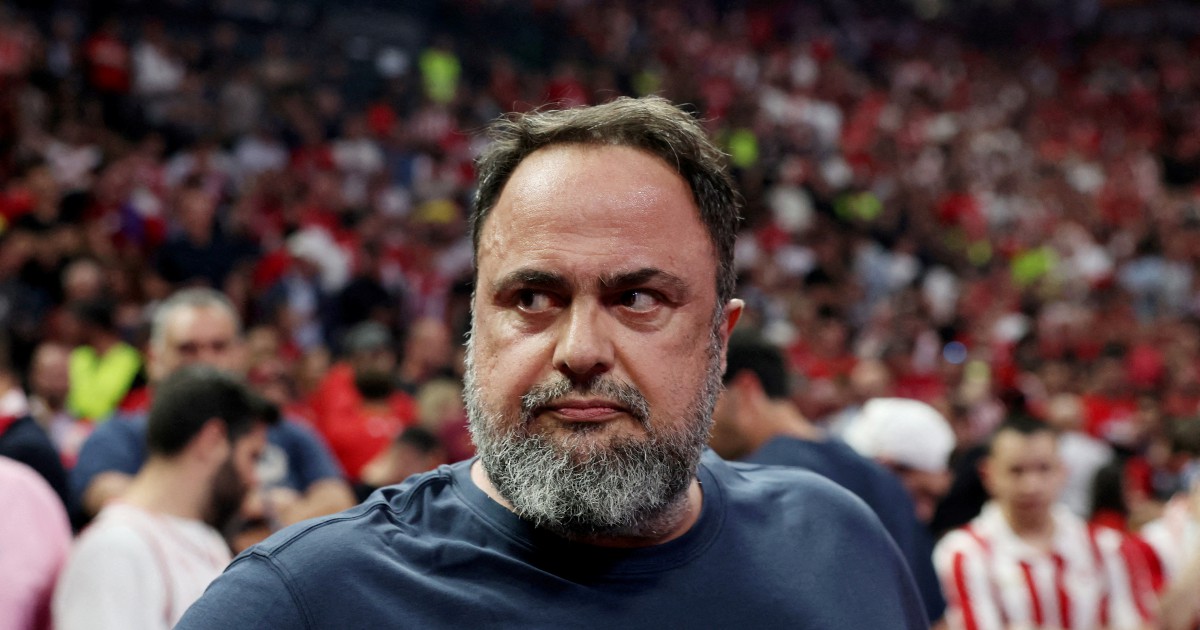
Greek shipping magnate and Nottingham Forest proprietor Evangelos Marinakis has escalated his dispute with fellow Premier League club Crystal Palace by commencing formal legal proceedings at London's High Court on Monday. The libel action centres on a banner that was prominently displayed by Crystal Palace supporters during a match contested between the two sides in the preceding season, according to media accounts of the case.
The decision to pursue litigation marks a significant escalation in an incident that emerged from the ordinary friction that characterises English football rivalry. What began as a momentary disturbance during match day has evolved into a substantial legal matter, reflecting how contemporary football disputes increasingly find resolution through formal judicial channels rather than being confined to the pitch or settled through conventional club negotiations.
Marinakis, who acquired Nottingham Forest in 2017, has established himself as an assertive football club proprietor willing to defend his reputation vigorously. His involvement in professional football extends beyond the English Premier League, with his business interests encompassing multiple sporting enterprises across Europe. The decision to pursue legal action against a rival institution underscores the seriousness with which he has treated the banner incident and the accompanying implications for his public standing.
Crystal Palace, based at Selhurst Park in South London, represents one of the Premier League's enduring institutions with a passionate supporter base known for their vocal and spirited match day conduct. The alleged banner, whilst originating from a specific incident, has evidently struck Marinakis sufficiently to warrant substantial legal expenditure and the formal machinery of High Court proceedings. The specifics of the banner's content and the precise allegations motivating the lawsuit remain subject to the legal processes now underway.
The litigation gains particular significance within the context of modern football's evolution as a commercial and media spectacle. Premier League clubs operate within an environment of intense scrutiny, where supporter conduct, ownership decisions, and public statements receive constant examination. Marinakis's legal response demonstrates how contemporary club proprietors increasingly employ formal legal mechanisms to address matters that previous generations of football figures might have dismissed as routine partisan expression.
For Malaysian and Southeast Asian football followers, this dispute illustrates the formality and legal complexity characterising English football's institutional framework. The Premier League operates within a sophisticated legal and regulatory environment substantially different from football governance structures in Southeast Asia, where disputes tend to be resolved through administrative channels or informal negotiation. The involvement of London's High Court in a matter rooted in supporter conduct exemplifies how comprehensively law and commerce intersect within English professional football.
The broader implications for Crystal Palace are considerable, as the club now faces defending its position in formal legal proceedings whilst maintaining its competitive standing during the ongoing season. The distraction of litigation, coupled with potential reputational consequences, creates complications extending beyond the immediate legal question. Financial exposure, legal costs, and the duration of proceedings all represent tangible burdens that the club must now navigate.
Commentators within English football have noted that libel actions involving supporter conduct remain comparatively uncommon, rendering this case somewhat noteworthy within the sport's legal history. The threshold for successfully establishing libel claims requires demonstrating that statements caused genuine damage to reputation, a standard that becomes intricate when evaluating temporary banner displays intended primarily for match day audiences rather than permanent public communication.
The timing of the action's commencement during the current season adds operational pressure to what is already a demanding competitive environment. Nottingham Forest, under Marinakis's ownership, has pursued an ambitious trajectory involving substantial investment in player acquisition and squad development. The owner's decision to simultaneously pursue high-profile litigation demonstrates his willingness to address perceived slights alongside competitive ambitions.
As proceedings advance through London's legal system, the case will likely attract continued attention from both football and legal circles. The outcome may establish precedent regarding supporter conduct and the boundaries of permissible expression during match day activities. Victory for Marinakis could embolden other proprietors to pursue similar action, whilst a dismissal might reinforce protections for supporter expression and fan culture traditionally regarded as integral to football's identity.
The dispute ultimately reflects tensions inherent within modern professional football between competing values: proprietorial prerogatives, commercial considerations, supporter autonomy, and traditional notions of partisan expression. For Southeast Asian observers accustomed to different regulatory frameworks and governance structures, the case offers instructive perspective on how English football's institutional complexity addresses such conflicts through formal legal mechanisms rather than alternative dispute resolution approaches.

