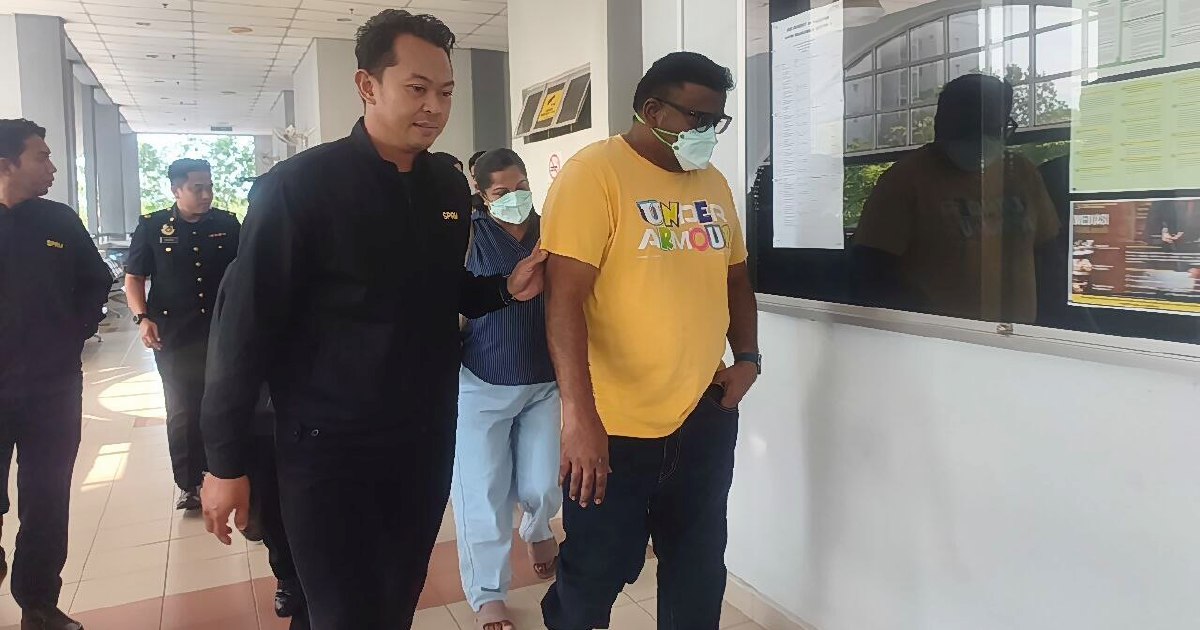
In a move signalling intensified enforcement against social security fraud, three individuals including a husband-and-wife pair have entered not guilty pleas at the Sessions Court in Seremban regarding charges connected to fabricated claims submitted to Malaysia's Social Security Organisation, commonly known as Perkeso. The development comes as authorities continue to crack down on systematic misuse of the national social protection scheme, which serves millions of workers across the country.
The trio faced the court in Seremban, where they denied all allegations relating to the submission of false incentive claims under Perkeso. The charges highlight a growing concern among enforcement agencies regarding improper access to social security benefits and the financial burden such misconduct places on the public welfare system. These types of cases typically involve individuals or organised networks falsifying employment records, claiming non-existent dependents, or misrepresenting work-related injuries to unlawfully obtain payments.
Perkeso, established under Malaysian law to provide integrated social protection to workers, offers various assistance schemes including occupational accident and disease benefits, disability benefits, sickness benefits, and rehabilitation allowances. The organisation's programmes are funded through contributions from employers and employees, making fraudulent claims a direct drain on resources intended for legitimate beneficiaries. When false claims succeed, they effectively transfer money away from workers genuinely entitled to support, undermining the scheme's integrity and sustainability.
The emergence of this case in Seremban reflects a nationwide pattern of benefit fraud investigations that have accelerated in recent years. Authorities have grown increasingly vigilant about detecting irregular claim patterns and verifying supporting documentation. The involvement of a married couple in these charges suggests the possibility of coordinated fraud, where family members may have colluded to amplify false claims or exploit spousal documentation to strengthen fraudulent applications. Such coordinated schemes often prove more difficult to detect initially, as they can appear as legitimate parallel claims within a household.
Fraud cases within social security systems carry significant implications for Malaysia's welfare infrastructure. The country's social safety net is designed to protect vulnerable workers during periods of unemployment, illness, or incapacity. When undeserving parties access these benefits through deception, resources become stretched thinner for those with genuine need. This reality has prompted Perkeso and other enforcement bodies to strengthen verification protocols and collaborate more closely with law enforcement agencies to identify and prosecute offenders.
The not guilty pleas indicate that the accused intend to contest the charges rather than accept settlement through plea bargaining. This approach suggests either confidence in their defence or a deliberate strategy to challenge the prosecution's evidence gathering methods. Sessions Court proceedings will require the prosecution to present comprehensive documentation proving that false claims were indeed submitted knowingly and with intent to defraud. Evidence typically includes employment records, medical certificates, witness testimony, and bank transaction trails showing the movement of unlawfully obtained funds.
For Malaysian workers and employers alike, such enforcement actions carry an important message about the seriousness with which authorities treat benefit fraud. Employees contributing to Perkeso through regular payroll deductions view the system as a mutual aid mechanism built on trust and honest participation. When that trust is breached through fraudulent claims, it erodes confidence in the entire social security framework. Equally, employers who comply with contribution obligations expect the system to remain financially viable and sustainable for the protection of their workforces.
The prosecution of fraud cases also serves a deterrent function within Malaysian society. Publicised court proceedings and convictions warn potential offenders that Perkeso has the investigative capability and prosecutorial resources to pursue cases of benefit abuse. This institutional capacity has been strengthened through cooperation between Perkeso's in-house investigation units and the police, as well as enhanced data analytics that can flag suspicious claim patterns more rapidly than before.
Beyond enforcement, this case underscores the importance of robust digital infrastructure within social security systems. Modern welfare organisations worldwide increasingly employ artificial intelligence and machine learning to detect anomalies in claim submissions before payments are released. Malaysia's Perkeso has been gradually modernising its systems, though challenges remain in fully integrating digital verification across all benefit categories and processing channels. Investment in such technology can prevent fraudulent claims from being approved in the first place, reducing the enforcement burden on courts and investigative agencies.
The Seremban case will likely proceed through multiple court sessions as evidence is presented and cross-examined. The verdict, when delivered, will contribute to case law establishing precedents for similar fraud prosecutions. Courts in Malaysia have previously imposed custodial sentences and substantial fines on those convicted of benefit fraud, particularly in cases involving significant sums or organised schemes. The specific outcome in this instance will depend on the materiality of the false claims involved and any aggravating factors that emerge during trial.
For government policymakers, cases like this reinforce the ongoing need to balance accessibility of social security benefits with robust fraud prevention measures. Too restrictive an approach can exclude vulnerable workers who legitimately need assistance; conversely, insufficient controls invite exploitation. This equilibrium remains a central challenge for Perkeso and the broader Malaysian social protection system as it continues to serve and protect the nation's workforce.

