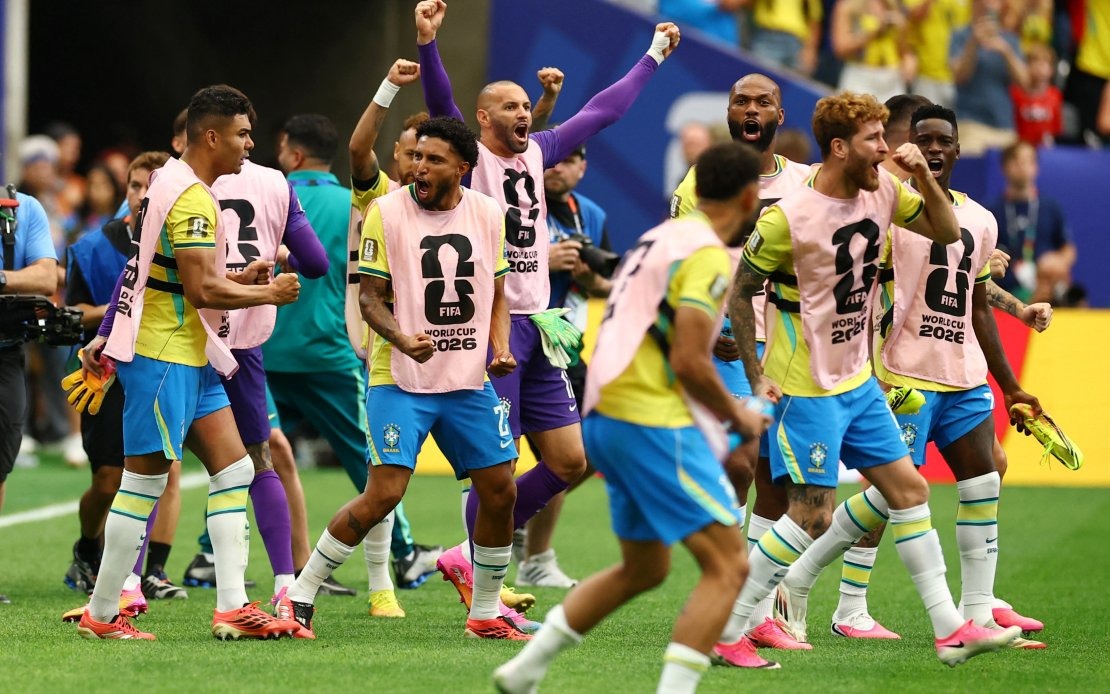
Gabriel Martinelli's composed finish in the dying moments handed Brazil a dramatic 2-1 victory over Japan in Houston on Monday, propelling the South American powerhouse into the World Cup's knockout phase and setting up a last-16 showdown against either Côte d'Ivoire or Norway. The strike came as a crushing blow to Japan, who had staged an impressive defensive display throughout the encounter and briefly threatened to claim a famous upset against the tournament's most decorated nation.
Both sides had navigated the group stage with impressive records, demonstrating the competitive equilibrium that has increasingly characterised contemporary World Cup football. Brazil topped Group C with seven points, establishing their credentials as a strong contender for silverware. Japan's path proved more arduous, finishing second in Group F with a solitary victory complemented by two draws, yet their consistency proved sufficient to advance alongside unbeaten qualification. The contrast in their group performances masked deeper tactical sophistication on both teams' part.
The historical narrative between these nations reveals a relationship characterized by shifting momentum. Brazil's only previous World Cup meeting with Japan resulted in a commanding 4-1 victory that appeared to establish a significant superiority. However, Japan's most recent encounter with their South American counterparts—a non-competitive fixture just twelve months prior—rewrote this script entirely. The Japanese side orchestrated a remarkable comeback from a deficit to triumph 3-2, suggesting that contemporary Japanese football possesses the technical and psychological resources to trouble even the most formidable opponents.
Brazil dominated territorial possession throughout the opening quarter, imposing their typically fluid attacking patterns upon a compact Japanese defence. Matheus Cunha orchestrated an early chance in the 14th minute that forced goalkeeper Zion Suzuki into a one-handed save, signalling Brazil's intent to control proceedings. Yet despite this early dominance, Brazil failed to translate possession into substantive goalscoring opportunities, a recurring theme that would frustrate the South Americans throughout the first half.
Japan's breakthrough arrived through incisive transition play. In the 29th minute, Danilo's imprecise distribution gifted possession to Kaishu Sano, who capitalized immediately. The Japanese midfielder accelerated forward with purpose, evading the pressing Casemiro before unleashing a powerful strike that found its way past an unsuspecting Alisson. The goal carried particular significance, demonstrating that Japan's counter-attacking philosophy could puncture even Brazil's renowned defensive organization and suggesting the tournament's elite remained vulnerable to disciplined, purposeful opponents.
Brazil's response reflected their championship pedigree. The five-time World Cup champions elevated their intensity after conceding, though their subsequent attacking movements often lacked the clinical finishing required against resolute opposition. Bruno Guimarães orchestrated several promising sequences, yet Suzuki's positioning and Japan's collective defensive discipline repeatedly frustrated Brazilian ambitions. Casemiro's earlier defensive lapse became the focal point of collective frustration as Brazil searched for the creative breakthrough.
The equalizer materialized in the 56th minute when Casemiro atoned for his earlier mistake by directing a Guimarães cross past Suzuki with a well-placed header. Momentum had decisively shifted toward the South Americans, who sensed vulnerability in Japan's defensive structure. Minutes later, Vinícius Júnior conjured a moment of individual brilliance, conducting a penetrating dribbling run through Japan's backline before striking the post, illustrating the talent available to Brazil's attacking arsenal.
Brazil maintained relentless pressure as the match progressed, suffocating Japan's capacity to generate meaningful counter-attacking opportunities. The Japanese defence, previously so resolute, gradually frayed under sustained bombardment. Television replays would later confirm that Vinícius's strike warranted a more fortunate outcome, a near-miss that symbolized Brazilian dominance without corresponding success. Yet the breakthrough finally arrived in the 94th minute when Guimarães delivered a penetrating pass that found an unmarked Martinelli inside the penalty area, who demonstrated composure under pressure to dispatch beyond Suzuki.
Japan's frantic response in the final moments, desperate for an improbable equalizer, proved insufficient. Brazil's defending held firm, denying the Japanese any opportunity to craft a fairytale conclusion. The victory represents a significant psychological marker, erasing lingering doubts about Brazil's ability to respond to adversity and reestablishing their credentials as World Cup contenders. For Japan, the defeat ends a promising campaign but provides valuable experience competing at the tournament's highest level against established international powers, observations particularly relevant for Southeast Asian observers assessing regional football development trajectories.
Brazil's advancement carries implications throughout South America and beyond, with the five-time champions demonstrating the character required for deep tournament runs. Japan's consolation emerges from their competitive performance against one of football's traditional superpowers, validating the technical progress achieved within Japanese domestic leagues and youth development systems. The encounter encapsulates modern World Cup football's unpredictability, where tactical organisation and disciplined execution can compete meaningfully against technical excellence and established pedigree.

