The construction of Masjid Warisan, situated prominently in front of the Tun Razak Exchange (TRX) tower in Kuala Lumpur's financial district, will proceed according to schedule, according to Minister in the Prime Minister's Department (Religious Affairs) Dr Zulkifli Hasan. The mosque project, which has been under discussion for an extended period, represents a deliberate effort to strengthen places of worship as anchors for communal cohesion and interfaith understanding within Malaysia's increasingly diverse urban landscape.
Zulkifli's public endorsement comes amid mounting pressure from unnamed quarters claiming that the mosque's construction could precipitate social friction and breed public discontent. The minister's response indicates the government's determination to move forward despite these reservations, framing the undertaking as a long-planned initiative that aligns with broader urban development and religious infrastructure objectives. His remarks underscore the administration's commitment to ensuring that religious institutions remain integral to the fabric of modern Malaysian cities, particularly in central business districts where such facilities often serve transient working populations.
The significance of this project extends beyond its immediate architectural or religious function. Masjid Warisan's location opposite TRX—one of Malaysia's most prestigious financial centres—positions it as a symbol of religious accommodation within commercially dominant spaces. This placement challenges conventional urban planning paradigms that have historically relegated religious facilities to residential peripheries, instead asserting that places of worship deserve prominent positioning within metropolitan core areas. For Malaysian businesses and expatriate communities working in the TRX precinct, the mosque will provide essential prayer facilities and cultural touchstones during working hours.
Addressing the controversy directly, Zulkifli invited sceptics to engage with the Federal Territories Islamic Religious Council (MAIWP) to obtain comprehensive information regarding the project's design, objectives, and community benefits. This invitation to dialogue reflects an institutional confidence that transparent communication can dispel misconceptions and build understanding among those harbouring reservations. The minister's approach suggests that opposition stems partly from information gaps rather than irreconcilable ideological differences, positioning dialogue and explanation as potential pathways toward consensus.
The minister contextualised Malaysia's mosque development within a global framework, observing that major cities worldwide maintain mosque infrastructure as integral urban amenities. His reference to the spiritual and tranquillising qualities of the adhan—the Islamic call to prayer—advances an argument that such facilities enhance rather than diminish urban living standards. This international perspective is particularly relevant for Malaysia's ambitions as a globally competitive financial and technological hub, where multicultural accommodation strengthens rather than weakens economic positioning. By normalising mosque presence in premium urban locations, Malaysia articulates a model of development that integrates religious expression within secular commercial modernity.
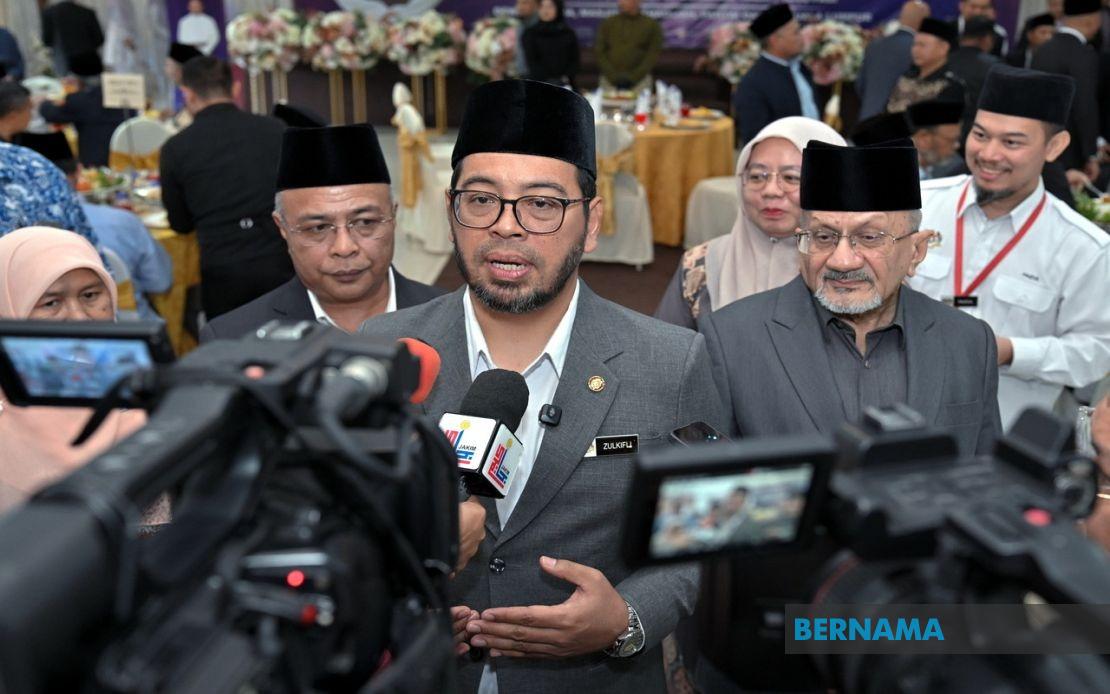
While the Masjid Warisan announcement captured immediate attention, Zulkifli also presided over a broader institutional matter affecting mosques across the Federal Territories. At Masjid Al-Khadijah in Kampung Pantai Dalam, he formally presented appointment letters to committee members selected for the 2026-2029 term across the Federal Territories' mosque and Friday prayer surau network. This routine administrative process, though less conspicuous than the TRX announcement, reflects the extensive institutional apparatus required to manage religious infrastructure across metropolitan Kuala Lumpur.
The selection process itself demonstrates rigorous institutional standards. From 3,010 nominations submitted for committee positions spanning 91 mosques and 124 Friday prayer suraus, 2,914 candidates advanced following an integrity vetting process involving multiple government agencies. The Royal Malaysia Police, the Malaysian Anti-Corruption Commission, and the Insolvency Department conducted background checks, ensuring that individuals managing mosque affairs met established standards of integrity and financial responsibility. This multi-agency approach underscores government commitment to professionalising mosque administration and maintaining public trust in religious institutional governance.
The scale of this selection exercise reveals the substantial organisational infrastructure supporting Islamic religious life in the Federal Territories. With nearly 3,000 committee members appointed across more than 200 religious venues, the system touches thousands of individuals and serves millions of worshippers. Such extensive institutional engagement positions mosque committees as significant civil society actors, responsible not only for spiritual facilitation but increasingly for community welfare, educational programming, and social cohesion initiatives.
For Malaysian readers and policymakers observing these developments, the Masjid Warisan project and associated institutional activities illustrate how modern Malaysia negotiates the integration of religious expression within secular urban development frameworks. The government's willingness to construct prominent mosques in financial districts, coupled with rigorous governance standards for religious institutions, reflects a particular model of religious accommodation—one that neither marginalises faith-based facilities nor permits them to operate without accountability structures. This approach differs markedly from secular models that minimise religious visibility in commercial zones, positioning Malaysia's approach as distinctive within the broader Southeast Asian context.
The project also carries implications for Malaysia's international standing. As the country seeks to position itself as a modern, inclusive financial centre comparable to Singapore or Hong Kong, demonstrating accommodation for diverse religious communities becomes diplomatically significant. International investors and expatriate employees increasingly seek cities that facilitate authentic religious practice rather than merely tolerating it nominally. By prioritising mosque development in premium urban locations, Malaysia signals that religious identity and cosmopolitan modernity need not conflict, potentially enhancing the country's appeal as a destination for skilled international talent across sectors from finance to technology.
Looking forward, the Masjid Warisan project will likely face continued scrutiny as construction commences. The architectural treatment of the building, its acoustic design particularly regarding the adhan, and its integration with surrounding commercial and residential infrastructure will become focal points for ongoing public discourse. How the government manages these technical and social dimensions will significantly influence whether the project ultimately functions as a symbol of successful multicultural urban development or becomes flashpoint for tensions regarding religious expression in secular spaces. The project thus operates at the intersection of urban planning, religious accommodation, and Malaysia's evolving national identity.