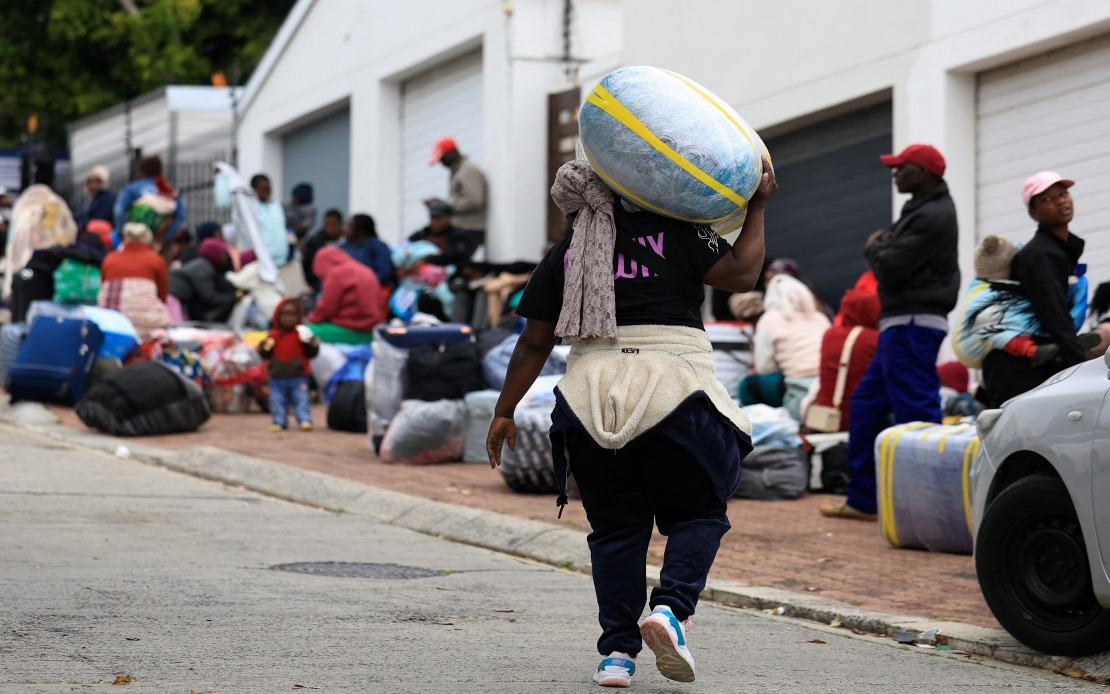
South African authorities have begun moving hundreds of Zimbabwean nationals and some Malawians out of Cape Town following a surge in xenophobic tensions and anti-immigrant activism in the Western Cape. The mass relocation from the Epping processing centre marks a significant development in South Africa's handling of irregular migration, with buses departing on Saturday toward Musina in Limpopo Province where thousands of other foreign nationals await processing and eventual repatriation.
The transfer comes just weeks after approximately 3,000 migrants gathered outside the Zimbabwean consulate in Cape Town, having fled their temporary shelters to seek refuge at government facilities. These individuals had spent roughly two weeks in the open, driven by fears of violence stemming from coordinated anti-immigrant campaigns that culminated in an unofficial June 30 deadline set by activist groups demanding the departure of undocumented foreigners from South Africa. The consolidation of migrants at the Epping centre represented an attempt by authorities to provide safer conditions and facilitate orderly processing.
Conditions at the temporary processing facility have been challenging despite humanitarian support. Aid organisations have been supplying food, shelter, and sanitation services, yet health concerns have emerged among the population. Some detainees developed diarrhoea and flu-like symptoms, raising questions about disease transmission and the adequacy of hygiene infrastructure at the site. The humanitarian response reflects broader concerns about migrants' vulnerability during processing and the risks associated with extended confinement in crowded conditions.
The closure of the Epping centre has created an immediate logistical crisis. Approximately 400 additional arrivals overnight found themselves unable to gain entry as the facility prepared to wind down operations. These individuals remained in nearby areas awaiting alternative arrangements, compounding the humanitarian challenges facing both migrants and local authorities. The scene underscores the tension between processing capacity and the continued flow of asylum seekers and economic migrants seeking government assistance to regularise their status or obtain repatriation support.
Zimbabwean migrants describe the unfolding situation with stark realism. Yekuai Mokoena, who had sought shelter at the facility with her two children after spending multiple nights outside the consulate, simply characterised the circumstances as dire. Her succinct assessment—"The situation is bad"—captures the desperation and uncertainty facing families navigating bureaucratic systems under conditions of fear and instability. Such personal testimonies reveal the human dimension of migration crises often obscured by policy discussions.
The relocation to Musina represents part of a broader consolidation strategy by the Department of Home Affairs. Rather than maintaining dispersed processing sites across multiple provinces, authorities are concentrating migrant populations at centralised facilities in Limpopo Province. This approach presumably aims to streamline administrative procedures and reduce the burden on individual municipalities, though it distances migrants from urban centres where some may have established informal support networks or employment opportunities.
Government messaging has also shifted toward encouraging migrants to self-report to Musina directly rather than gathering at consulates or other informal collection points. This strategy attempts to manage flows and reduce visible concentrations of foreign nationals in Cape Town, where public tensions remain elevated. However, the efficacy of such messaging depends on migrants' trust in authorities and their understanding of procedures—conditions that may not exist among traumatised populations fleeing violent communities.
The Zimbabwean migration surge reflects broader economic dysfunction in that country, where currency collapse, unemployment, and political uncertainty continue driving citizens across borders. South Africa, as the region's largest economy, remains the primary destination despite increasing hostility. The scale of the Cape Town mobilisation—involving thousands—demonstrates the desperation driving migration and the continued pull of South African economic opportunities despite documented security risks.
For Southeast Asian observers, South Africa's response offers cautionary lessons about migration management during periods of heightened xenophobia. The reliance on temporary processing centres, the pressure from anti-immigrant activist campaigns, and the humanitarian costs of rapid relocation all present patterns relevant to regional contexts. Malaysia and other Southeast Asian nations managing complex migrant populations might note how security concerns and public sentiment can drive policy shifts that affect vulnerable populations, and the importance of maintaining adequate humanitarian standards even during periods of political pressure.
The longer-term resolution of Cape Town's migration crisis remains unclear. While relocation to Musina temporarily relieves pressure on the Western Cape, it addresses neither the underlying factors driving Zimbabwean emigration nor the social tensions within South Africa regarding immigration policy. The processing centre at Musina, already hosting thousands, faces capacity constraints, and the pace of repatriation remains uncertain. Without meaningful engagement with root causes and regional cooperation on migration governance, such crises will likely recur.

