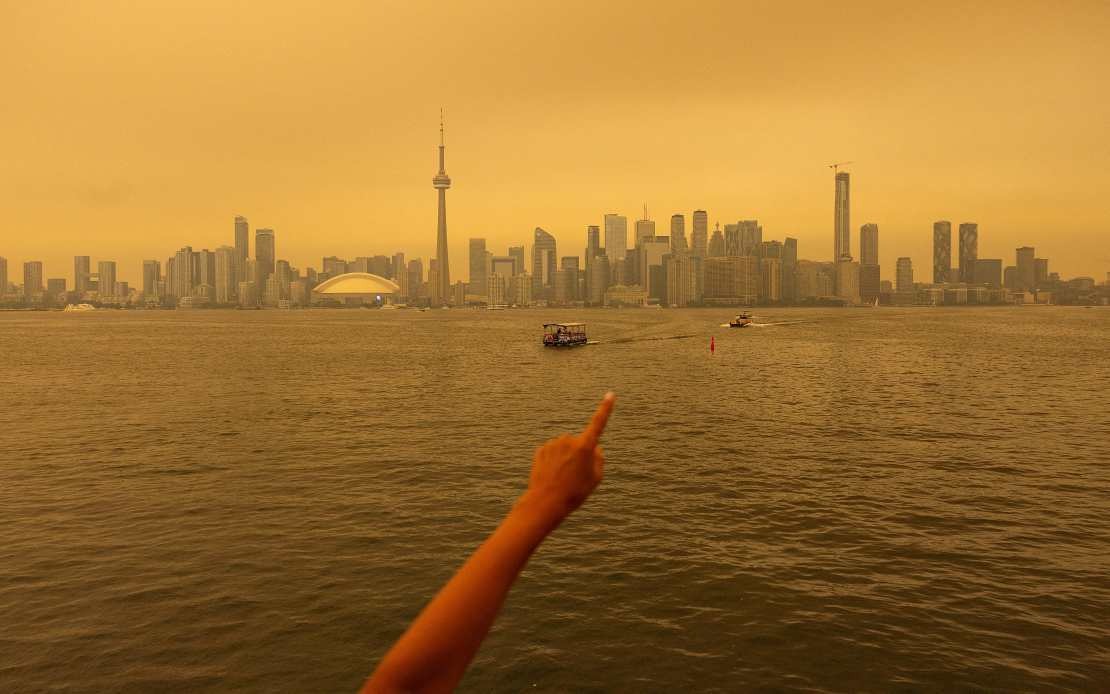
Wildfires burning across northwestern Ontario have plunged Canada's two largest metropolitan areas into hazardous air conditions, with thick smoke creating the worst air quality recorded globally in major cities this week. The crisis has extended beyond environmental concerns to disrupt critical transportation infrastructure, as Canadian National suspended rail operations through affected zones and dramatic footage documented a freight train narrowly escaping wall-of-flame conditions.
Toronto experienced particularly severe air deterioration on Wednesday morning, when its air quality index fell to the worst among major international cities tracked by environmental monitors. The Ontario capital's Air Quality Health Index reached "very high risk" classification, prompting widespread public health advisories. Concurrently, Ottawa issued formal air quality alerts as meteorological conditions trapped wildfire smoke particles in the atmosphere, with high humidity preventing dispersal and creating a distinctly yellowed sky across the nation's capital region.
Environment Canada data reveals the extent of the crisis, with over 100 active fire zones still burning intensely throughout northwestern Ontario's forests. The sheer scale of the outbreak has necessitated emergency evacuation orders for multiple residential communities in the affected zone, displacing residents and overwhelming regional emergency response systems. Weather forecasts suggest the hazardous conditions will persist for several additional days due to prevailing wind patterns and atmospheric circulation that continue channelling smoke toward populated eastern regions.
The transportation disruption came into sharp focus when dramatic video footage circulated widely on social media depicting a Canadian National freight train engulfed by towering flames on both sides of the track near Armstrong, Ontario. A locomotive crew member captured the harrowing scene late Monday evening, showing intense red and orange glows illuminating the cab as roaring fires consumed forest on either flank. The imagery underscored the immediate physical danger posed by the wildfire advance toward critical infrastructure corridors.
Canadian National confirmed the video's authenticity on Wednesday and stated that the train crew had been evacuated safely before conditions became untenable. The incident prompted the railway operator to announce a temporary suspension of all train services through the impacted section of track, affecting freight movements and supply chain operations across the region. The disruption compounds economic challenges already facing Canadian industries recovering from pandemic-related disruptions.
The convergence of environmental hazard and infrastructure interruption carries particular significance for supply chain continuity across North America. Canadian National represents a vital corridor for cargo movement between Canada and the United States, and the suspension demonstrates how climate-related disasters can rapidly cascade into economic consequences affecting multiple sectors and neighbouring jurisdictions. Mining operations, agricultural producers, and manufacturers dependent on rail transport face scheduling pressures and cost implications.
For Malaysian observers and regional analysts monitoring global climate patterns, the Ontario wildfire crisis illustrates the escalating intensity and geographic reach of extreme weather events affecting developed nations. Southeast Asian economies increasingly depend on North American supply chains, and disruptions demonstrate vulnerabilities in cross-border logistics that merit attention from policymakers. The incident reinforces arguments for supply chain diversification and resilience-building investments.
The air quality deterioration also raises public health concerns beyond immediate visible impacts. Fine particulate matter from wildfires penetrates deep into respiratory systems, triggering exacerbations of asthma, bronchitis, and cardiovascular conditions across affected populations. Vulnerable demographics including children, elderly residents, and those with pre-existing conditions face elevated health risks during the extended smog period. Canadian public health authorities have issued guidance recommending limiting outdoor activities and using approved air filtration masks.
Metereological analysis indicates that atmospheric stagnation caused by high humidity and weak wind patterns created a perfect storm for smoke accumulation. Rather than dispersing smoke across broader geographic areas, the weather systems essentially bottled emissions above population centres, creating visible air quality crises in Toronto and Ottawa. Climate scientists increasingly link such atmospheric conditions to broader warming trends that alter traditional wind and pressure patterns across North America.
The wildfire outbreak itself reflects broader environmental pressures affecting Canada's boreal forest regions. Extended drought periods, elevated temperatures, and earlier spring conditions have lengthened fire seasons and expanded zones of combustible vegetation. Land management decisions, timber harvesting practices, and climate adaptation strategies will likely undergo scrutiny as governments assess lessons from the current crisis and plan preventive measures for future seasons.

