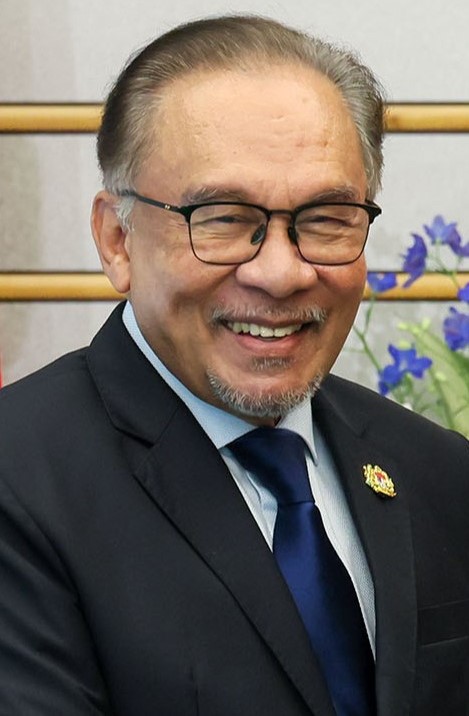
Maszlee Malik, the former Education Minister and Pakatan Harapan candidate contesting the Puteri Wangsa seat, has formally accepted an invitation to debate with Johor Menteri Besar Onn Hafiz Ghazi in the lead-up to the state election scheduled for July 11. The acceptance marks a significant moment in the campaign as prominent figures from opposing coalitions prepare to directly engage voters on key policy issues facing the state.
Maszlee's decision to participate in what has been proposed as the "Johor State Election Grand Debate" reflects his conviction that public discourse between political rivals strengthens democratic engagement rather than undermining it. In a Facebook statement released on June 23, he articulated his reasoning by emphasizing that substantive debate elevates the quality of political conversation and demonstrates respect for voters' intelligence and capacity to make informed decisions. His willingness to accept the challenge stands in contrast to political environments where candidates avoid direct confrontation, suggesting a more transparent campaign approach in this particular state contest.
The debate proposition originated from social media influencer Muhamad Harris Nasril and gained broader visibility through the Redaksi.com Facebook page following Pakatan Harapan chairman Anwar Ibrahim's announcement of the coalition's full slate of 56 candidates for the Johor election. The grassroots nature of the initiative—emerging from civil society rather than party machinery—has generated unexpected public momentum, with numerous citizens and organizations contacting both campaigns to confirm participation. This organic support indicates genuine appetite among the electorate for substantive policy discussions rather than mere campaign rhetoric.
Packatan Harapan's candidate distribution across the 56 contested seats reflects careful coalition management. The PKR component party fields 20 candidates, while Amanah and DAP each contribute 19 and 17 respectively. This distribution attempts to balance the influence and bargaining power of each partner while maintaining credibility with their respective voter bases. The coalition's strategy in Johor carries broader implications for peninsular Malaysian politics, as the state remains a crucial barometer of national sentiment and coalition viability.
Johor's electoral calendar is now firmly established. The Election Commission designated the following Saturday as nomination day, with early voting scheduled for July 7 and the general poll set for July 11. This compressed timeline—typical of state elections—concentrates campaign intensity and heightens the significance of high-profile events such as the proposed debate. Political observers across Malaysia will be monitoring the contest closely, particularly given Johor's historical role in determining broader political trajectories.
Maszlee's parliamentary experience and ministerial background position him as a heavyweight candidate capable of articulating complex policy positions on education, development, and governance. His previous tenure in the Education Ministry during the Pakatan Harapan federal government (2018-2020) provides substantive ground for debate, as opponents may challenge his record while supporters highlight achievements during that administration. The choice to contest a state seat represents a tactical repositioning, potentially reflecting either party calculations about electoral prospects or Maszlee's own strategic priorities following the coalition's federal government loss in 2020.
Onn Hafiz Ghazi, the incumbent Menteri Besar, brings the advantage of executive incumbency and the machinery of state government. As head of the Johor administration, he has wielded significant patronage and development resources, factors that traditionally benefit ruling parties in state contests. However, the acceptance of a public debate by the opposition candidate forces the ruling coalition to engage on intellectual and policy merits rather than relying solely on administrative advantages, potentially shifting campaign dynamics.
The debate represents a notable departure from the often-fractious tone of contemporary Malaysian politics. By explicitly framing the exercise as an opportunity to educate the public and demonstrate democratic maturity, Maszlee has established an expectation of substantive engagement. This implicit contract between candidates and voters creates pressure on both sides to move beyond personal attacks or party slogans toward discussing measurable policy outcomes and competing visions for Johor's development.
For Malaysian voters, particularly those in Johor, such direct confrontations between candidates offer rare opportunities to assess competing visions without media filtering or party narrative management. The debate format allows undecided voters to observe how candidates handle pressure, defend their positions, and articulate responses to unexpected challenges. In a political landscape where public confidence in institutions has eroded, such transparent engagement may contribute to renewed voter participation, particularly among younger electors and those previously disengaged from the political process.
The broader significance extends beyond Johor's borders. Successful conduct of a high-profile, substantive debate could establish a precedent for other state and federal contests, potentially elevating overall campaign quality across Malaysia. Conversely, if the event devolves into partisan conflict or fails to address substantive issues, it may reinforce public cynicism about political engagement. The responsibility weighs heavily on both candidates to demonstrate that serious political competition can coexist with mutual respect and commitment to democratic principles.
As the election approaches its climactic phase, the debate has become a focal point of campaign strategy for both coalitions. For Pakatan Harapan, demonstrating intellectual vigor and policy coherence through Maszlee's performance could help counter narratives about coalition dysfunction or ideological inconsistency. For the ruling Barisan Nasional administration in Johor, the debate presents both opportunity—to showcase the Menteri Besar's administrative achievements—and risk, should performance fall short of public expectations. The outcome may influence not only the Johor outcome but broader perceptions of coalition competence heading toward future national elections.