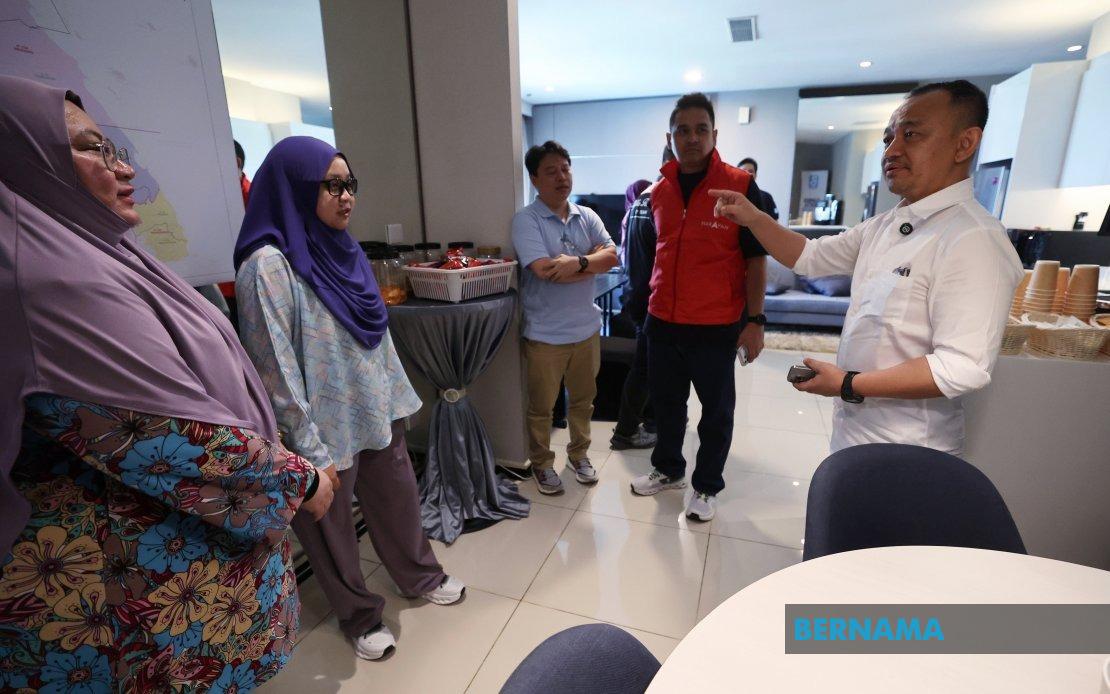
Dr Maszlee Malik, the Pakatan Harapan candidate contesting the Puteri Wangsa seat in the forthcoming 16th Johor state election, has unveiled plans to leverage technology as a cornerstone of his constituent services strategy. Should he win the July 11 poll, he intends to develop a bespoke mobile application designed to simplify how residents report local grievances and lodge complaints, addressing what he sees as critical gaps in traditional service delivery mechanisms for a constituency marked by significant geographical and demographic diversity.
The Puteri Wangsa constituency spans economically disparate communities, encompassing both prosperous residential zones such as Austin Heights and rural settlements including Felda Ulu Tebrau. This geographic and socioeconomic fragmentation creates distinct constituent needs that Maszlee argues cannot be adequately served through conventional face-to-face engagement alone. His proposed technological solution reflects a growing recognition among Malaysian politicians that digital infrastructure may offer practical pathways to serve large, dispersed electorates more effectively, a lesson increasingly relevant for constituencies undergoing rapid urbanisation across the country.
Beyond streamlining complaint mechanisms, Maszlee emphasises that the application would function as a diagnostic tool to identify residents falling through bureaucratic cracks. Specifically, he envisions the app helping to locate vulnerable populations such as single mothers and persons with disabilities who qualify for government assistance but remain unreached due to information gaps or administrative barriers. This dimension of his proposal touches on a persistent challenge in Malaysian governance: ensuring that welfare infrastructure actually reaches intended beneficiaries rather than being lost within layered bureaucratic procedures.
The inspiration for Maszlee's approach derives from international examples of civic technology implementation. He references New York City Mayor Zohran Mamdani's community engagement methodology, which combines dedicated applications with social media platforms to facilitate direct constituent feedback. Maszlee suggests that learning from such models could enhance Malaysian political practice, though the transferability of such systems across different governance contexts and technological infrastructure remains an open question for Southeast Asian democracies.
Complementing the digital dimension, Maszlee intends to maintain conventional engagement channels including regular consultation with non-governmental organisations, residents' associations and government agencies. Town hall meetings would continue to feature prominently in his outreach strategy, suggesting a hybrid model rather than wholesale replacement of traditional constituent relations. This balanced approach acknowledges that technological solutions, while valuable, cannot entirely displace the human dimensions of representation and accountability that voters expect from their elected representatives.
Maszlee's campaign strategy extends beyond the Puteri Wangsa constituency's immediate geography. Recognising that significant portions of the electorate—particularly younger voters and Malaysian professionals based in Singapore—cannot be reached through conventional doorstep canvassing, his team has developed targeted social media campaigns. This reflects the reality that substantial numbers of Malaysian voters lack temporal flexibility to engage with traditional campaigning methods, a phenomenon that extends well beyond Johor and necessitates rethinking how political parties communicate across dispersed, digitally-native populations.
However, Maszlee acknowledges the inherent limitations of digital campaigning in contemporary contexts. Algorithmic filtering and echo chambers create communication barriers that can dramatically reduce campaign message reach, particularly when attempting to break through to voters with divergent political views or limited prior engagement with a candidate's platform. These technical constraints present genuine challenges that no amount of sophisticated messaging can entirely overcome, forcing campaigns to adopt multi-layered strategies rather than relying solely on digital channels.
To navigate these constraints, Maszlee's campaign tailors content across different demographic segments, considering variables including socioeconomic status, ethnic background, age cohorts and residential location. This granular approach targets generational divides—particularly Generation Z voters—alongside specific communities such as Singapore-based Malaysians from Chinese-speaking backgrounds, individuals residing in less densely populated areas, and working professionals. The underlying logic recognises that homogenised messaging fails to resonate with heterogeneous electorates, requiring instead carefully calibrated communication that acknowledges genuine differences in community priorities and lived experiences.
The Puteri Wangsa contest itself has become a five-way race, with Maszlee facing competition from Rashifa Aljunied of the Malaysian United Democratic Alliance, Barisan Nasional's Teow Chia Ling, Parti Bersama Malaysia's Nicholas Paul Vincent, and independent candidate Wang Wee Siong. This crowded field reflects broader fragmentation within Malaysian electoral politics, where traditional two-coalition dominance has fractured to accommodate newer political movements and independent challengers. Such multiplicity complicates campaign strategy, as candidates must differentiate themselves across increasingly crowded political space while generating sufficient brand recognition to break through voter attention constraints.
With early voting scheduled for July 7 and the main polling day set for July 11, Maszlee's technology-focused platform now enters the final campaign phase. His emphasis on digital constituent services and data-driven governance reflects evolving expectations among Malaysian voters, particularly younger cohorts, regarding how political representation should function in technologically advanced societies. Whether such technological innovations can meaningfully improve actual service delivery, however, depends heavily on implementation capacity and sustained political commitment post-election—challenges that extend beyond campaign rhetoric to governance realities that constituencies across Malaysia continue negotiating.

