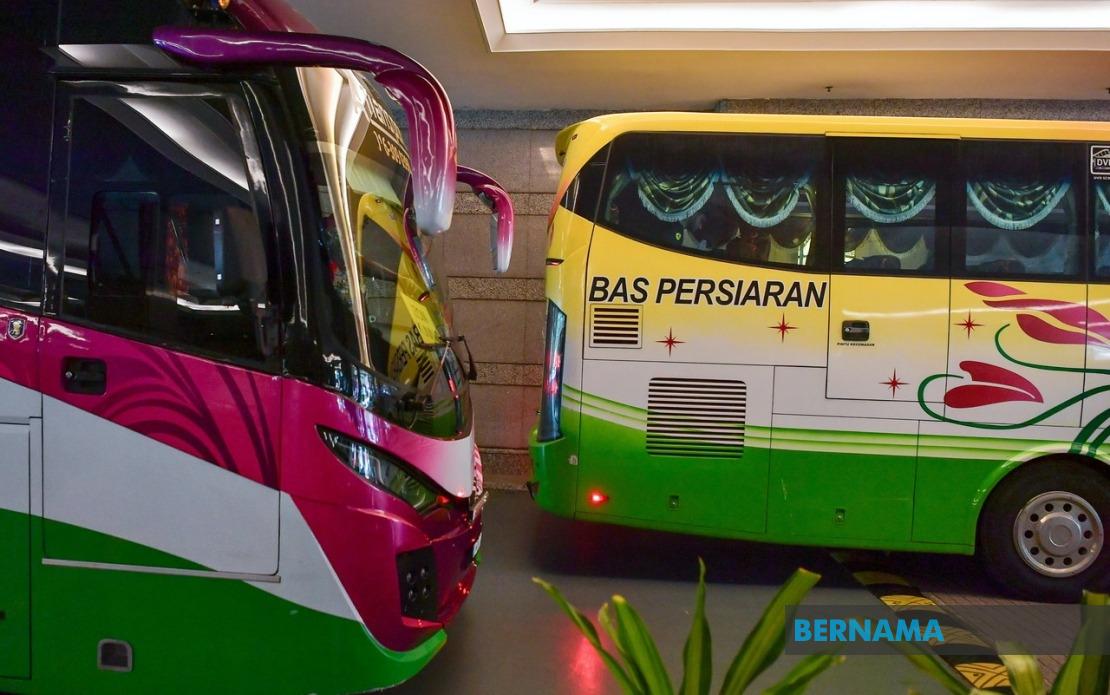
The Malaysian Association of Tour and Travel Agents has escalated its campaign against the government's recent decision to exclude licensed tourism transport operators from the diesel subsidy programme, contending that the policy overlooks a critical sector serving millions of Malaysian holidaymakers alongside international visitors. MATTA president Nigel Wong has directly contradicted Finance Minister II Datuk Seri Amir Hamzah Azizan's assertion that subsidising tourism transport would primarily benefit foreign tourists, presenting evidence that the licensed sector carries substantial domestic passenger volumes that would be left exposed to fare increases if the exclusion stands.
The exclusion represents a fundamental mischaracterisation of how Malaysia's tourism transport ecosystem actually functions, according to MATTA's analysis. Licensed operators provide services spanning a broad spectrum of domestic demand: family holidays, school excursions, corporate team-building initiatives, incentive travel programmes, religious pilgrimages, and community cultural tours. Each segment relies on cost-effective transport to remain viable, and removing subsidy protection threatens to make these experiences financially inaccessible to middle and lower-income Malaysian households. The suggestion that subsidies flow exclusively to foreign visitors therefore rests on an incomplete understanding of the industry's revenue structure and passenger composition.
Operational economics in the sector leave little room for absorbing rising fuel costs without passing them directly to consumers. The removal of diesel subsidies would immediately elevate transportation expenses for all tourism operators, creating a cascading effect throughout travel packages and tour pricing. Tour companies, hotels, restaurants, and attractions bundled into packaged holidays would all face pressure to adjust rates upward. For domestic tourists operating within fixed holiday budgets, price sensitivity is acute; even modest fare increases can trigger decisions to defer travel or seek unlicensed alternatives, both outcomes detrimental to Malaysia's tourism economy and government revenue objectives.
The timing of the exclusion complicates Malaysia's broader tourism recovery strategy. Visit Malaysia 2026 represents a flagship national initiative aimed at repositioning Malaysia as a compelling destination in Southeast Asia's competitive tourism marketplace. International visitor arrivals have rebounded substantially from pandemic lows, but sustaining and accelerating growth depends partly on accessibility and value perception. Conversely, domestic tourism represents a more stable revenue foundation less vulnerable to geopolitical disruption or currency fluctuations. By increasing the cost of domestic travel packages, the subsidy exclusion works against the government's own promotional efforts, potentially constraining the multiplier effects that strong tourism activity generates across accommodation, food service, retail, entertainment, and transportation sectors.
The economic interconnectedness of tourism demand extends into rural and regional areas that depend heavily on visitor flows to sustain livelihoods. Tour operators, hotel workers, restaurant staff, market vendors, and transport workers in Malaysia's secondary and tertiary tourism destinations would face reduced business activity if higher transport costs dampen travel frequency. These communities possess limited economic alternatives, making tourism a critical employment pillar. Rising transport costs effectively reduce discretionary spending on regional experiences, perpetuating concentration of tourism value in major urban hubs and widening regional economic disparities.
MATA's counterargument frames diesel subsidy support as an investment in economic growth rather than a cost burden. This framing shifts the evaluation framework from short-term fiscal impact to long-term revenue generation. A properly targeted subsidy mechanism—applied exclusively to licensed operators to maintain quality standards and prevent abuse—could yield substantial net gains through increased visitor spending, expanded employment, enhanced tax revenue, and strengthened competitiveness against other Southeast Asian destinations. The Finance Ministry's calculation appears to focus narrowly on subsidy expenditure without accounting for secondary economic benefits generated through tourism activity amplification.
The association has submitted specific recommendations to the Finance Ministry seeking reconsideration of the exclusion decision alongside structured engagement with the Ministry of Tourism, Arts and Culture to design a targeted, governance-compliant subsidy framework. MATTA advocates treating licensed tourism transport operators as strategic infrastructure elements comparable to other sectors receiving government support for public interest purposes. This positioning reflects growing recognition that transportation represents a binding constraint on tourism industry development, and deliberate pricing mechanisms can either facilitate or impede broader economic growth objectives.
The dispute also highlights tensions between different government agencies prioritising competing objectives. The Finance Ministry's focus on fiscal sustainability and preventing subsidy overextension clashes with the Tourism Ministry's mandate to grow visitor arrivals and tourism receipts. Without coordinated interagency policy development, sector-specific support mechanisms risk fragmentation and inconsistent application. MATTA's call for collaborative policy design between Finance and Tourism ministries reflects awareness that siloed decision-making produces suboptimal outcomes for strategic sectors.
Licensed tourism operators face competitive disadvantages if subsidised fuel access flows exclusively to other transport categories. Long-distance bus operators, agricultural transporters, or other vehicles may retain subsidy eligibility while tourism operators do not, creating unlevel playing fields despite comparable fuel consumption patterns. The discrimination raises fairness questions about the basis for subsidy allocation across transport segments, particularly when tourism contributes substantially to foreign exchange earnings and employment.
Government policy frameworks typically justify sector-specific subsidies through public interest rationales: ensuring rural connectivity, maintaining essential services, supporting affordable access to public goods, or promoting strategically important industries. Tourism transport arguably qualifies under multiple justifications—domestic mobility enablement, economic diversification, employment generation, and export earnings. The exclusion's rationale appears narrower, focusing on preventing benefits to foreign consumers. That reasoning potentially applies to many subsidised sectors where international customers participate alongside domestic ones, suggesting inconsistent policy logic.
The coming weeks will reveal whether MATTA's escalated advocacy prompts policy reconsideration or whether the Finance Ministry maintains its exclusion decision. The outcome carries implications extending beyond immediate transport costs, signalling the government's commitment level to tourism competitiveness in Southeast Asia's increasingly crowded market. Malaysia's success in Visit Malaysia 2026 and beyond depends substantially on sustaining the affordability and accessibility that motivates both domestic exploration and international visits, making transport cost architecture a consequential policy domain for tourism policymakers to address.

