Maxim, the regional e-hailing platform, is accelerating a nationwide push to dismantle transport inequalities affecting persons with disabilities, senior citizens, low-income households, and other marginalised groups. The initiative represents a strategic pivot toward inclusive mobility, underpinned by competitively priced journeys, technology innovations, and collaborative relationships with community-serving organisations. According to Syed Abdul Syarif Syed Peiaru, Head of Maxim Kuala Lumpur, the company operates from a conviction that equitable transport access remains essential for national inclusion and individual empowerment across Malaysia's diverse landscape.
The philosophical foundation underpinning Maxim's accessibility drive extends beyond conventional service delivery. Transportation, the company contends, functions as a prerequisite to opportunity—enabling individuals to pursue education, secure livelihoods, obtain healthcare, and participate meaningfully in civic life. This framing positions mobility infrastructure as a social determinant of wellbeing rather than merely a commercial offering. For persons with disabilities, elderly populations, and economically constrained households, reliable transport frequently determines whether opportunities remain theoretical or achievable. Maxim's positioning acknowledges that transport poverty directly constrains human development outcomes and social participation.
The platform's operational commitment to affordability reflects recognition that pricing remains a primary barrier to mobility among vulnerable populations. By maintaining competitive fare structures while simultaneously expanding service coverage into rural and underserved regions, Maxim addresses a fundamental market gap often overlooked by mainstream operators. This geographical expansion proves particularly significant for Malaysian contexts where public transport infrastructure remains uneven, and rural communities frequently experience transport scarcity. The company's willingness to operate in lower-density areas, even where profit margins compress, suggests a business model capable of balancing commercial viability with social objectives.
Maxim's Mesra OKU service exemplifies the technological translation of accessibility principles into practical features. Extended passenger waiting times accommodate users requiring additional time for boarding or preparation. Driver assistance training ensures service personnel possess competency in supporting individuals with varying mobility requirements. Mobility aid accommodation—such as wheelchair-accessible vehicles and assistance with equipment—removes logistical friction from journey initiation. Voice-recognition booking capabilities bypass traditional digital interfaces that exclude visually impaired users. Collectively, these features constitute a comprehensive accessibility architecture addressing the heterogeneous needs within the disability community.
Partnerships represent a critical operational lever for Maxim's inclusion strategy. Collaborations with hospitals facilitate transport to medical appointments, addressing a chronic accessibility challenge for individuals with disabilities and elderly populations. Educational institution partnerships remove transit barriers for students with disabilities, directly supporting their academic participation. Engagements with non-governmental organisations and community groups create feedback mechanisms that inform service refinement based on ground-level understanding of user requirements. These institutional relationships simultaneously extend Maxim's reach into communities where trust and awareness require mediation through established local actors.
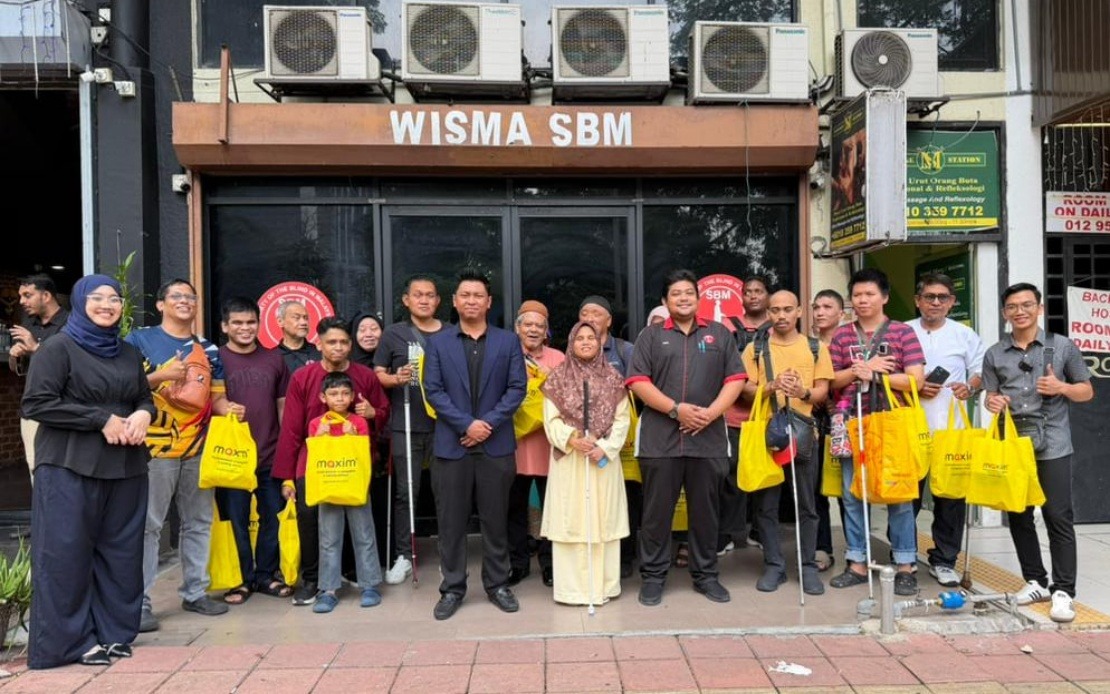
The collaboration with the Society of the Blind in Malaysia demonstrates targeted engagement with specific disability constituencies. Promoting TalkBack voice features acknowledges that digital literacy and accessibility interfaces require deliberate design and user education. This partnership simultaneously functions as awareness-raising for visually impaired populations who may be unfamiliar with technological solutions enabling independent transport use. Such initiatives suggest that accessibility succeeds only when combining technical capability with community outreach and education.
Maxim's extension into adaptive sports communities—including transport support for Sarawak para swimmers—reveals how mobility access functions as prerequisite for competitive athletic participation. Para-athletes require reliable, accommodating transport to training facilities and competition venues. Without accessible mobility solutions, participation barriers prevent talented athletes from accessing elite-level development opportunities. This sports dimension illustrates how transport accessibility ripples across multiple life domains and contributes to broader social inclusion.
The company's special pricing structures targeting persons with disabilities and individuals with special needs acknowledge that affordability cannot be generic. Vulnerability manifests along multiple dimensions, and tailored pricing approaches recognise that some user cohorts experience heightened cost sensitivity. These initiatives require subsidy mechanisms or margin compression, implying corporate decisions to absorb costs in service of inclusion objectives rather than distribute these costs to vulnerable populations.
From a Malaysian policy perspective, Maxim's expansion of inclusive mobility services addresses identified gaps in transport equity. Malaysia's National Disability Agenda and Vision 2050 emphasise social inclusion, yet transport accessibility remains inconsistently implemented. Private sector initiatives functioning at scale can either complement government provision or, in some contexts, substitute for inadequate public services. Maxim's demonstrated commitment creates precedent that accessibility represents legitimate business strategy rather than peripheral corporate social responsibility exercise. This normalisation of inclusive design within commercial operations potentially influences sector-wide standards.
The technology dimension of Maxim's strategy proves particularly significant for Southeast Asian contexts where digital adoption accelerates rapidly. Seamless booking through transparent fare structures and real-time driver connectivity reduces information asymmetries that disadvantage users unfamiliar with ride-hailing platforms. Voice recognition and TalkBack features make digital transport integration feasible for users excluded from standard interfaces. As transportation systems increasingly digitise across Southeast Asia, deliberate accessibility integration during platform development phase proves more effective than retrofitting later.
Maxim's commitment to ongoing platform refinement through user-centric design and continuous stakeholder engagement suggests recognition that accessibility represents evolving challenge rather than static problem. Disability communities and underserved populations possess accumulated knowledge about barriers and solutions; genuine inclusion requires institutional willingness to incorporate this expertise into service development. The company's stated intention to strengthen platform features while maintaining community partnership proximity indicates operational commitment to this participatory approach.
Government coordination emerges as essential for maximising impact. Maxim's expressed willingness to collaborate with government agencies, healthcare providers, NGOs, and educational institutions creates potential for systemic integration. When private transport operators, public health systems, educational authorities, and social agencies align around mobility inclusion objectives, cumulative impact exceeds individual organisational contributions. For Malaysian policymakers, Maxim's expansion demonstrates possibilities for leveraging private sector capabilities toward public interest objectives.
The broader significance of Maxim's accessibility initiative extends beyond individual service provision. Transportation fundamentally shapes urban development patterns, economic opportunity distribution, and social cohesion. When mobility access distributes inequitably, geographic and socioeconomic segregation intensifies. Conversely, when transport becomes genuinely accessible across population groups, economic mobility, social participation, and civic integration improve. Maxim's efforts to systematically address mobility barriers therefore contribute to inclusive development trajectories benefiting Malaysia and Southeast Asia more broadly.

