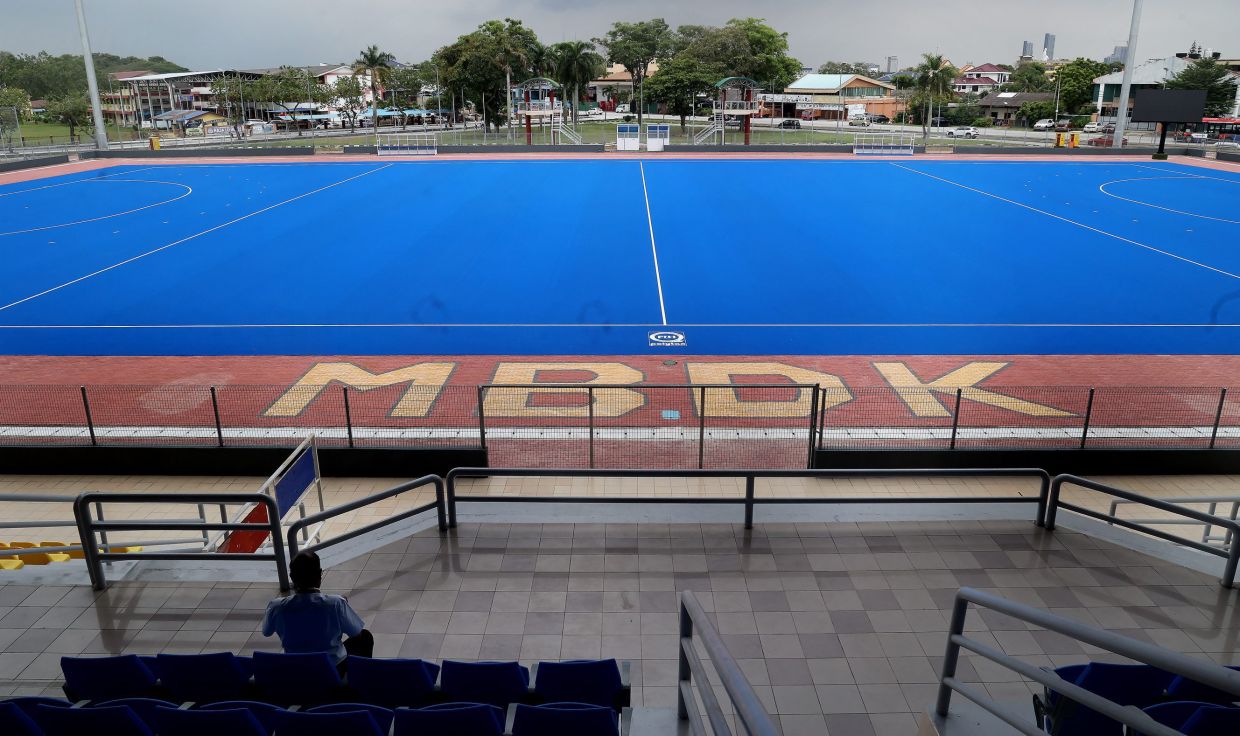
The Klang Royal City Council (MBDK) has embarked on a significant governance restructuring for sports infrastructure, designating the Selangor Hockey Association (SHA) as the principal operator of its newly upgraded Pandamaran Hockey Stadium. This strategic handover reflects a broader shift towards specialised management models in Malaysian municipal sports facilities, positioning professional sporting bodies at the helm of venue operations rather than relying solely on in-house government administration.
Klang Mayor Datuk Abd Hamid Hussain articulated the council's vision, emphasising that the stadium transcends its conventional role as a playing surface. The facility now represents a long-term strategic asset requiring governance frameworks rooted in professionalism, operational efficiency, and financial sustainability. By engaging SHA—an organisation with deep institutional knowledge of hockey administration, event coordination, and athlete development—MBDK aims to establish management practices aligned with international standards and industry best practices, rather than defaulting to generic municipal oversight.
The stadium, situated strategically between Jalan Sukma and Jalan Raja Lumu in Pandamaran, Port Klang, underwent comprehensive refurbishment totalling an estimated RM9 million. This substantial investment reflects MBDK's commitment to upgrading sporting infrastructure across the Klang municipal area. The facility launch, scheduled as a soft opening this evening, will be followed by a test match utilising the newly completed venue—a practical validation of construction quality and operational readiness ahead of its first major tournament hosting responsibilities.
The timing proves particularly significant given Selangor's forthcoming hosting responsibilities. The 22nd Sukma will unfold across the state from August 15 to 24, 2026, with the subsequent Para Sukma scheduled for September 5 to 10. These back-to-back national sporting spectacles will place extraordinary demands on venue management, from athlete accommodation protocols to broadcast infrastructure, making professional governance critical. Pandamaran Stadium will serve as a centrepiece venue for these competitions, with the refurbished facility expected to handle international-calibre events and media coverage.
Mayor Abd Hamid reframed the RM9 million expenditure within a broader economic lens, positioning it as strategic capital investment rather than recurrent spending. This rhetorical shift acknowledges growing fiscal scrutiny on municipal sports spending while simultaneously articulating tangible returns: sports development capacity, enhanced community wellbeing outcomes, and accelerated local economic activity. This framing aligns with contemporary governance discourse emphasising measurable social returns on public infrastructure investment, particularly relevant for Malaysian councils navigating budget constraints and stakeholder accountability.
The management architecture will now incorporate a dedicated stadium operations team, distinct from general council administration. This team will oversee operational mechanics including maintenance schedules, security protocols, promotional activities, and facility bookings—functions traditionally fragmented across multiple municipal departments. By consolidating these responsibilities under specialised personnel, MBDK seeks to improve response times, enhance facility utilisation rates, and create accountability mechanisms transparent to both SHA and the broader sporting community.
The stadium's infrastructure reflects substantial technical investment. Beyond the primary playing surface, the facility incorporates advanced drainage systems engineered to manage tropical rainfall patterns, comprehensive floodlighting enabling evening competitions and training, electronic scoreboards facilitating broadcast integration, and modern changing facilities meeting athlete welfare standards. Maintaining this constellation of systems requires coordinated expertise spanning grounds management, electrical engineering, and facilities logistics—precisely the domain where SHA's specialised knowledge provides institutional advantage over generalist municipal teams.
Certification by the International Hockey Federation (FIH) constitutes the facility's most symbolically significant achievement, with validation extending until July 2, 2029. This accreditation signifies that Pandamaran Stadium meets prescribed international competitive standards, enabling it to host world-class tournaments while facilitating live global broadcast transmission. Such certification typically requires compliance with exacting specifications regarding playing surface consistency, sightline geometry, emergency egress protocols, and technical control facilities—benchmarks that SHA's involvement will help maintain throughout the certification period.
The FIH accreditation carries broader implications for Klang's positioning within Malaysia's sporting geography and Southeast Asia's international sporting calendar. Certified facilities attract bidding opportunities for continental and global events, generating tourism revenue, international profile elevation, and soft power returns disproportionate to initial infrastructure investment. For Klang—historically positioned as a maritime and industrial hub rather than sporting destination—this repositioning offers economic diversification pathways and community engagement opportunities extending beyond traditional municipal service delivery.
SELANGOR's hosting of Sukma and Para Sukma represents a watershed moment for state infrastructure and organisational capacity. Pandamaran Stadium's readiness demonstrates both technical preparedness and governance maturity, with the SHA partnership exemplifying how Malaysian sporting bodies can assume greater institutional responsibility for facility stewardship. This model potentially establishes a template for other municipalities seeking to elevate sports infrastructure management beyond conventional municipal capacity.
The partnership between MBDK and SHA ultimately reflects evolving expectations regarding public sports facilities in Malaysia. Rather than treating stadiums as generic municipal buildings, this arrangement recognises them as specialised environments requiring expert stewardship, professional standards, and sustainable operational models. As Sukma 2026 approaches, Pandamaran Stadium's success will offer instructive lessons regarding facility management governance—a question increasingly central to Malaysian sports policy as the nation develops hosting capabilities for major continental and international events.

