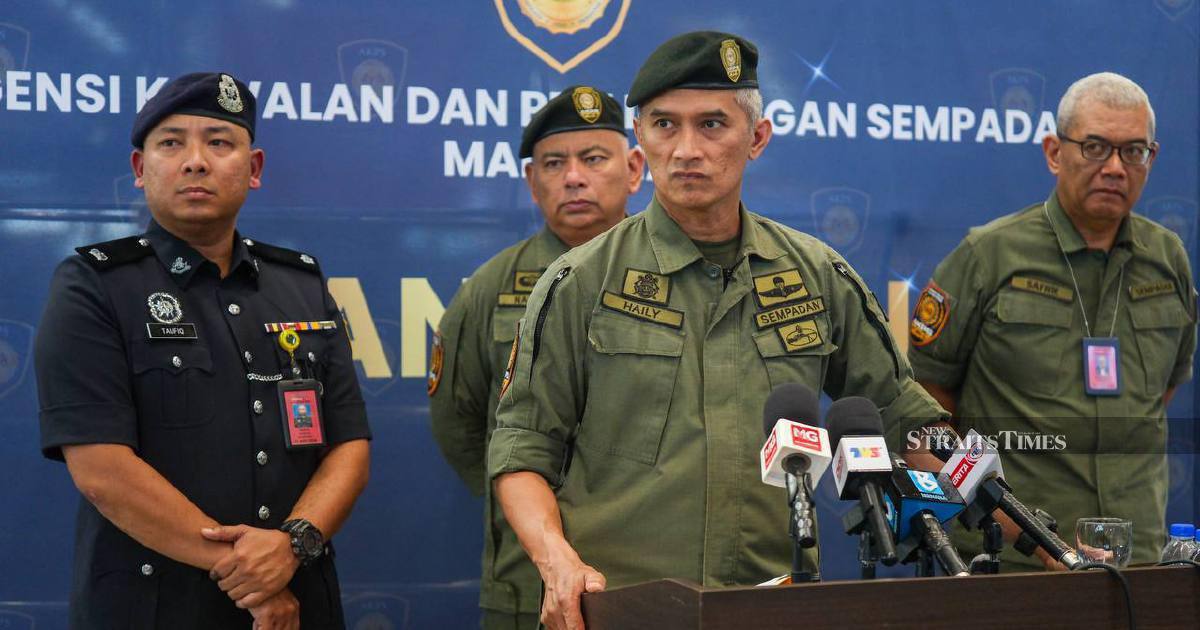
The Malaysian Customs and Border Agency (MCBA) has defended its baggage screening operations following the arrest of a Malaysia Airlines pilot in Indonesia on suspicion of attempting to smuggle drugs across borders. The agency maintained that every protocol in its standard operating procedures was rigorously followed during the initial screening at Sepang, even though advanced AI-assisted scanning technology failed to detect any contraband in the pilot's luggage.
The incident has raised questions about the effectiveness of automated screening systems at international borders, particularly given that the equipment cleared the baggage despite what authorities in Indonesia later discovered. The MCBA's reaffirmation of procedural compliance suggests a potential limitation in current detection technologies or the possibility that the alleged contraband may have been concealed in ways that bypass existing scanning methods.
For Malaysia, this case carries significant implications regarding border security credibility and the reliability of investments in artificial intelligence-driven customs infrastructure. The Southeast Asian region has increasingly prioritised upgrading border controls with smart technology, and incidents like this test public confidence in whether such systems deliver their promised security benefits. The MCBA's response appears designed to reassure stakeholders that its systems functioned as intended, even if external factors ultimately led to the discovery of alleged contraband.
The pilot's arrest in Indonesia marks an embarrassing moment for Malaysia's aviation sector, which has long struggled with occasional security breaches and criminal activity among personnel. Malaysia Airlines, already navigating reputational challenges from past incidents, faces renewed scrutiny over employee vetting and the effectiveness of internal security measures beyond the airport checkpoint.
The reliance on AI-assisted scanners at Malaysian borders reflects broader regional trends toward technological modernisation of customs operations. However, this case underscores a critical reality: no automated system can provide absolute certainty. Border security remains partially dependent on random inspections, intelligence sharing, and human judgment—elements that can fall short when criminal activity is deliberately concealed or when international cooperation encounters gaps.
The MCBA's emphasis on full SOP adherence serves an important defensive function. It clarifies that the agency operated within established guidelines and that any failure in detection did not stem from negligence or cutting corners. Standard procedures typically include baggage scanning followed by selective physical examination. If the AI systems registered no alerts and the selected screening levels were executed as protocol demands, the agency's position becomes technically defensible even if the ultimate outcome proved inadequate.
Yet the broader question persists: should Malaysia's border screening standards be elevated, particularly for staff employed by high-profile companies like Malaysia Airlines? International best practices increasingly employ multi-layered approaches combining technology with enhanced human oversight for passengers in sensitive positions. A pilot's access to aircraft and international routes creates security considerations beyond typical travellers, potentially warranting additional scrutiny during routine screening.
The incident also reflects the complex nature of modern drug smuggling operations. Organised trafficking networks continuously evolve their concealment methods to circumvent automated detection systems. This arms race between law enforcement technology and criminal ingenuity means that even sophisticated AI scanners may encounter novel smuggling techniques. The MCBA would be wise to use this case as a learning opportunity to evaluate whether its AI systems require parameter adjustments or whether protocols for high-risk traveller categories should be enhanced.
Cross-border cooperation with Indonesia in resolving this matter demonstrates the functioning regional security architecture. However, the fact that Indonesian authorities discovered the alleged contraband suggests either more thorough screening procedures on their side or that the pilot's activities came under suspicion through intelligence channels rather than routine scanning. Understanding how Indonesian authorities made their determination could provide valuable insights for Malaysian border operations.
From a passenger and aviation perspective, this situation reinforces an uncomfortable reality: security personnel and flight crew, despite thorough vetting, occasionally engage in illegal activities. No screening process can achieve perfect reliability because individuals can be vetted extensively before employment but subsequently compromised or radicalised. The case highlights why aviation security depends on layered defences and why cooperation between airlines, customs agencies, and law enforcement remains essential.
Looking forward, the MCBA faces a credibility challenge that extends beyond technical justifications about SOP compliance. Public reassurance requires not only demonstrating that procedures were followed but also showing willingness to assess whether current standards remain adequate. The agency should consider whether AI-assisted scanners require sensitivity adjustments, whether selective physical inspections need more rigorous application criteria, and whether security protocols for aviation personnel should incorporate additional intelligence-driven elements.
This incident ultimately underscores that border security effectiveness depends on the complete system functioning in concert—neither technology alone nor human oversight alone suffices. The MCBA's maintenance that standard procedures were followed provides one layer of accountability, but genuine confidence restoration requires acknowledging gaps and committing to systematic improvements that address the vulnerabilities this case has exposed to scrutiny.

