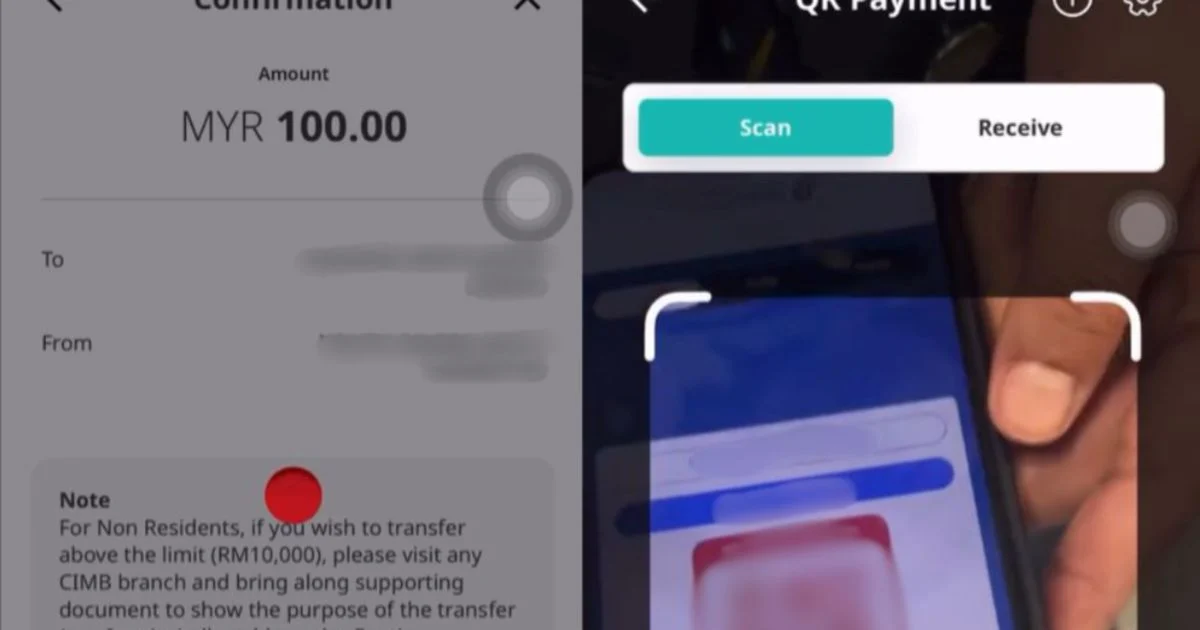
The Malaysian Border Control and Protection Agency (MCBA) has initiated an internal investigation into claims that one of its officers at Kuala Lumpur International Airport (KLIA) Terminal 2 engaged in an improper financial transaction with a traveller using a personal Quick Response code payment method. The incident raises fresh concerns about financial impropriety at Malaysia's primary international gateway, where border control staff interface daily with thousands of passengers and cargo operators.
The allegation centres on the acceptance of a RM100 payment through what appears to be a personal mobile payment channel rather than official government collection mechanisms. This distinction carries significant administrative and ethical weight, as it suggests the payment may have bypassed official accounting systems and oversight procedures designed to maintain transparency and prevent corruption at public agencies. Such transactions, if substantiated, would contravene established protocols governing how border control officers conduct financial interactions with the travelling public.
KLIA Terminal 2, which handles a substantial portion of Malaysia's international passenger traffic alongside cargo movements, represents a critical junction where compliance standards must remain rigorously enforced. The terminal processes approximately 40 per cent of Malaysia's international air passengers annually, making it particularly vulnerable to isolated misconduct that could undermine public confidence in border management systems. The investigation's scope will likely examine whether this represents an isolated incident or part of a broader pattern requiring systemic remediation.
The MCBA's decision to pursue an internal investigation signals institutional responsiveness to allegations of officer misconduct, though questions remain regarding investigation timelines and the specific evidence available to investigators. Border control agencies internationally face persistent challenges balancing operational efficiency with corruption prevention, and Malaysia is no exception. The agency must demonstrate that allegations are investigated thoroughly and that consequences reflect the seriousness of financial impropriety involving public officials.
The nature of the transaction—conducted through a personal QR code rather than official payment channels—suggests a deliberate circumvention of standard procedures. Such methods leave minimal documentary trails within official systems, complicating auditing and accountability mechanisms. This aspect of the allegation is particularly troubling from a governance perspective, as it indicates potential awareness of wrongdoing on the officer's part and raises questions about how such transactions might evade detection across multiple shifts and operational periods.
For Malaysian travellers and international visitors, incidents of this nature erode confidence in border processes and raise concerns about the professionalism of officials responsible for border security and facilitation. While individual officer misconduct does not represent systemic failure, cumulative incidents can damage Malaysia's reputation as a professionally managed travel destination. The government and MCBA must balance the presumption of innocence for the officer under investigation with public reassurance that border integrity remains protected.
The incident also highlights the vulnerability of cash and digital payment collection at high-traffic border facilities. KLIA Terminal 2's operational environment involves multiple collection points for various official fees and charges, creating opportunities for confusion—either genuine or feigned—about proper payment procedures. The investigation will need to clarify whether the officer misrepresented official requirements or whether the passenger voluntarily offered payment through a personal channel, as these scenarios carry different implications for accountability.
From a regulatory standpoint, this allegation may prompt MCBA to review payment collection protocols and staff training across all international terminals. Enhanced point-of-service documentation, security camera coverage of transaction zones, and clearer signage directing passengers to official payment mechanisms could all serve as preventive measures. The agency might also consider whether digital payment systems could be standardized to reduce opportunities for personal QR code transactions.
The investigation's outcome will carry implications extending beyond the individual officer involved. MCBA's handling of the case will signal to both staff and the public whether the agency takes financial accountability seriously and whether officers can expect consistent enforcement of conduct standards. Transparent communication about investigation progress and findings, subject to privacy and investigative confidentiality constraints, will be essential to maintaining institutional credibility during what may extend to a multi-week investigation process.
International best practices suggest that border agencies should establish clear consequences for financial impropriety while maintaining fair investigation procedures. Malaysia's track record in addressing corruption allegations within government agencies has shown both successful prosecutions and cases where outcomes have remained opaque to public scrutiny. The MCBA's handling of this case will contribute to shaping perception of the agency's commitment to internal governance standards.
Larger questions about digitalization of border processes also emerge from this incident. As Malaysia modernizes its airport infrastructure and border management systems, ensuring that digital payment mechanisms are secure, auditable, and resistant to misuse becomes progressively important. The government's Digital Economy Framework and Smart Border initiatives place emphasis on technological advancement, yet this case demonstrates that technological solutions alone cannot prevent misconduct without accompanying oversight and accountability mechanisms.
The investigation now proceeds with the officer's identity protected pending conclusions, yet the public interest in border integrity assurance remains significant. As MCBA pursues its internal review, the agency faces the dual challenge of conducting a thorough investigation while maintaining operational efficiency at KLIA Terminal 2, where disruption to border processing could create international travel complications. The resolution of this matter will ultimately depend on the quality of evidence gathered and the integrity of the investigation process itself.

