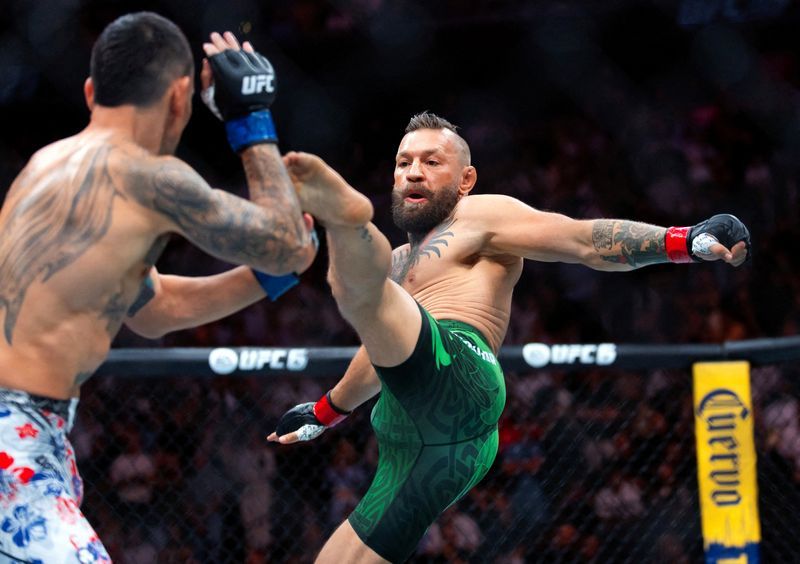
Conor McGregor's long-awaited return to mixed martial arts competition has ended in disappointment, with the former two-weight champion suffering a serious knee injury that forced him to withdraw from his fight against Max Holloway after just 69 seconds inside the octagon on Saturday evening in Las Vegas. The injury occurred during the opening stages of the bout when McGregor attempted a jump kick but landed awkwardly, immediately compromising his ability to continue. Despite briefly persevering in the aftermath of the incident, the 37-year-old Irish fighter quickly signalled to the referee that he could not proceed, bringing a premature conclusion to a contest that had been the subject of considerable anticipation within combat sports circles.
On Monday, McGregor took to Instagram to confirm that he will require surgical intervention to address the knee injury and expressed his determination to mount a fresh comeback attempt. His message, infused with religious sentiment, suggested unwavering confidence in his prospects for recovery and future success. The fighter's commitment to rehabilitation and eventual return to the sport demonstrates his psychological resilience, though the injury represents yet another obstacle in what has become an increasingly turbulent chapter of his professional career.
The 37-year-old's struggles extend well beyond the immediate injury setback suffered during the Holloway encounter. McGregor has endured a succession of personal and professional crises that have fundamentally undermined his trajectory as a professional fighter over the past several years. These difficulties have transformed what was once a meteoric rise through the ranks of mixed martial arts into a prolonged period of adversity and rehabilitation attempts.
Prior complications include a severe leg fracture sustained against Dustin Poirier approximately five years ago, an injury that required extensive recovery and reset his competitive timeline significantly. More recently, McGregor was scheduled to face Michael Chandler in June 2024, but this bout was cancelled after the fighter sustained a broken toe during training camp. Such injuries, while individually manageable, have accumulated into a pattern that has kept him sidelined from competitive action during critical periods.
Beyond the physical injuries plaguing his athletic career, McGregor has confronted substantial legal and regulatory complications. In 2024, a jury in an Irish civil court determined that he was liable in connection with allegations stemming from 2018, a finding that resulted in significant reputational and financial consequences. This civil judgment added considerable weight to the institutional and public scrutiny surrounding the fighter.
Further complicating his situation, McGregor accepted an 18-month ban imposed by combat sports authorities for what was characterised as "whereabouts failures" related to anti-doping protocols. The fighter had failed to make himself available for three separate attempts by Combat Sports Anti-Doping officials to collect biological samples during 2024. Although the ban was backdated and technically expired in March 2025, its imposition underscored ongoing tensions between McGregor and the regulatory bodies overseeing professional mixed martial arts.
For Malaysian readers and Southeast Asian fight enthusiasts, McGregor's situation carries broader implications for how elite athletes navigate the intersection of sporting competition, personal conduct, and regulatory compliance. The region has produced its own prominent mixed martial artists, and McGregor's travails serve as a cautionary narrative about the fragility of even the most accomplished careers when compounded by injuries, legal problems, and administrative violations. His circumstances illustrate that professional standing in global combat sports depends not merely on fighting ability but on consistent availability, regulatory cooperation, and personal conduct.
The fighter's determination to pursue what he has described as a "final fight of the contract" suggests he envisions a discrete endpoint to his professional career, potentially reflecting acknowledgment that his competitive window may be narrowing. His reference to contractual obligations implies he remains bound to a promotional agreement with the Ultimate Fighting Championship, and fulfilment of that arrangement appears to represent his immediate objective rather than an open-ended competitive future.
McGregor's road back to meaningful competition will demand not only successful surgical repair and physiotherapy but also successful navigation of regulatory clearances and potentially continued management of his broader legal situation. The psychological demands of returning to elite competition following such setbacks should not be underestimated, particularly given his age and the accumulation of physical and personal challenges he has recently endured. Whether the fighter can achieve his goal of one final professional contest remains uncertain, though his stated commitment to the process suggests he retains the determination necessary to pursue rehabilitation, even if success remains far from guaranteed.

