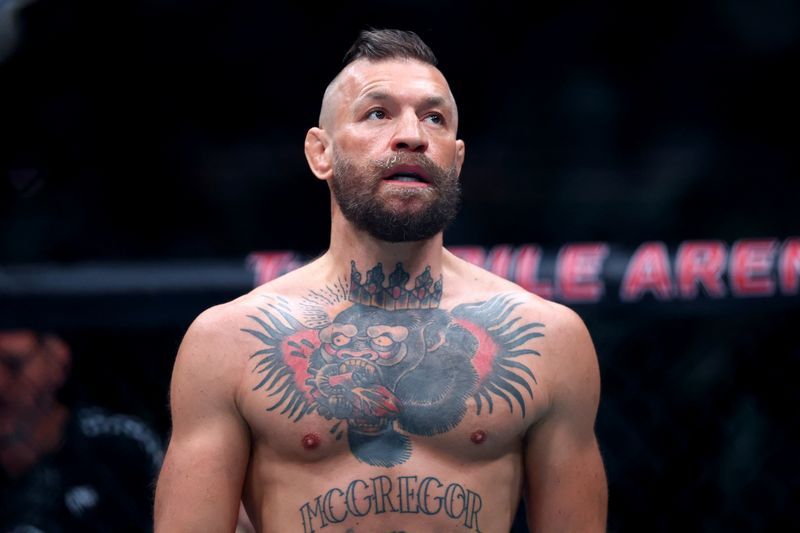
Conor McGregor's long-awaited return to professional mixed martial arts competition ended in cruel disappointment at UFC 329 in Las Vegas on Saturday, when a serious knee injury forced the Irishman to withdraw from his bout with Max Holloway after barely a minute of action. The former two-weight champion, attempting a flying kick to initiate the opening round, landed awkwardly and immediately signalled distress. After a brief attempt to continue fighting, McGregor made the decision to inform the referee that he could not proceed, bringing a premature conclusion to one of the year's most heavily anticipated matchups.
McGregor's absence from competitive fighting had stretched nearly four years since his last bout, during which he suffered a fractured leg against Dustin Poirier in July 2021. The circumstances surrounding his latest comeback attempt had been complicated by a succession of setbacks that extended far beyond the sporting arena. Most notably, a jury in an Irish civil court determined in 2024 that he bore liability for a sexual assault allegation dating to 2018 involving Nikita Hand, a legal verdict that cast a shadow over his professional rehabilitation efforts.
The path to Saturday's fight had proven extremely challenging. McGregor was originally scheduled to face Michael Chandler in June 2024, but that contest fell through after he sustained a broken toe during training sessions. Beyond these physical impediments, his involvement in anti-doping matters further complicated his return timeline. In October 2025, McGregor accepted an 18-month suspension relating to whereabouts failures after he missed three separate testing collection attempts by Combat Sports Anti-Doping officials during 2024. Although the ban was backdated to commence earlier and subsequently expired in March, it demonstrated the multiple layers of difficulty surrounding his comeback.
Max Holloway, the former featherweight champion facing McGregor at UFC 329, expressed his openness to a rematch once the Irishman recovers from his injury. Holloway's willingness to engage in a second encounter signals the continued commercial appeal of the McGregor brand within professional mixed martial arts, despite the controversies and setbacks that have accumulated around him in recent years. Their previous meeting in 2013 resulted in a unanimous decision victory for McGregor, establishing a clear historical precedent for another competitive matchup between these two accomplished fighters.
Holloway indicated his intention to negotiate with the UFC regarding the possibility of staging a return bout, while also acknowledging the significant anticipation that had been building around the initial encounter. His comment that "we've got to run it back one more time" reflected both the commercial potential of such a rematch and his confidence in his ability to perform competitively against McGregor given how their previous fight concluded. The rapid nature of Saturday's injury, however, suggests an extended recovery period may be necessary before any serious discussions about rescheduling can commence.
The injury that ended McGregor's comeback represents the latest in a frustrating succession of setbacks that has fundamentally disrupted what might have been a dominant career trajectory. Beyond the high-profile knee injury, McGregor has contended with legal challenges, regulatory sanctions, and training camp incidents that have collectively narrowed his competitive window. At 37 years of age, each lost opportunity carries particular significance given the physical demands of elite-level professional fighting and the toll that accumulated damage inflicts over time.
The timing of this injury holds particular significance for professional mixed martial arts as an industry. McGregor remains one of the sport's most marketable and recognizable athletes globally, and his comeback carried genuine potential to attract both longtime fans and casual observers. The rapid conclusion to the event means sponsors, broadcasters, and the UFC organization itself experienced significant disappointment regarding what had been positioned as a marquee return for a fighter whose drawing power continues to transcend the sport itself.
On the undercard, British fighter Paddy Pimblett delivered a striking performance in the lightweight co-main event, defeating Frenchman Benoit Saint-Denis with remarkable speed through a submission hold. Pimblett's victory, achieved in less than a minute through choking his opponent into submission, demonstrated the unpredictable nature of combat sports outcomes and the sometimes razor-thin margins separating success from failure at the highest competitive level. While McGregor's evening concluded with disappointment, Pimblett's performance provided some dramatic entertainment value during a card that failed to deliver several expected highlights.
For Malaysian and Southeast Asian combat sports enthusiasts, McGregor's injury underscores the perpetual vulnerability of athletic careers, particularly in disciplines as physically demanding as mixed martial arts. The incident also reflects broader questions within professional sports regarding appropriate return timelines following extended absences and the medical protocols governing fighter safety. McGregor's situation will undoubtedly prompt continued discussion regarding rehabilitation procedures and the decision-making processes that determine when athletes are genuinely prepared to resume competition at elite levels.
Looking ahead, the immediate priority for McGregor involves comprehensive medical assessment and rehabilitation of the knee injury sustained during the opening moments of his UFC 329 encounter. Whether he pursues another return attempt remains uncertain, particularly given his age and the accumulation of physical and legal complications that have characterized recent years. The sports world will await developments regarding both his health status and any potential rescheduling discussions with the UFC and Max Holloway regarding a rematch between these two accomplished fighters.

