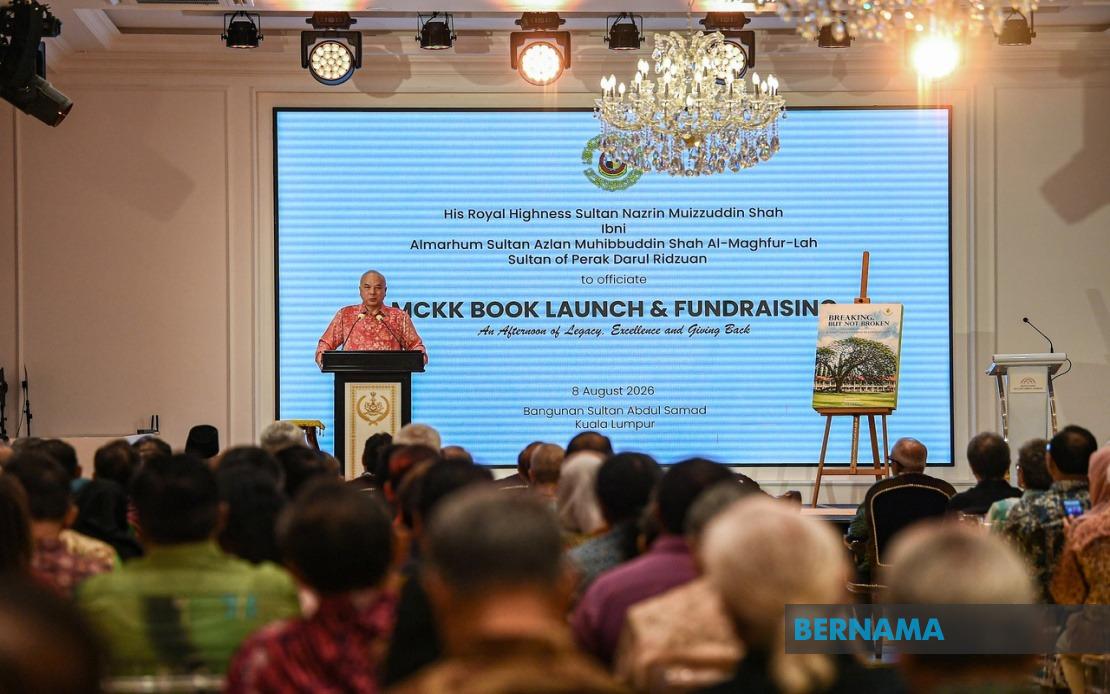
The Sultan of Perak Sultan Nazrin Shah has outlined a vision for how established heritage schools such as the Malay College Kuala Kangsar (MCKK) can navigate contemporary challenges and re-establish themselves as vital institutions in Malaysia's educational landscape. Speaking at an event in Kuala Lumpur, the Royal Patron of the MCKK Board of Governors suggested that schools of this calibre need not fade into irrelevance, but rather can harness their historical strengths while making fundamental adjustments to remain pertinent in an era increasingly defined by artificial intelligence and rapid digital transformation.
Sultan Nazrin's remarks acknowledge a broader reality that has troubled observers of Malaysia's elite residential school sector: many historically prestigious institutions have experienced a gradual erosion of their academic standing and cultural influence over recent decades. The monarch pointed out that what were once considered "power schools" — a designation reserved for the nation's most selective and influential boarding establishments — have seen their reputation dimmed and their track record of producing exceptional graduates become less reliable. This observation extends beyond MCKK to encompass a cohort of similarly venerable institutions that shaped generations of Malaysian leaders, professionals, and public figures.
The decline of these schools, according to Sultan Nazrin, manifests in tangible ways. Graduates emerging from these once-hallowed institutions are increasingly perceived as deficient in areas that historically defined their competitive advantage: command of language, capacity for independent critical thinking, and an ingrained sense of obligation to contribute meaningfully to society. Such observations will resonate with Malaysian employers and university admissions officers who have noted that pedigree alone no longer guarantees the calibre of intellectual preparation or civic consciousness that these schools were traditionally designed to cultivate. The contrast with the output of previous generations is particularly stark, suggesting that structural or philosophical changes within these institutions have contributed to shifting outcomes.
However, Sultan Nazrin's message was not one of resignation. Rather, he framed the challenge as an opportunity for strategic reinvention. The key, he suggested, lies in recognising that heritage schools operate in a fundamentally different context than the one in which they were established or achieved their peak influence. The schools must adapt their curricula, teaching methodologies, and institutional priorities to address the realities of technological disruption while simultaneously preserving the ethical foundations and holistic educational philosophy that have historically differentiated them from other schools.
Critical to this vision is the recognition that the future will demand unprecedented synergy between technical competency and human development. Sultan Nazrin stressed that education systems must be reimagined to equip younger generations not merely to survive but to flourish in an artificial intelligence-driven economy. Yet this practical imperative must coexist with — indeed, must be strengthened by — the cultivation of fully realised human beings. The Ruler emphasised that developing well-rounded individuals possessing not only technical skills but also refined sensibilities and coherent values remains essential to their role as contributors to society, perhaps now more than ever.
The distinction Sultan Nazrin drew between the "practical" and the "intangible" dimensions of education is philosophically significant. It suggests that heritage schools need not abandon their traditional commitment to character formation, cultural refinement, and ethical development in pursuit of technological relevance. Rather, these institutions must integrate modern competencies with enduring humanistic values. This integrated approach could position them as unique alternatives to schools that prioritise STEM subjects at the expense of liberal arts, critical reflection, and civic responsibility — a differentiation that could prove increasingly valuable to Malaysian families seeking holistic educational experiences.
Sultan Nazrin also commended a recently published book examining MCKK's trajectory, authored by Ghazally Ismail, Ahmad Ibrahim, and Hisham Badrul Hashim. His endorsement of the authors' willingness to address uncomfortable truths about the school's challenges — including candid, sometimes harsh assessments of institutional shortcomings — suggests that productive reform will require institutional transparency and unflinching self-examination. The apparent appetite among MCKK leadership to engage with critical analysis rather than defensively retreat is itself an encouraging sign that meaningful adaptation may be possible.
On the resource front, MCKK's fundraising efforts offer concrete evidence of institutional capacity for renewal. The MCKK Foundation has accumulated more than RM36 million in donations and contributions since its establishment in 2008, with over RM19 million invested in significant infrastructure projects including the International Baccalaureate Complex and Auditorium Tun Abdul Razak. An additional RM3.5 million has been directed toward facility refurbishment, addressing everything from hostel upgrades to swimming pool maintenance. This demonstrates that both the school's alumni network and corporate Malaysia, including major entities like PETRONAS, retain sufficient confidence in MCKK's institutional future to commit capital.
Beyond physical infrastructure, the Foundation has cultivated an endowment exceeding RM16 million, with investment income now generating more than RM7 million to date for the school's operations. Notably, international figures including His Majesty Sultan Hassanal Bolkiah of Brunei Darussalam have contributed to this endowment, reflecting MCKK's continued prestige beyond Malaysia's borders and its appeal to wealthy stakeholders in the broader Malay-Muslim world. The consistent revenue stream derived from endowment investment income has been systematically directed toward scholarships for deserving students, professional development for teaching staff, participation in international academic competitions, and preservation of heritage facilities.
These resource allocations signal a philosophical orientation toward genuine educational quality improvement rather than mere cosmetic modernisation. The commitment to teacher professional development is particularly significant, as faculty capability directly determines whether institutional aspirations translate into measurable improvements in student outcomes. Similarly, the financing of scholarships ensures that MCKK can attract academically gifted students regardless of family wealth, maintaining meritocratic principles essential to any school claiming to develop future national leaders.
For Malaysian policymakers and education stakeholders, Sultan Nazrin's intervention carries particular weight. His vision implicitly challenges the notion that heritage schools are anachronistic relics destined for decline. Instead, it posits that Malaysia's educational ecosystem benefits from maintaining a diversity of institutional approaches, and that schools rooted in tradition can simultaneously embrace innovation. The suggestion that schools such as MCKK can reclaim prominence by thoughtfully integrating AI-era competencies with enduring commitments to ethical formation and critical thinking offers a model potentially applicable to other established institutions facing similar pressures.
The broader implications extend to questions about how Malaysia positions itself in global education markets and how the nation develops human capital capable of competing in technology-driven sectors while maintaining the civic virtues and intellectual depth that underpin stable, prosperous societies. If heritage schools can successfully execute the transformation Sultan Nazrin envisions, they could serve as important counterweights to purely utilitarian, credential-focused educational models that increasingly dominate the landscape. For Malaysian families, employers, and the nation as a whole, the success or failure of this institutional reinvention will merit close attention in coming years.

