The Malaysian Communications and Multimedia Commission received 29 complaints tied to problematic online content throughout the campaign phase of the 16th Johor state election, Deputy Communications Minister Teo Nie Ching disclosed on polling day. The complaints encompassed a spectrum of digital-age electoral challenges, spanning fabricated news stories, inflammatory speech targeting communities, and deceptive schemes designed to mislead voters during this significant political contest in the southern state.
Breaking down the complaint categories, Teo revealed that 17 of the total submissions concerned the distribution of false information, while 11 focused on hate speech incidents. A single additional complaint addressed the creation of a fraudulent online account used for impersonation purposes. This distribution underscores the persistent difficulty of managing digital spaces during high-stakes electoral moments when misinformation spreads rapidly and inflammatory rhetoric can sway public sentiment.
Among the hate speech cases that drew regulatory attention, nine centred on issues of racial identity and communal tension, reflecting ongoing sensitivities within Malaysia's multiethnic society. One complaint each involved content attacking religious groups and denigrating the monarchy, all falling under the commonly understood framework of 3R violations—designating prohibited speech targeting race, religion and royalty. These categories represent constitutional and social red lines in Malaysia, where such speech can inflame intercommunal relations and undermine social cohesion.
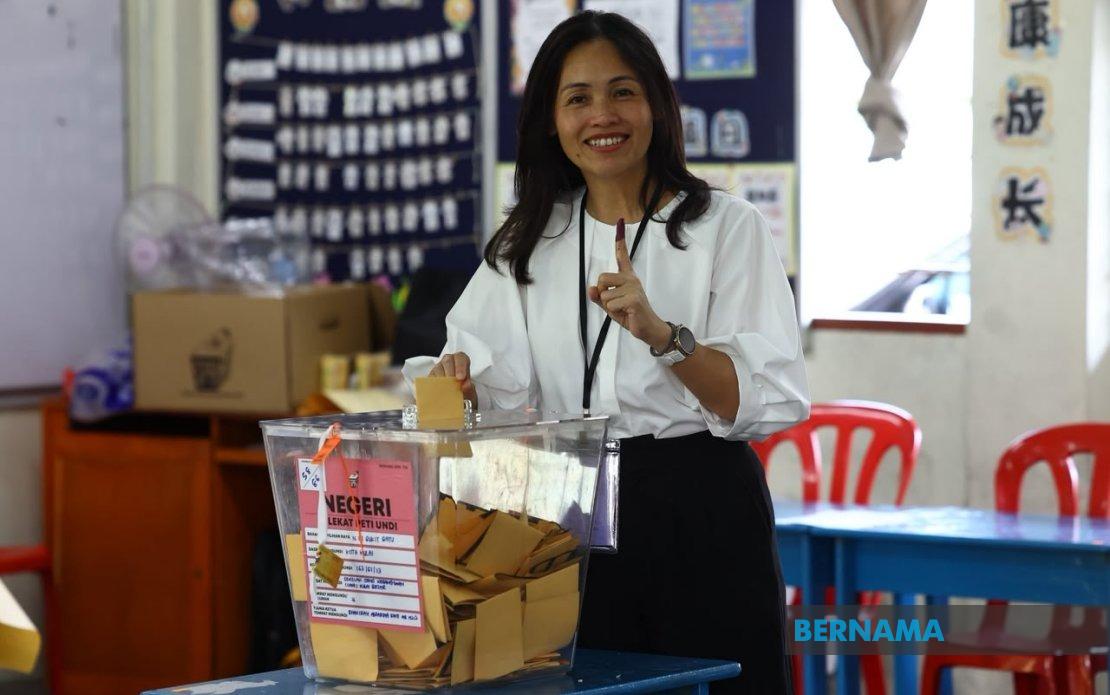
Teo, who also represents Kulai as a Member of Parliament, made her remarks after voting in the election at SJK (C) Kulai Besar. She seized the opportunity to address the broader challenge of digital misinformation in electoral contexts, emphasising that citizens must sharpen their ability to distinguish credible information from falsehoods circulating across social media platforms and messaging applications. Her intervention reflected growing official concern about the vulnerability of voters to coordinated disinformation campaigns during elections.
The Deputy Communications Minister called specifically on the electorate to adopt a more critical stance towards unverified claims and suspicious content encountered online. She stressed that citizens should resist the temptation to share or believe statements lacking proper sources or corroboration, particularly during periods when political temperature runs high and partisan actors have incentive to spread divisive narratives. Teo's message underscored the complementary roles of both regulators and individual digital users in combating information pollution.
Central to Teo's appeal was the concept of digital literacy as an essential democratic skill. She framed voter education not merely as understanding candidates and policy platforms, but as developing the judgment to navigate a complex information landscape where truth competes with fabrication in real time. By urging Malaysians to become "digitally literate netizens and voters," she articulated a vision of electoral participation that extends beyond the polling booth into the broader sphere of how citizens consume and evaluate political information in their daily digital interactions.
Teo also expressed gratitude to the personnel managing the election machinery on behalf of the Electoral Commission, acknowledging their contribution to maintaining order and procedural integrity throughout the polling process. Her recognition of election workers reflected the logistical complexity underlying democratic exercises at the state level, where thousands of officials coordinate across multiple constituencies to facilitate voting and counting activities.
The Johor state election itself represented a substantial undertaking, with 172 candidates competing for 56 seats in the State Legislative Assembly. Over 2.6 million registered voters across the state participated in determining the composition of the legislature, making it a consequential contest with implications for governance priorities, constituency representation and party control of the state government.
The election took place against a backdrop of escalating concerns across Southeast Asia about the manipulation of online spaces during critical political moments. Countries throughout the region have grappled with foreign and domestic actors deploying false narratives, deepfake videos, and coordinated inauthentic behaviour to influence electoral outcomes. Malaysia's regulatory response through the MCMC reflects efforts to establish guardrails around digital campaigning, though questions persist about enforcement capacity and the balance between preventing harmful speech and protecting legitimate expression.
The 29 complaints processed by MCMC during the Johor campaign phase provide a window into the nature of digital interference in Malaysian elections. While the absolute number appears modest relative to the scale of online activity occurring across the state, the categories of complaints—particularly those involving 3R content and organised scams—suggest targeted efforts to exploit electoral anxiety and social divisions. The relatively high proportion of complaints involving hate speech compared to fake news underscores how electoral campaigns can amplify existing intercommunal tensions and activate dormant animosities within plural societies.
Moving forward, the incident highlights the ongoing tension between digital freedom and electoral integrity in Malaysia. Regulators must develop increasingly sophisticated approaches to identifying coordinated disinformation while respecting the legitimate speech rights of candidates, parties, and voters engaged in robust political debate. Equally important is building public resilience against manipulation, through educational initiatives that help ordinary Malaysians develop the critical thinking skills necessary to evaluate claims in real time as elections unfold across digital platforms that reach populations far more extensively than traditional media channels.

