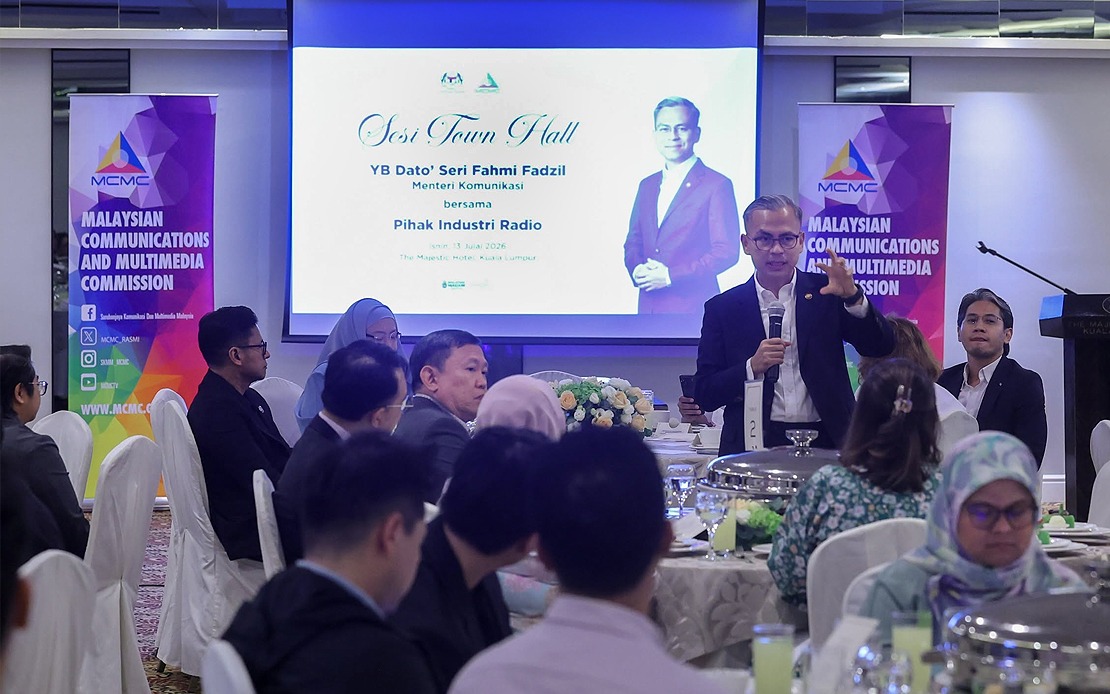
The Malaysian government has committed to a comprehensive examination of the radio broadcasting sector, with Communications Minister Datuk Seri Fahmi Fadzil announcing that the Malaysian Communications and Multimedia Commission (MCMC) will undertake a formal study of the National Broadcasting Policy. The initiative aims to fortify Malaysia's overall broadcasting infrastructure as the country navigates an increasingly complex media environment marked by rapid digitalisation and shifting listener preferences.
The policy review initiative represents a strategic alignment with broader government priorities, including the National Creative Industry Policy framework and the Orange Economy Council's development agenda. By embedding the radio sector assessment within these larger economic and creative initiatives, the government signals its recognition that broadcasting plays a crucial role in the nation's creative economy and cultural industries. This positioning reflects international trends where traditional media sectors are being repositioned as components of broader digital and creative economies rather than standalone utilities.
Fahmi outlined the collaborative approach adopted during recent town hall sessions with radio industry stakeholders and management representatives. These consultation forums proved instrumental in gathering direct feedback from practitioners about the operational realities and competitive pressures facing the sector. By engaging directly with industry players before formulating policy recommendations, the government demonstrates a consultative governance model that prioritises evidence-based policymaking informed by those with practical experience navigating the broadcasting landscape.
Several interconnected challenges emerged as focal points during these consultation sessions. The promotion of local music content surfaced as a priority concern, reflecting broader anxieties within the creative community about whether domestic talent receives adequate platform and promotional support through radio broadcasting. Simultaneously, participants raised questions about optimal licensing models that could sustain commercial viability while serving the public interest, a perennial tension in broadcasting regulation globally. The sustainability question extends beyond immediate profitability concerns to encompass broader industry resilience and the conditions necessary for long-term sector viability.
The digital transformation of media consumption has fundamentally altered radio's market position. While traditional over-the-air broadcasting remains significant across Southeast Asia, streaming platforms, podcasts, and on-demand audio services have fragmented listener audiences and challenged conventional revenue models. Malaysia's radio industry confronts these disruptions while competing with regional and global audio content providers. The MCMC review must therefore address how local radio can differentiate itself, leverage its community connections, and monetise content in ways that traditional licensing frameworks may not adequately contemplate.
Local music promotion through radio represents a strategic consideration with implications extending beyond the industry itself. Radio stations have historically functioned as crucial platforms for discovering and developing Malaysian artists, providing the exposure necessary to build fan bases and commercial viability. However, as advertising revenues decline and programming costs rise, some stations have increasingly relied on cheaper international content, potentially undermining support for homegrown talent. A policy framework that incentivises local content while maintaining commercial sustainability could strengthen Malaysia's music industry ecosystem and provide pathways for emerging artists.
The licensing model question touches on fundamental regulatory architecture. Current frameworks may impose constraints that prevent radio operators from exploring diverse revenue streams, collaborating with streaming platforms, or adapting business models to contemporary listener habits. The MCMC study may recommend reforms enabling greater operational flexibility while maintaining safeguards for content standards, ownership transparency, and public interest obligations. Such reforms could position Malaysian radio as an adaptable medium rather than a legacy industry fighting inevitable decline.
Minister Fahmi emphasised the government's commitment to maintaining radio's relevance and competitiveness as a medium accessible to broad population segments. This framing acknowledges radio's distinctive social role, particularly in reaching audiences during commutes, work hours, and in areas where internet penetration remains uneven. Radio's immediacy, localised programming capacity, and low barrier to access distinguish it from digital alternatives, attributes that policy frameworks should explicitly protect and leverage rather than inadvertently erode through outdated regulations.
The initiative reflects recognition that broadcasting policy cannot remain static in digital environments. Frameworks designed for an era of spectrum scarcity and limited channels must evolve to accommodate hybrid broadcasting models, convergence with digital platforms, and audience fragmentation across multiple channels. MCMC's involvement ensures that technical expertise, regulatory experience, and data analytics inform recommendations rather than nostalgic preferences for traditional broadcasting models. The commission's review will presumably examine international best practices from markets successfully navigating similar transitions.
For Malaysian radio operators, the MCMC review represents both opportunity and potential constraint. Progressive reforms reducing regulatory barriers and enabling business model innovation could unlock growth and competitiveness. Conversely, if recommendations impose additional obligations without corresponding flexibility, operators may face squeezed margins and reduced investment capacity. Industry players will likely advocate for balanced approaches maximising operational autonomy while addressing legitimate public interest concerns regarding content quality, ownership diversity, and service accessibility.
The broader Southeast Asian context adds significance to Malaysia's policy review. Radio remains economically important across the region, but each market confronts distinct challenges reflecting different regulatory legacies, audience demographics, and digital adoption patterns. Malaysia's approach may influence policy discussions in neighbouring countries facing analogous broadcasting sector challenges. If the MCMC review produces innovative solutions addressing licensing, localisation, and digital convergence, regional broadcasters may adopt similar frameworks, creating opportunities for policy harmonisation and regional industry collaboration.
The review process will determine whether Malaysia's radio industry enters the next decade as a thriving, diversified sector or a gradually diminishing medium. The outcome depends on policy recommendations balancing legitimate public interest objectives against industry sustainability imperatives. Success requires moving beyond reactive regulation toward proactive policy frameworks acknowledging radio's transformed media ecosystem while protecting attributes making the medium uniquely valuable within broader broadcasting landscapes.

