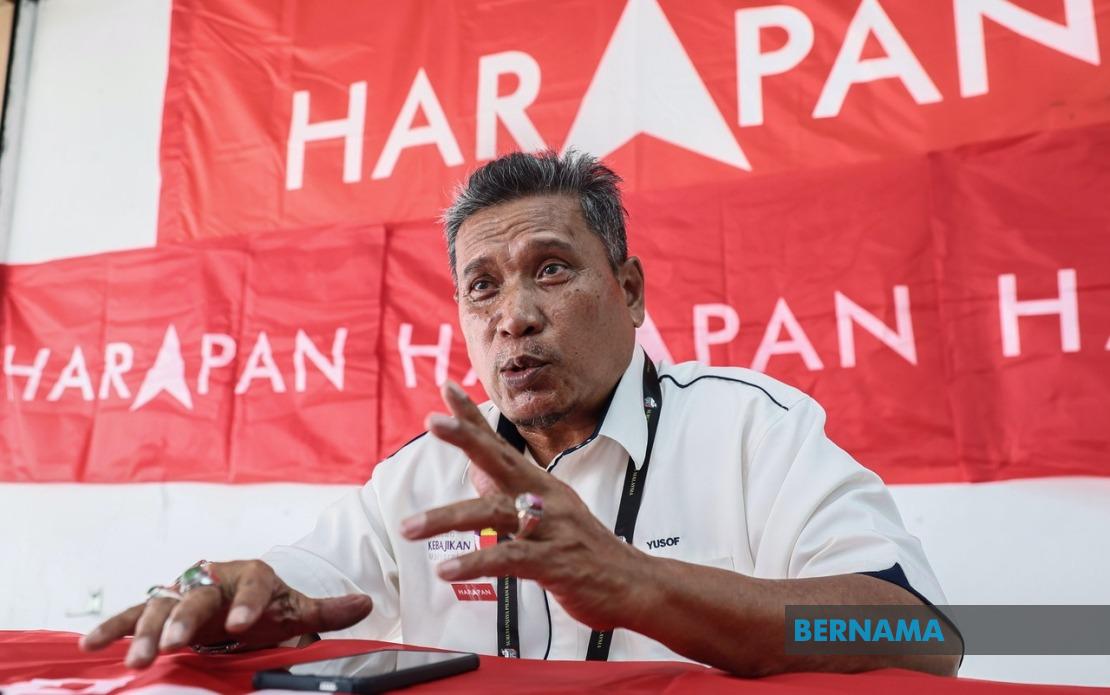
The Tenggaroh state seat race in the 16th Johor state election is shaping up as a test of rural development policies, with Pakatan Harapan candidate Md Yusof Dawam presenting a constituency-focused agenda that directly addresses the economic pressures facing Malaysia's Felda communities. The 64-year-old former educator is positioning his campaign around tangible solutions to long-standing structural challenges within the Federal Land Development Authority scheme, signalling a shift from broad promises to granular problem-solving in agricultural settlement areas.
Young people in the Tenggaroh Felda scheme are leaving for cities at a troubling rate, and Md Yusof argues that the root cause is readily identifiable: there is simply no housing pathway for the second generation. Unlike their parents, who were allocated land through the original Felda programme, the children of settlers face a crushing financial barrier to remaining in their birthplaces. Many continue living under their parents' roofs into adulthood, unable to afford independent housing in an era when agricultural incomes alone cannot support property ownership. This demographic exodus, if left unchecked, threatens the viability of family-run oil palm operations and the social cohesion of farming communities that have existed for decades.
Md Yusof's proposed solution centres on a disciplined, government-backed settlement scheme spanning 10 to 20 acres within Tenggaroh. By carving out designated land and applying modern urban planning principles, he argues, the state can create a secondary housing tier specifically designed for settler families. This is not merely about providing roofs and walls—it represents a deliberate strategy to keep generational wealth within farming families and prevent the fragmentation or sale of agricultural assets to outside investors. The proposal reflects understanding that retention of younger people depends on addressing their material circumstances, not simply appealing to sentiment about rural life.
Beyond housing, Md Yusof has identified the retail and commercial sector as another area where Tenggaroh has stagnated. The small shops and market facilities serving the 70-kilometre expanse between Tenggaroh and Mersing town have remained essentially frozen since the 1980s, offering little incentive for entrepreneurial young people to establish businesses locally. He plans to propose temporary land grants to encourage construction of modern, competitively designed commercial premises. The vision is to transform Tenggaroh into a functioning small town with contemporary retail infrastructure, keeping economic activity and consumer spending within the community rather than seeing residents drive to Mersing to satisfy everyday needs such as purchasing fresh keropok lekor.
The tourism dimension of Md Yusof's agenda exposes an anomaly in how regional economic benefits are distributed. Mersing's islands—Pulau Besar, Pulau Tinggi, and Pulau Aur—have become favoured filming locations for international production companies, yet local residents, particularly young people, have captured almost no economic gain from this activity. Foreign film crews arrive, spend money in their own supply chains, and depart. Md Yusof contends that with proper investment in locally-operated tourism and maritime transport enterprises, the Felda community could capture a meaningful slice of this emerging sector. His argument is that enabling young Tenggaroh residents to operate their own tourism ventures would create sustainable livelihoods and reduce out-migration pressure.
Md Yusof's campaign approach reflects his lengthy residence in the constituency and background in education. Rather than pursuing a high-visibility, media-centric strategy, he is conducting small-group meetings designed to foster genuine dialogue with residents and grasp the specific aspirations of different segments within Tenggaroh. His 16 years teaching in Felda Nitar have given him familiarity with the institutional culture of settler communities and the particular challenges families face. This emphasis on direct engagement and local knowledge stands in contrast to parachute candidacies and centrally-scripted campaign narratives.
The Tenggaroh contest occurs within a broader competitive field in the 16th Johor state election, where 172 candidates are competing for 56 seats. The scale of the contest underscores the intense focus on Johor as a political bellwether and the importance major coalitions place on retaining or capturing state influence. Polling is scheduled for July 11, with early voting for security personnel occurring beforehand. The outcome in constituencies like Tenggaroh will signal whether rural voters perceive meaningful policy differentiation between contenders, or whether traditional party allegiances remain dominant.
For Felda settler communities across Malaysia, the Tenggaroh campaign offers a microcosm of broader developmental challenges. Second-generation housing shortages are not unique to this particular scheme; they reflect systemic policy gaps affecting Felda areas nationwide. Similarly, the retail infrastructure decay and underutilisation of regional tourism assets are problems recognised in multiple locations. If Md Yusof's ideas gain traction among voters, they could become a template for other candidates seeking to address rural economic stagnation with concrete, implementable proposals rather than rhetorical flourishes. Conversely, if voters reward candidates offering alternative visions, the constituency outcome may suggest that Felda residents prioritise different policy directions or maintain stronger attachments to incumbent parties regardless of specific platform offerings.
Md Yusof's positioning as a long-term resident and educator brings credibility to his proposals, but effectiveness will ultimately depend on whether Pakatan Harapan—if victorious in sufficient seats to form government—translates campaign commitments into budgetary allocations and legislative action. The practicality of his housing and commercial schemes depends on state-level resources and federal coordination. The tourism initiatives require private-sector involvement and skills development infrastructure. His campaign thus functions simultaneously as a statement of local priorities and an implicit referendum on whether political coalitions can deliver tangible developmental outcomes in rural constituencies, or whether Felda areas will continue experiencing the combination of agricultural income pressure, youth migration, and infrastructure stagnation that has characterised recent decades.

