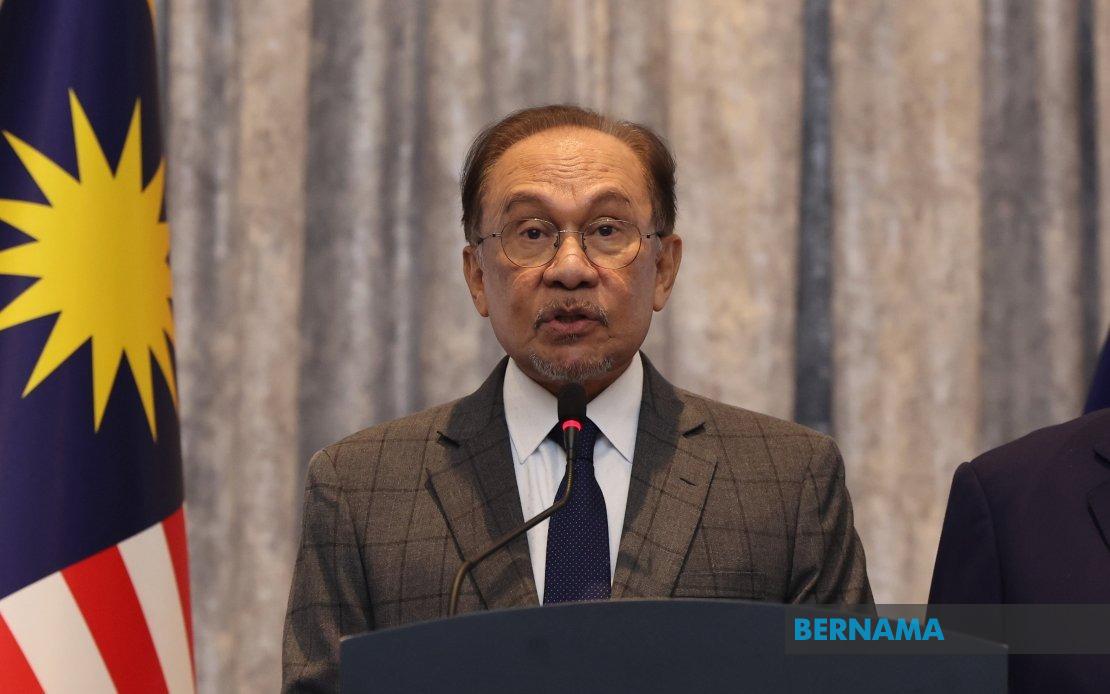
Prime Minister Datuk Seri Anwar Ibrahim has cautioned the Malaysian media industry against pursuing technological advancement at the expense of fundamental journalistic values and national identity. Speaking at the Malaysian Press Night 2025 and Malaysian Press Institute-PETRONAS Journalism Awards 2026 ceremony in Kuala Lumpur, Anwar emphasised that while progress in information technology, digital platforms, and artificial intelligence remains essential, these tools must be deployed within a framework that respects established ethical principles and cultural considerations.
The Prime Minister's intervention reflects growing international concerns about the intersection of media, technology, and cultural sovereignty. He articulated a nuanced position that neither rejects technological advancement nor permits its uncritical adoption. Instead, Anwar framed the challenge as one of selective modernisation—adopting innovations that enhance journalistic capability while maintaining the editorial and ethical standards that distinguish quality journalism from mere content generation. This approach resonates particularly in Southeast Asia, where countries balance development aspirations against concerns about external cultural influence and media dominance.
Anwar drew parallels with historical patterns of media control, noting that Western dominance of global media infrastructure historically enabled agenda-setting aligned with particular geopolitical interests. He signalled awareness that technological power now concentrates similar influence in fewer hands, with digital platforms and artificial intelligence systems capable of shaping information flows and public discourse across borders. This shift represents what some scholars term "techno-colonialism"—the use of technological infrastructure to advance ideological or cultural values that may conflict with local societies' preferences and identities.
Central to Anwar's argument is the concept of the "captive mind," traditionally understood as intellectual subjugation through political or colonial means. The Prime Minister reframed this concept for the digital age, suggesting that technological systems—through algorithmic curation, data-driven content distribution, and artificial intelligence applications—can produce similar effects of constrained thought and manufactured consensus without overt political coercion. This concern extends beyond Malaysia to the entire region, where growing digital literacy coexists with limited local capacity in advanced technology development and platform governance.
The government's role in this process, according to Anwar, involves supporting rather than controlling the media landscape. He indicated that Communications Minister Datuk Seri Fahmi Fadzil and the Malaysian Communications and Multimedia Commission (MCMC) would provide institutional backing for media innovation efforts. Simultaneously, Anwar stressed the importance of maintaining an inclusive national dialogue on these issues, explicitly stating that the country cannot afford divisions over technological and media policy. This language suggests recognition that poorly managed technology transitions risk fragmenting national consensus on fundamental questions about information reliability and cultural values.
Anwar extended particular recognition to the Malaysian Press Institute (MPI), supported by PETRONAS, and the Malaysian Media Council (MMC) for their contributions toward ensuring the media sector remains independent and responsive to technological change without losing institutional autonomy. These organisations serve as intermediaries between government and the media industry, capable of establishing standards and best practices that reflect both Malaysian and broader Southeast Asian contexts. The emphasis on institutional support rather than regulatory heavy-handedness suggests a preferred model of industry self-governance complemented by government partnership.
The Prime Minister's remarks implicitly acknowledge that Malaysian journalists face unprecedented pressures from multiple directions. Commercial pressures drive adoption of algorithms and data analytics that can distort editorial decision-making toward sensationalism or advertiser preferences. Simultaneously, misinformation and disinformation campaigns exploit technological platforms to undermine public trust in legitimate news sources. Foreign actors, whether state-sponsored or commercial, increasingly target Southeast Asian media ecosystems with sophisticated information warfare. Within this environment, maintaining journalistic integrity requires both individual professional commitment and institutional support structures.
Anwar's emphasis on columnists' responsibility to examine these issues signals recognition that elite opinion-formers can influence how the broader media industry addresses technological change. Op-ed writers and commentators, often trusted for interpretive rather than purely factual authority, possess influence over normative frameworks within which technological adoption occurs. By calling on columnists to engage seriously with questions of values, ethics, and technological governance, Anwar attempted to elevate these conversations beyond technical discussions confined to media managers and technology specialists.
The broader context for these remarks includes Malaysia's positioning as a developing Southeast Asian economy seeking technological competitiveness without sacrificing social cohesion or cultural distinctiveness. The country invests substantially in digital infrastructure and artificial intelligence research while maintaining constitutional provisions protecting Islam's special position and national unity. This dual agenda—technological modernisation and cultural continuity—creates inherent tensions that Anwar's framing attempts to resolve by insisting that progress and values need not conflict if pursued thoughtfully.
For Malaysian readers and regional observers, Anwar's intervention carries significance beyond immediate media policy. It represents an official acknowledgement that technological systems carry non-neutral implications for national sovereignty and cultural identity. Rather than treating technology as a neutral tool serving whatever purposes users assign it, the Prime Minister positioned technological governance as a legitimate policy domain requiring government attention, industry cooperation, and public discourse. This represents a departure from earlier assumptions that technology transcends politics or that market forces naturally optimise media outcomes.
The practical implications extend to specific questions about artificial intelligence regulation, data protection, digital platform accountability, and the relationship between technology companies and traditional news organisations. Malaysia, like other Southeast Asian nations, lacks comprehensive frameworks addressing these issues. Anwar's speech provided rhetorical support for developing such frameworks, though he avoided prescribing specific regulatory approaches that might appear to curtail media freedom or stifle innovation.
Looking forward, this emphasis on balanced technological adoption likely influences media industry strategies across Malaysia and potentially shapes regional approaches to digital media governance. News organisations may increasingly emphasise editorial standards and original reporting as differentiating factors against algorithmic content. Professional training programmes may incorporate greater attention to technological literacy and ethical implications of emerging tools. Meanwhile, policymakers receive signals that technology regulation need not imply press censorship if framed around protecting journalistic values rather than controlling content.

