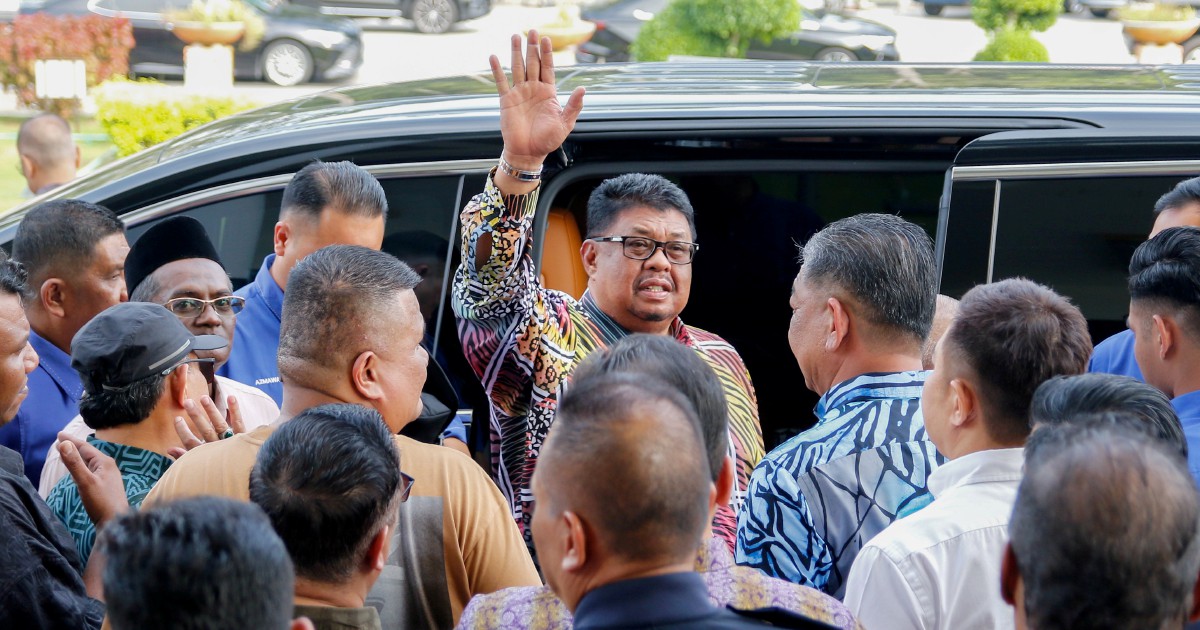
Melaka's Barisan Nasional leadership has characterised the coalition in strikingly romantic terms, portraying it as a highly coveted political entity attracting overtures from rival groupings as the state readies itself for electoral competition. Speaking at Ayer Keroh, Datuk Seri Ab Rauf Yusoh, who chairs the BN chapter in Melaka, employed the metaphor of a 'beautiful maiden' to illustrate how other coalitions and political formations are jockeying for partnership arrangements with BN in advance of the forthcoming state election. The comparison underscores the underlying dynamics of coalition politics in Malaysia, where legislative and electoral strength often hinges upon securing strategic alliances and garnering support from potential partners.
Ab Rauf's characterisation carries significant weight within Melaka's political landscape. The state has emerged as a crucial battleground for both incumbent and opposition forces, with multiple coalitions competing for influence and representation. By framing BN as an attractive partner, the coalition leadership signals confidence in its electoral prospects and political relevance, whilst simultaneously suggesting that rival groups recognise the coalition's value and wish to align with it. This positioning reflects the calculated messaging that major political blocs employ to project strength and desirability to both voters and potential coalition partners.
The timing of such remarks is particularly noteworthy given the cyclical nature of Malaysian state elections. Political coalitions typically intensify their courtship efforts as election dates approach, seeking to solidify partnerships that could prove decisive in securing legislative majorities. For BN, which has faced significant challenges to its political dominance in recent years across various states, the suggestion that other groups are actively pursuing cooperation represents an attempt to reshape narratives around the coalition's standing and future viability. The metaphorical language employed reflects broader patterns in Malaysian political discourse, where traditional and contemporary terminology often blend together.
Melaka holds particular strategic importance within Malaysia's federal structure. As a relatively compact state with a defined electoral geography, it presents opportunities for coalition partners to make tangible gains through focused campaigning and resource allocation. The state's political composition has shifted considerably over recent election cycles, reflecting broader national trends of voter volatility and coalition realignment. Understanding which groups are approaching BN for potential cooperation illuminates the evolving power dynamics within Malaysian politics and the relative positioning of different blocs.
The notion that multiple coalitions are seeking partnerships with BN suggests a fragmentation within the opposition spectrum, where no single alternative bloc commands sufficient confidence or resources to challenge the incumbent independently. This fragmentation has characterised Malaysian politics in the post-2018 era, with various coalitions rising, dissolving, and reforming according to shifting political calculations and leadership dynamics. For BN, this presents both opportunity and vulnerability. On one hand, the apparent eagerness of other groups to cooperate signals recognition of BN's continued organisational capabilities and electoral machinery. On the other hand, the necessity of courting such partnerships may indicate that BN cannot secure victory through its core support alone, a reality that contradicts the narrative of invulnerability that the coalition has historically cultivated.
The metaphorical language used by coalition leaders often serves multiple functions within Malaysian political communication. Beyond its surface meaning, Ab Rauf's description of Melaka BN as a 'beautiful maiden' suggests a deliberate attempt to position the coalition as desirable, sought-after, and ultimately in control of its own political destiny. This rhetorical approach aims to shape public perception of the coalition's strength whilst simultaneously signalling to potential partners that any cooperation must be conducted on terms favourable to BN. The traditional imagery inherent in the metaphor also carries cultural resonance within Malaysian society, making it an effective tool for communicating complex political relationships to diverse audiences.
For voters in Melaka, the substance behind such political positioning matters considerably. The question of which coalitions ultimately cooperate, and under what arrangements, will directly influence the policy priorities, resource allocation, and governance approaches that will characterise the state government following the election. Different coalition partnerships could yield markedly different outcomes for pressing issues such as economic development, education, healthcare, and infrastructure investment. Understanding the motivations behind these courtship efforts—whether they stem from genuine ideological alignment or purely transactional political calculation—provides voters with important context for evaluating their electoral choices.
The broader implications for Southeast Asian observers merit consideration as well. Malaysian coalition politics increasingly reflects patterns visible across the region, where traditional political structures have given way to more fluid, pragmatic arrangements driven by personality-centred leadership and electoral calculations. The manner in which Melaka's political blocs position themselves and negotiate partnerships offers insights into how democratic competition functions within Malaysia's federal system and how power is ultimately contested and distributed. The stakes surrounding state-level elections have grown considerably as national political dynamics become increasingly unstable and unpredictable, making control of state governments and their associated resources more valuable than in previous electoral cycles.
As the election campaign period progresses, the actual partnerships that materialise will ultimately matter far more than the rhetorical positioning offered by coalition leaders. The durability of any alliances formed between BN and other political groups will depend upon the incentive structures that bind them together and the degree to which they can deliver tangible benefits to their respective support bases. For Melaka's voters and for Malaysian politics more broadly, the competitive dynamics now unfolding in the state represent a critical juncture in determining not merely the composition of the state government, but the trajectory of coalition politics and democratic competition within the country during a period of considerable transition and realignment.

