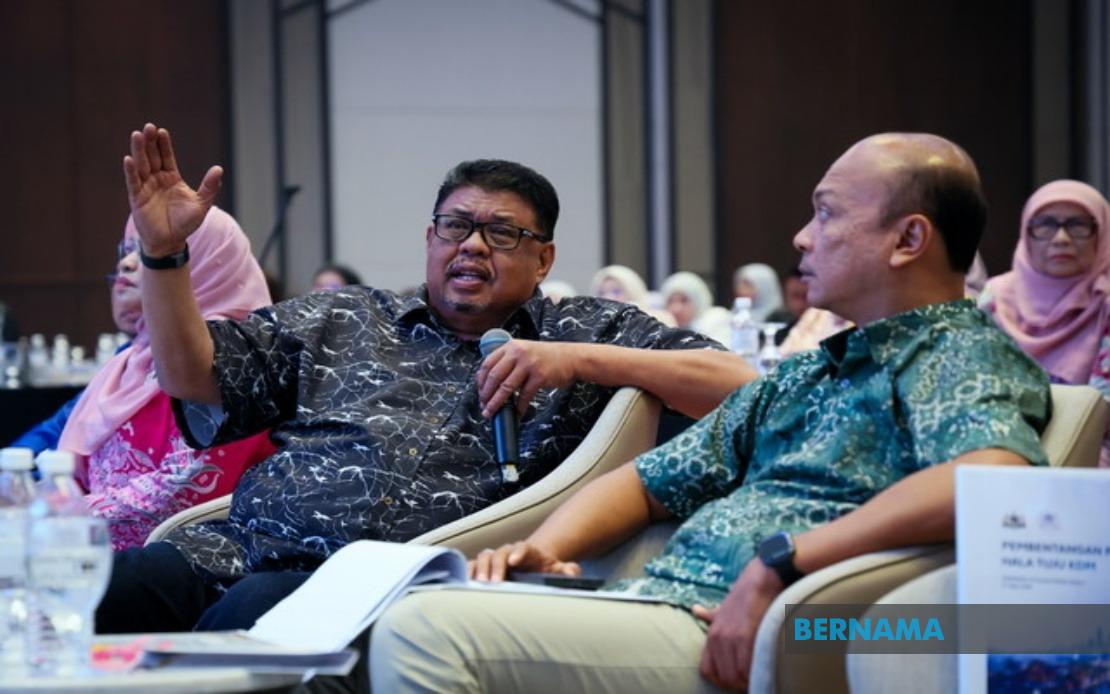
Melaka's Barisan Nasional leadership has drawn a firm line in the sand ahead of the state election, making clear that defending all 21 State Legislative Assembly seats currently held by the coalition is completely off the table for negotiation. Datuk Seri Ab Rauf Yusoh, who chairs both the Melaka BN machinery and serves as the state's Chief Minister, delivered this unambiguous message after attending an event in Alor Gajah, signalling that any potential political partner seeking to work with BN in the coming poll must accept this baseline condition without question.
The delineation of these 21 seats as a non-negotiable boundary represents a strategic positioning by BN as discussions with potential allies gather pace. Ab Rauf indicated that despite reports of imminent talks with senior PAS figures, any dialogue will proceed strictly within parameters that respect BN's current electoral foothold. This hardline stance reflects the coalition's confidence in its position and its determination to preserve the gains it secured in the 15th Melaka state election held in 2020, when it emerged as the clear victor despite heightened political competition and shifting voter sentiment across the state.
The Chief Minister acknowledged that delegations from PAS were expected to approach him for discussions during the week, but clarified that he welcomes such engagements provided they are rooted in reasonable propositions. However, he stressed that any commitments he might contemplate would require explicit approval from BN's Supreme Council, the coalition's highest decision-making body. This procedural caution underscores the political complexity surrounding coalition negotiations, where individual leaders cannot unilaterally bind their organisations to agreements without collective consent from party hierarchies.
Melaka's political landscape currently comprises 28 state assembly seats in total, distributed among three major political blocs following the 2020 election. Beyond BN's commanding 21-seat majority, Pakatan Harapan holds five seats while Perikatan Nasional occupies the remaining two, reflecting a fragmented opposition that has struggled to mount a unified challenge to the ruling coalition. This distribution provides BN with substantial breathing room, allowing the coalition to govern without dependency on external support, which in turn strengthens its negotiating hand with potential partners contemplating electoral cooperation.
Regarding the timing of the state election itself, Ab Rauf maintained an air of calculated ambiguity, suggesting that the dissolution of the state assembly and consequent poll could materialise "at any time" without pinpointing a specific date. The Chief Minister's coy reference to lacking "inspiration about the date" represents a familiar political deflection, yet carries genuine substance given Melaka's constitutional framework. The current state government's constitutional term expires on December 31, providing a firm deadline by which the election must occur, though technically it could be held at any point prior to that endpoint. This window of flexibility grants BN considerable tactical advantage in determining when campaign momentum will be optimal.
The election timing carries particular significance for regional politics beyond Melaka's borders, as it coincides with a period of substantial flux within Malaysia's coalition landscape. The potential for electoral surprises remains elevated across multiple states, and how Melaka's electorate votes will inevitably send ripples through calculations affecting national politics and other state assemblies. For Malaysian observers, Melaka has traditionally served as a bellwether of broader political trends, making its outcome particularly consequential for understanding voter sentiment and coalition dynamics heading toward any future federal elections.
The strategic emphasis on the 21 seats also reflects BN's institutional memory of recent electoral volatility. The coalition's dominance in Melaka, while substantial, cannot be taken as absolutely assured given the state's history of competitive contests and shifting coalitional arrangements over recent decades. By establishing the 21-seat defence as a precondition for negotiations, BN essentially communicates to potential partners that it seeks strengthening through additional allies rather than accommodation through seat-sharing compromises. This posture demands that any incoming partner must bring genuine value in terms of voter consolidation or geographic reach, rather than merely claiming a portion of BN's existing electoral terrain.
The role of PAS in these emerging negotiations warrants particular attention, given the party's complex relationship with BN and its history within Melaka politics. Should discussions between PAS and BN leadership prove substantive, such an arrangement could reshape the state's political configuration significantly. However, Ab Rauf's insistence on the Supreme Council's blessing for any arrangement suggests that BN's top echelon maintains centralised control over coalition arrangements, preventing ad hoc agreements that might contradict broader party strategy or create complications at the federal level where coalition dynamics operate differently.
The Melaka situation reflects broader patterns visible across Malaysian state politics, where coalitions continually recalibrate their positioning to optimise electoral performance while managing internal party interests. BN's firm stance on its 21 seats simultaneously sends conflicting signals: confidence in its position, yet also acknowledgement that coalition support enhances electoral security in an unpredictable environment. For regional analysts and Southeast Asian observers tracking Malaysia's political trajectories, the Melaka contest will provide important indicators regarding the stability of Malaysia's electoral coalitions and the enduring appeal of BN's brand among diverse voter segments.

