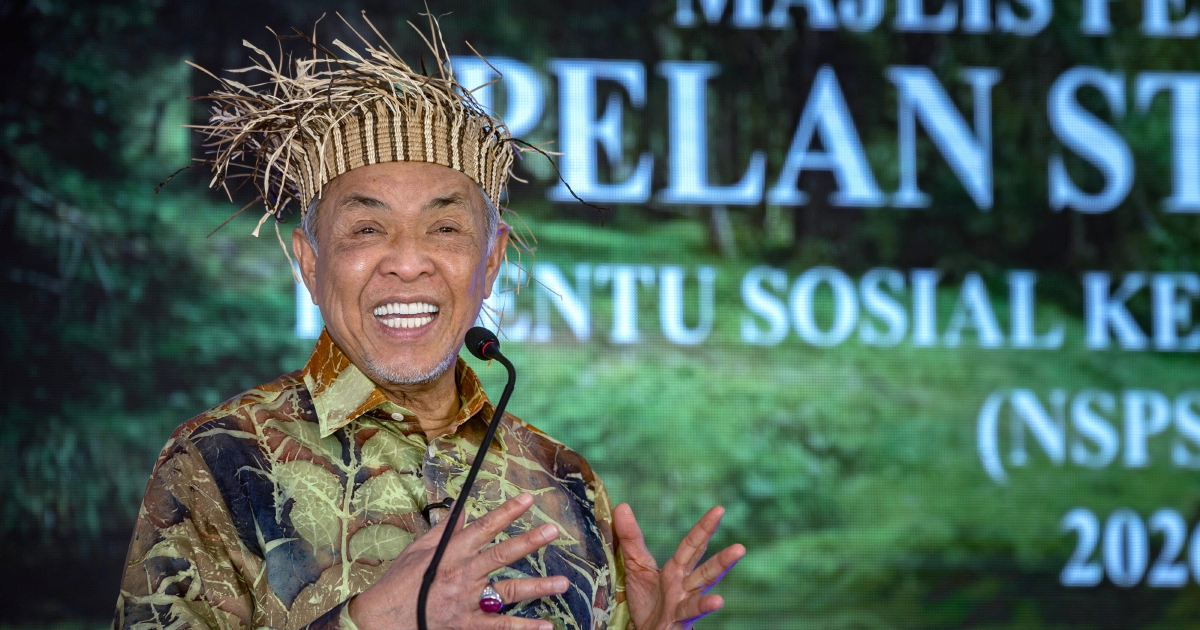
Melaka Chief Minister Datuk Seri Ab Rauf Yusoh has received full authority to negotiate cooperation arrangements with any political coalition ahead of the forthcoming Melaka state election, according to statements made in Gerik. This empowerment signals a significant shift in how the state's political leadership intends to approach the electoral contest, allowing its chief executive officer considerable flexibility in pursuing strategic alliances without requiring further authorization from party hierarchies.
The granting of this broad negotiating mandate represents a notable development in Malaysian state-level politics, where chief ministers typically operate within tighter constraints imposed by their respective party leaderships and coalition agreements. By delegating such expansive authority to Rauf, the relevant political stakeholders appear to be prioritizing electoral flexibility and pragmatic coalition-building over rigid ideological positioning. This approach reflects the evolving nature of Malaysian politics at the state level, where electoral mathematics often demand creative and fluid political arrangements.
Melaka has been a particularly volatile political arena in recent years, with multiple changes in state government reflecting deeper instability within the broader Malaysian political system. The state has experienced several transitions in leadership following shifts in coalition alignments and defections among state representatives. The decision to provide Rauf with comprehensive negotiating authority suggests that political parties are attempting to consolidate their position in the state by enabling more responsive and adaptive leadership at the ground level.
The timing of this authorization carries particular significance given the broader context of Malaysian politics, where both Peninsular Malaysia's federal government and various state administrations face recurring questions about coalition stability and voter preferences. Melaka, as a state with a relatively modest population but considerable political symbolism, often serves as a testing ground for new political strategies and coalition experiments. Success or failure in Melaka elections frequently influences political calculations at the national level, making the state's electoral outcomes disproportionately important.
For Malaysian voters and observers, this development suggests that pre-election negotiations in Melaka may become more complex and multifaceted than typical coalition arrangements. Rather than adhering to predetermined alliance formulas, political negotiations may now accommodate more localized considerations and demographic-specific appeals. This could potentially benefit certain constituencies that have felt marginalized by broader coalition agreements, though it may also introduce additional uncertainty into the electoral process.
The expansion of Rauf's negotiating authority also reflects confidence in his political acumen and relationship-building capabilities. As the sitting chief minister, his ability to engage constructively with multiple political actors while maintaining credibility and trust becomes paramount. Any agreements negotiated under this mandate will reflect not just party interests but also his personal political reputation and the relationships he has cultivated across different political circles.
Regional observers and political analysts will likely scrutinize how extensively Rauf exercises this negotiating mandate and which coalition partners he ultimately approaches. The nature of these negotiations—whether they remain broadly within existing Peninsular Malaysia political coalitions or venture toward entirely novel arrangements—will provide important signals about the direction of Malaysian politics more broadly. Coalition experimentation in one state often presages shifts in national political strategy.
For Southeast Asian context, Malaysia's ongoing political flux and state-level coalition experiments continue to demonstrate how federal systems can accommodate significant political volatility. Unlike some neighboring countries with more centralized political authority, Malaysia's state governments retain sufficient autonomy to pursue distinct political strategies. This decentralization has both stabilized the system by providing multiple venues for political competition and contributed to instability through inconsistent governance across state lines.
The election timeline and scheduling will determine how quickly Rauf utilizes his negotiating authority and how much time political actors have to finalize arrangements. Malaysian state elections typically involve several weeks of campaigning following official announcement of election dates. The window for productive coalition negotiations is therefore somewhat constrained, suggesting that preliminary discussions may already be occurring behind closed doors.
Stakeholders across the political spectrum will need to assess how cooperation agreements might affect their respective electoral prospects. For opposition parties, the opportunity to negotiate with a chief minister holding such broad authority potentially offers pathways to electoral influence they might not otherwise possess. For component parties within existing coalitions, the decision represents both opportunity and risk, as negotiations might strengthen the coalition or could result in unexpected realignments.
The success of this approach will ultimately be measured by electoral outcomes in Melaka and whether the coalition arrangements negotiated under Rauf's mandate prove sufficiently stable and cohesive to secure voter confidence. Should the elections produce clear results confirming the negotiated arrangements, this model may be replicated in future state contests. Conversely, electoral disappointment or coalition fractures during the campaign could discredit this approach to political organization.

