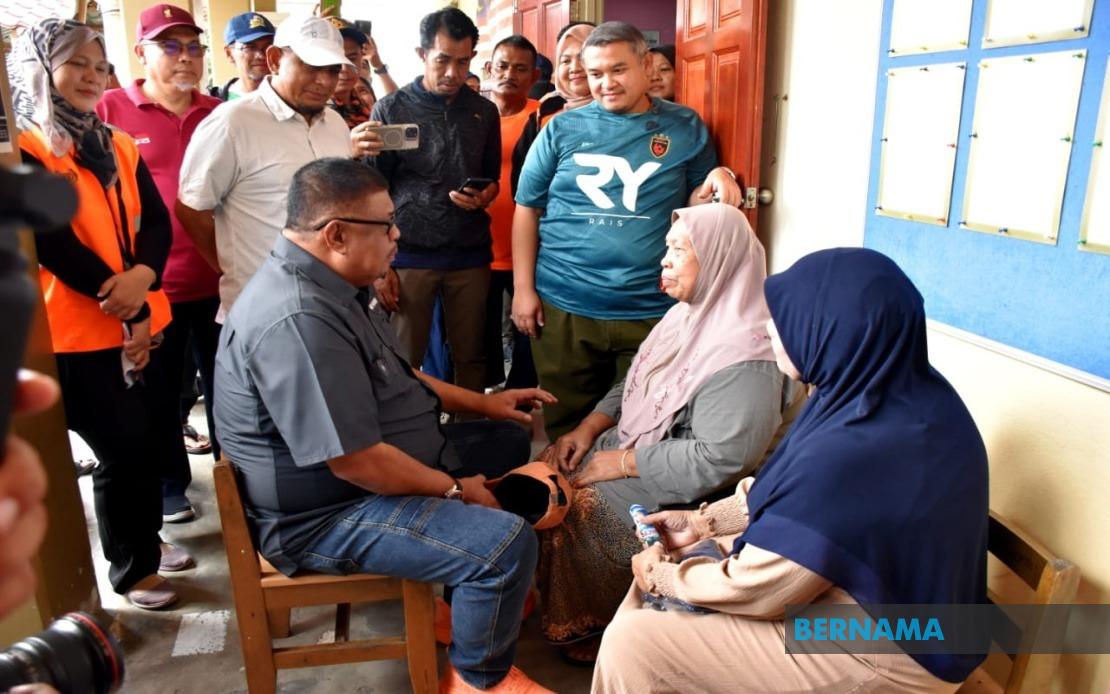
Melaka Chief Minister Datuk Seri Ab Rauf Yusoh has committed to finally addressing the persistent flooding crisis that has affected residents of Tanjung Minyak for more than three decades, following a recent deluge that forced over 900 people from roughly 300 households into temporary relief centres across the state. The pledge represents a significant moment for a community that has endured recurring water damage and displacement during heavy downpours, a cycle that has become almost routine for residents accustomed to seasonal disruptions and the attendant administrative challenges.
During a visit to evacuees sheltering at Sekolah Kebangsaan Tanjung Minyak 2 relief centre, the Chief Minister outlined the state government's intention to conduct a comprehensive review of all proposals and technical recommendations submitted by relevant agencies. This assessment process aims to identify sustainable, long-term interventions that move beyond the temporary measures and emergency responses that have characterised previous flood management efforts in the area. The announcement was accompanied by Melaka's top officials overseeing housing, local government, drainage infrastructure and disaster management, underlining the administration's intention to marshal multiple departments toward a unified solution.
The triggering event for this renewed commitment was exceptional rainfall that swept across Melaka Tengah and Alor Gajah districts, breaking weather records unseen in more than two decades. According to the state's Irrigation and Drainage Department director Mohd Adnan Ahmad Fauzi, cumulative precipitation exceeded 100 millimetres in both districts by 2.30 pm, surpassing even the rainfall recorded during Tropical Storm Senyar late in the previous year. Such intensity overwhelmed the area's existing water retention and drainage infrastructure, causing systems designed to manage normal precipitation levels to overflow directly into residential neighbourhoods and displacing families with minimal warning.
The Chief Minister attributed the flooding specifically to a confluence of factors: the exceptional nature of the rainfall, its volume exceeding design specifications for drainage systems, and the subsequent overflow from water retention facilities into populated areas. This technical analysis reveals a critical mismatch between infrastructure capacity and actual weather events, a problem increasingly relevant across Southeast Asia as climate patterns shift and extreme weather becomes more frequent. The state government's acknowledgement of this gap suggests recognition that piecemeal repairs and maintenance alone cannot resolve what has become a structural inadequacy.
The scale of displacement underscores the urgency of the situation. With more than 900 evacuees requiring temporary accommodation across multiple relief centres statewide, the logistics of managing such numbers represent a substantial burden on state resources. The Chief Minister committed to prioritising the welfare of affected residents until conditions normalise, with coordination flowing through the District Office and the state government channelling immediate assistance to families suddenly dispossessed of their homes and belongings. This emergency response capability, while essential, also highlights how consistently reactive the system has been rather than proactive in preventing such displacement.
The involvement of state senior officials including Datuk Rais Yasin, who chairs the committee overseeing housing, local government, drainage and disaster management, and Melaka Social Welfare Department director Halyjah Muhamad, indicates that the government intends to approach the problem across multiple domains simultaneously. Housing solutions, drainage infrastructure, local government coordination, and welfare support must all converge if the chronic problem is to be genuinely resolved rather than merely managed during each crisis cycle. The participation of these figures suggests that political will exists at the administrative apex to sustain attention on this issue beyond the immediate emergency phase.
For residents of Tanjung Minyak and observers across Malaysia concerned with infrastructure resilience, the pledged review process carries both promise and uncertainty. The commitment to examine agency recommendations is positive, yet the specifics of what solutions will emerge remain undetermined. Will the state invest in expanding and upgrading drainage capacity? Might relocation of the most vulnerable residents be considered? Could land-use planning be revised to reduce population density in flood-prone zones? The breadth of possible interventions means that the coming months of assessment will be critical in determining whether this represents a genuine turning point or merely another temporary political response to a cyclical crisis.
The Chief Minister's statement that all relevant agencies have been placed on high alert for fastest response to future flood victims indicates an immediate operational focus on improving emergency management procedures. Faster response times and better-coordinated aid distribution can certainly reduce suffering during floods, yet such measures address symptoms rather than underlying causes. True resolution requires infrastructure investment and possibly difficult decisions about urban planning that extend beyond emergency management protocols. The test of whether this administration's commitment proves substantive will come as the review process advances into detailed planning and implementation phases.
For the broader Southeast Asian context, Tanjung Minyak's three-decade struggle exemplifies challenges faced by numerous communities across the region where rapid urbanisation, aging infrastructure, and changing rainfall patterns collide. Malaysia's experience with chronic flooding in specific localities offers lessons applicable elsewhere: that emergency response systems, while necessary, cannot substitute for planned infrastructure upgrades; that political attention tends to intensify immediately after disasters but often wanes; and that sustainable solutions require sustained investment and commitment extending across multiple electoral cycles. The Chief Minister's pledge will be measured not by the words spoken during the crisis response phase, but by the concrete investments and policy changes implemented in the months and years ahead.

