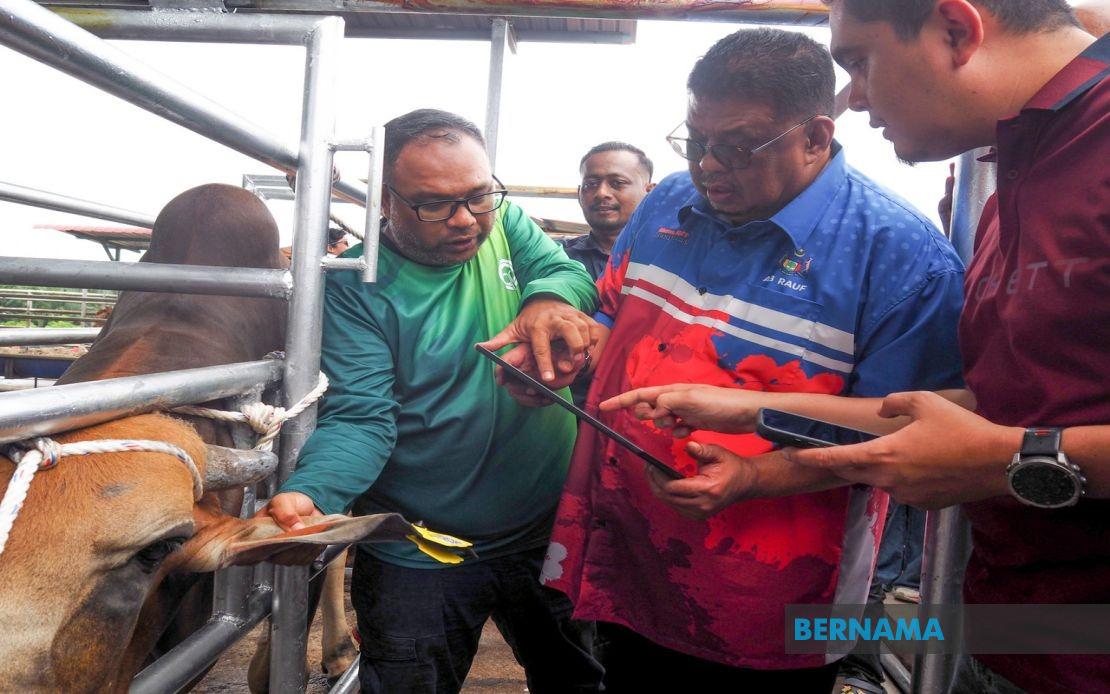
Melaka's state government has taken a significant step toward modernising its livestock management through the introduction of a QR Tag system, positioning the state as an early adopter of digital solutions in agricultural administration across Malaysia. This initiative reflects a growing recognition that traditional methods of livestock identification have become inadequate in addressing contemporary challenges, particularly the rising incidence of stray animals causing public safety concerns.
The project emerged from Chief Minister Datuk Seri Ab Rauf Yusoh's vision for digitalisation and represents a collaborative effort between the Melaka Chief Minister Department's Local Government Unit and the state's Veterinary Services Department. Mahathir Mustafa, chief assistant secretary of the Local Government Unit, explained that the system transcends basic identification by creating a comprehensive digital ecosystem that enables rapid owner verification and systematic farm management across Melaka's livestock sector.
Each animal registered under the programme receives a physical tag embedded with a QR code and unique identification number, allowing authorities and other stakeholders to access critical farming information instantly through smartphone scanning. This technological approach addresses a persistent problem in agricultural enforcement: the difficulty in swiftly identifying livestock owners when incidents occur. By eliminating the need for manual record searches, the system dramatically accelerates the response process during emergencies or when stray animals pose threats to public safety.
The scale of Melaka's livestock challenge underscores why this intervention became necessary. Since 2023, the state has recorded 835 accidents involving livestock and fielded more than 50 complaints regarding stray animals, demonstrating a tangible impact on road safety and community wellbeing. These statistics reveal that the problem extends beyond mere inconvenience, representing genuine public health and safety concerns that demand systematic solutions rather than ad hoc responses from local authorities.
Initial implementation has been encouraging, with approximately 2,000 animals already fitted with tags as of early June 2024. The state government has set an ambitious target to eventually encompass Melaka's entire registered cattle and buffalo population, estimated at over 32,000 head. This phased approach allows for refinement and troubleshooting while building momentum among the farming community, many of whom have expressed support for a system that protects their commercial interests and elevates the livestock industry's professional standing.
The QR tag serves as permanent livestock identification, remaining fixed throughout the animal's lifetime regardless of ownership changes. This permanence contrasts favourably with alternative systems that require renewal or updating, creating a seamless audit trail for disease control, movement monitoring, and enforcement purposes. When animals change hands, only the ownership information in the eVetPermit Malaysia system requires updating, ensuring regulatory records remain current without necessitating new tags or administrative burdens on farmers.
Financial incentives have proven instrumental in encouraging early adoption. The state government is absorbing the entire installation cost of RM6.50 per tag through the end of 2024, requiring farmers only to register their livestock with the state Veterinary Services Department to receive tags at no cost. This subsidy strategy recognises the financial constraints many breeders face and removes financial barriers to participation during the critical launch phase. Once the introductory period concludes, costs will transfer to breeders at RM5 per head starting in 2027, still a modest investment given the regulatory compliance and safety benefits.
Beyond ownership identification, the system strengthens disease surveillance and agricultural enforcement mechanisms. Authorities can now track livestock movement patterns, implement targeted disease control measures, and respond swiftly to welfare concerns. The ability to identify stray livestock owners directly transforms enforcement from reactive complaint management to proactive responsibility creation, encouraging breeders to maintain proper containment and care standards. This shift in accountability dynamics addresses root causes rather than merely managing symptoms of poor livestock stewardship.
The initiative reflects broader regional trends toward agricultural digitalisation, particularly relevant for Malaysian policymakers considering similar interventions. Countries throughout Southeast Asia face comparable challenges with livestock management, disease tracking, and the intersection of agricultural interests with public safety. Melaka's approach provides a testable model that other Malaysian states and regional neighbours might adapt or scale, demonstrating that digital solutions can address traditional farming challenges without requiring wholesale transformation of existing practices.
Close coordination between the Local Government Unit, Veterinary Services Department, and municipal authorities proves essential to implementation success. This interagency collaboration addresses the reality that livestock management intersects multiple government functions—agricultural development, public health, road safety, and local enforcement. The willingness of these departments to subordinate institutional boundaries to shared objectives suggests a maturing approach to public sector problem-solving in Malaysian governance.
From a broader developmental perspective, this system exemplifies how technology can enhance regulatory effectiveness and farmer compliance without imposing excessive burdens. The smartphone-based scanning mechanism ensures accessibility even in rural areas with limited infrastructure, and the tag format requires no specialised equipment for authorities to extract essential information. This pragmatic approach to technological adoption contrasts with more complex systems that sometimes fail due to implementation barriers or insufficient training support.
The positive reception from the farming community indicates that stakeholders increasingly recognise shared interests in systematic management practices. Breeders understand that a transparent, digitised system ultimately protects their livelihoods by establishing clear accountability standards across the sector and reducing conflicts between agricultural and residential communities. This convergence of interests between government agencies and farmers creates favourable conditions for sustained programme expansion and potential refinement based on operational experience.
As Melaka progresses toward comprehensive livestock tagging, lessons learned will likely influence policy discussions elsewhere in Malaysia. The system's success in reducing stray livestock incidents, improving disease response times, and strengthening owner accountability will provide empirical evidence supporting broader agricultural digitalisation efforts. For Malaysian policymakers evaluating how to modernise livestock administration while respecting existing farming practices, Melaka's methodical implementation offers valuable insights into feasible pathways toward more effective, transparent agricultural governance.

