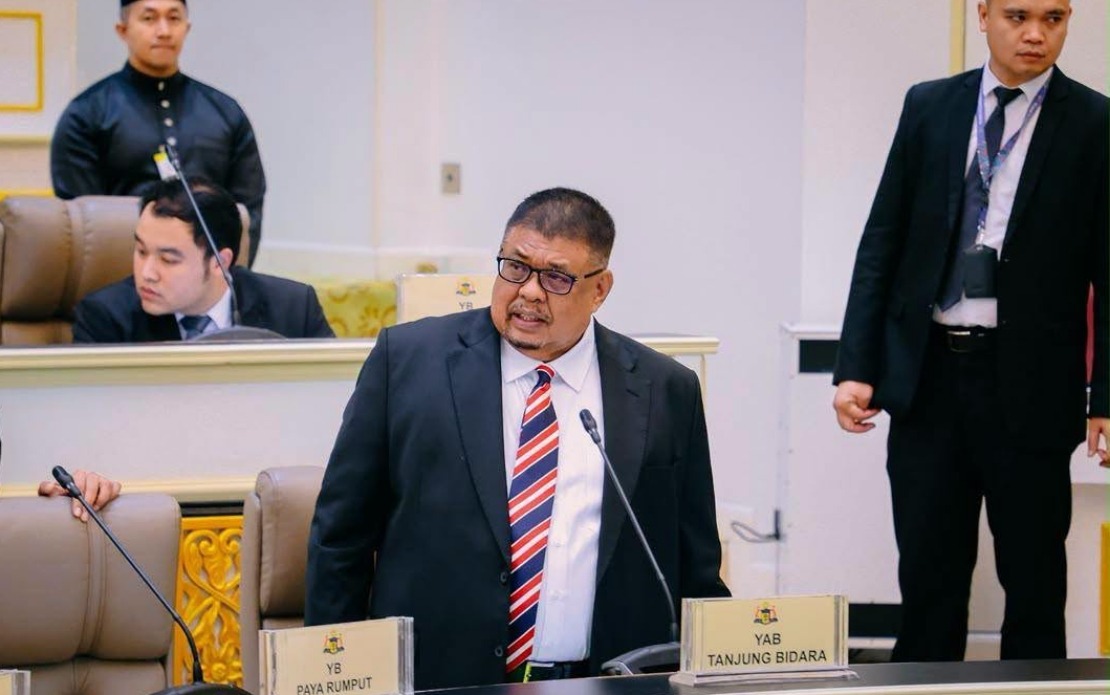
The Melaka state government will maintain normal operations despite the departure of the Democratic Action Party from the ruling coalition, Chief Minister Datuk Seri Ab Rauf Yusoh announced on July 15, addressing mounting concerns about administrative continuity. Speaking at the Seri Negeri Complex in Ayer Keroh, the CM sought to calm fears among the public, civil service, business community, and investors by emphasising that governmental functions, development initiatives, and service delivery would remain unaffected by the political realignment.
The departure follows a contentious sequence of events in which the Melaka State Legislative Assembly approved an amendment to the state constitution permitting the appointment of assemblymen by the executive. In immediate response, four DAP representatives—Allex Seah Shoo Chin from Kesidang, Low Chee Leong from Kota Laksamana, Leng Chau Yen from Banda Hilir, and Kerk Chee Yee from Ayer Keroh—tendered their resignations, effectively dismantling the collaborative arrangement that had underpinned the coalition's governance of the peninsula's southernmost state.
The timing and method of the DAP's exit left little room for diplomatic manoeuvre. Ab Rauf noted that the party's decision became final upon submission of resignation letters immediately following a press conference, eliminating the possibility of further negotiation. This assertion appeared to address Prime Minister Datuk Seri Anwar Ibrahim's public call for dialogue to reconsider the withdrawal, a proposal that had reached the leadership after the resignations were already formalised. The CM's statement suggested that the window for last-minute reconciliation had definitively closed.
In demonstrating his administration's commitment to pragmatic governance, Ab Rauf indicated that the four vacant executive council positions would remain unfilled for the present, with current administrative members assuming the additional responsibilities temporarily. This approach allows the government to maintain decision-making capacity whilst sidestepping the political complications that would accompany appointing replacement exco members. The strategy reflects an understanding that hasty appointments could reignite tensions or invite further accusations of constitutional manoeuvring.
The Chief Minister's remarks extended gratitude to the departing DAP representatives for their collaborative efforts during the period of joint administration. This acknowledgment served a dual purpose: it appeared to close a chapter without acrimony whilst simultaneously signalling that the government harbour no animosity toward the party or its officials. Such measured language carries significance in Malaysian political culture, where maintaining personal and institutional relationships remains important even after coalitions fracture.
Ab Rauf explicitly rejected the notion that the coalition's dissolution should transform political partners into adversaries, articulating a vision wherein former allies might continue supporting state interests through parallel rather than integrated efforts. This framing reflects broader anxieties about polarisation within Malaysian federalism, where state-level realignments can trigger destabilising ripple effects at federal and national levels. By emphasising shared commitment to Melaka's development, the CM attempted to establish a floor beneath which political conflict would not descend.
The administration's determination to maintain productive relations with the federal government constitutes another pillar of the transition strategy. Federal support remains crucial for funding, coordination of policies affecting both tiers of government, and political legitimacy in Kuala Lumpur. By explicitly pledging to preserve this relationship, Ab Rauf signalled that the state government's political transition would not translate into confrontational federalism or attempts to challenge national leadership.
The constitutional amendment that triggered the crisis merits deeper contextualisation for Malaysian observers. The provision enabling appointment of assemblymen represents a departure from conventional electoral democracy, introducing an element of executive discretion into legislative composition. For the DAP, whose political identity emphasises democratic participation and accountability through popular suffrage, such a mechanism constituted a fundamental threat to principles central to the party's ideology. The walkout, therefore, reflected not merely tactical political calculation but a defence of foundational commitments regarding representative government.
The implications for other Malaysian states experiencing coalition governance warrant consideration. The Melaka episode demonstrates the fragility of multiparty administrations when constitutional innovations occur without consensus amongst coalition partners. The experience may prompt coalitions elsewhere to establish clearer protocols governing constitutional amendments or institutional changes, recognising that unilateral moves risk destabilising the collaborative arrangements upon which they depend. For governance experts and political analysts, the Melaka situation exemplifies the tensions between executive efficacy and coalition management in Malaysia's complex federal system.
For investors and business interests in Melaka, the CM's assurances address legitimate concerns about administrative capacity and political stability affecting commercial confidence. Continuity in service delivery, regulatory consistency, and development project implementation all depend on functional governance capacity. The commitment to maintain operations without disruption, whilst leaving exco vacancies unfilled rather than conducting divisive appointment processes, represents a pragmatic balancing of these considerations against political imperatives.
The longer-term question concerns whether the coalition can stabilise in its new configuration or whether the departure signals the beginning of further fragmentation. The DAP's exit leaves the government dependent on consolidated support from remaining coalition partners and independents. This reduced margin might influence future policymaking, potentially constraining legislative ambitions or requiring extensive consensus-building. The CM's emphasis on systematic and orderly governance implicitly acknowledges that success in this new environment demands heightened cooperation and transparent communication with remaining allies.
As Melaka navigates this transition, observers across Southeast Asia with experience of multi-party coalitions will monitor the outcome closely. The state's ability to maintain administrative effectiveness and public confidence whilst managing reduced coalition strength may offer lessons applicable beyond Malaysia's borders, particularly for other democracies balancing coalition stability against principled positions on constitutional governance.

