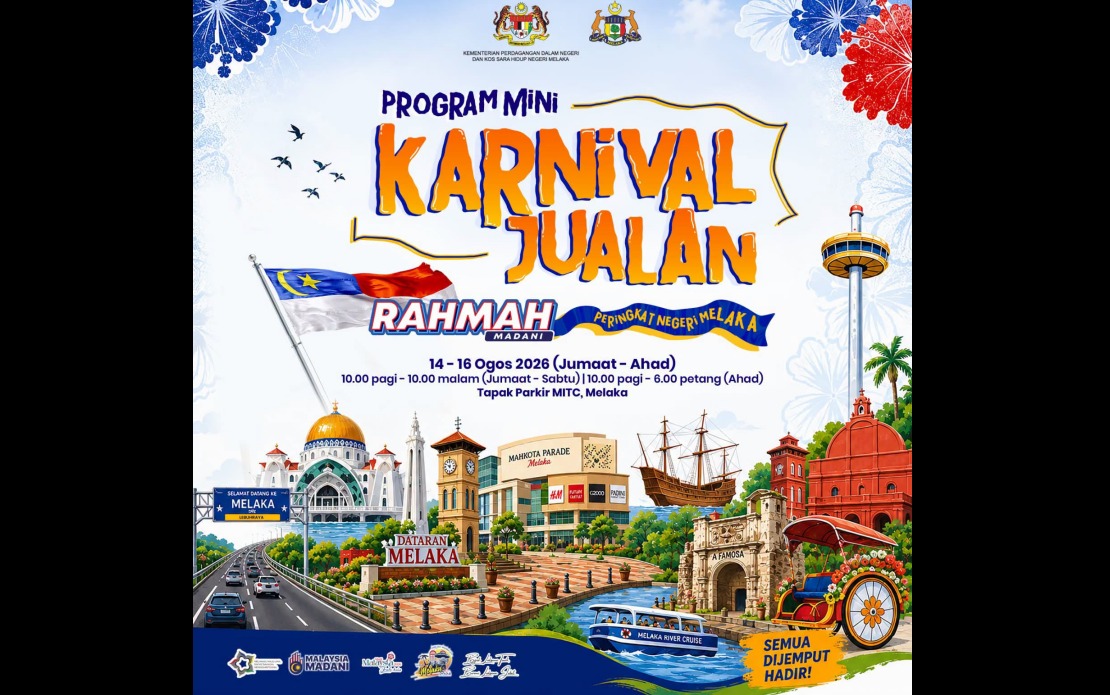
The Melaka Domestic Trade and Cost of Living Ministry (KPDN) is preparing for a significant community engagement exercise beginning tomorrow, with organisers projecting attendance exceeding 10,000 people across the three-day Mini Carnival at the Melaka International Trade Centre. The event underscores a broader strategy by the ministry to make its services and programmes more accessible to ordinary Malaysians through an approach centred on interactivity and public convenience.
Deputy Minister Senator Datuk Dr. Fuziah Salleh framed the carnival as a departure from traditional government outreach methods, emphasising the organisation's commitment to presenting its work in a relaxed and community-oriented manner. This positioning reflects growing recognition within government circles that public engagement around cost-of-living concerns requires a more dynamic platform than conventional press releases or formal announcements. By hosting a large-scale carnival rather than a regulatory-focused seminar, the ministry signals responsiveness to public anxiety about household expenses.
The centrepiece of the carnival is the MADANI Rahmah Sales Programme, a government subsidy scheme designed to keep essential goods affordable for lower-income households. At the event, members of the public will have direct access to discounted necessities, transforming what might otherwise remain an abstract policy into tangible purchasing power. Dr. Fuziah highlighted that the carnival provides an opportunity for visitors to both learn about KPDN initiatives and immediately benefit from them, collapsing the usual distance between programme announcement and public realisation.
Beyond price subsidies, the carnival reflects the ministry's broader mission encompassing consumer protection, price regulation, and law enforcement against unfair market practices. Exhibition booths will educate visitors about their rights as consumers and the mechanisms through which KPDN monitors markets to prevent exploitation. Business matching sessions indicate the ministry is also targeting small and medium enterprises, creating networking opportunities that could support compliance efforts and voluntary cooperation with regulatory standards.
The entertainment and recreation components reveal sophisticated event design aimed at multigenerational appeal. An esports tournament in partnership with Todak will engage younger demographics increasingly interested in digital competitions, while Menu Rahmah food truck sales, antique car exhibitions, and children's colouring competitions cater to families and older community members. This diversified programming acknowledges that public policy messaging is most effective when embedded within enjoyable social experiences rather than presented as isolated information.
Stage performances and family-oriented activities throughout the carnival serve dual purposes: they generate the festive atmosphere necessary to attract large crowds, and they provide informal settings for conversations between ministry representatives and the public. Such interactions often prove more valuable than formal surveys for understanding community concerns and grievances related to living costs. The carnival thus functions simultaneously as a marketing exercise for government programmes and a feedback mechanism for policy refinement.
The three-day schedule, running from 10 am to 10 pm on Friday and Saturday, then 10 am to 6 pm on Sunday, accommodates working Malaysians and families with typical weekend patterns. This timing demonstrates practical consideration for attendance, as does the choice of MITC as a venue with established capacity for handling large gatherings. Such logistical attention to accessibility reinforces the ministry's messaging about responsiveness to public needs.
For Melaka residents grappling with inflation and stagnant wages, the carnival represents a rare opportunity to access subsidised goods in bulk and directly interact with government officials responsible for consumer affairs. The concentration of multiple ministry initiatives in one location reduces friction that typically accompanies navigation of government services scattered across different offices and time slots. This efficiency consideration particularly benefits lower-income families with limited transport resources or time flexibility.
The carnival also reflects KPDN's evolving communication strategy across Malaysia, with regional events becoming more common as the ministry attempts to demonstrate that cost-of-living concerns receive serious institutional attention. By staging such events in multiple states, the ministry builds a narrative of active engagement with rising prices and household budgeting pressures. For Southeast Asian observers watching Malaysia's approach to inflation management, these grassroots initiatives complement monetary and fiscal policy responses, suggesting a government aware that consumer confidence requires both technical interventions and visible advocacy at the community level.
Dr. Fuziah's explicit welcome to local residents and the general public signals confidence that the ministry's offerings will generate genuine interest rather than requiring coercion or artificial incentives to attract crowds. The scale of expected attendance, if realised, will demonstrate whether Malaysians perceive real value in government subsidy programmes and consumer protection outreach. Success at this Melaka carnival could establish a template for replication elsewhere, while low turnout would prompt institutional reflection on whether current policy responses adequately address public concerns about living costs.

