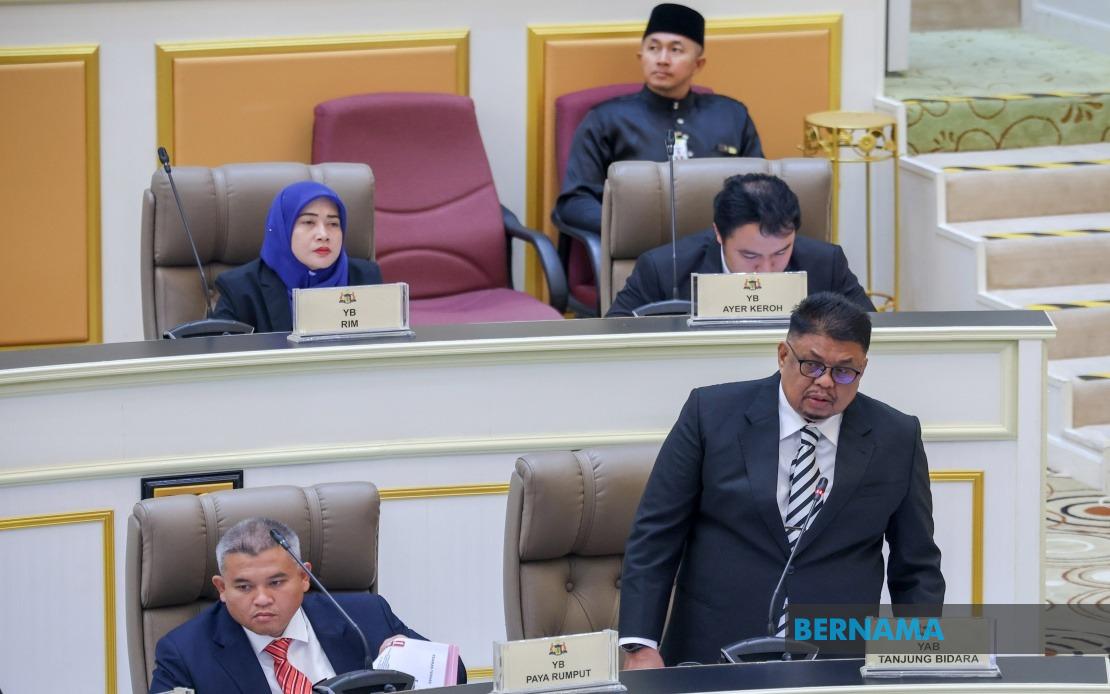
The Melaka State Legislative Assembly has taken a significant step toward broadening representation within its chambers by endorsing a constitutional amendment that would permit the appointment of nominated state assemblymen. Passed on July 14 with support from 23 of the chamber's members, the Melaka State Constitution (Amendment) Bill 2026 marks a departure from purely electoral selection of legislators and introduces a hybrid model of legislative composition. The initiative carries particular significance for Malaysian federalism, as it reflects growing interest among state governments in incorporating appointed representatives alongside those elected through the ballot box.
Chief Minister Datuk Seri Ab Rauf Yusoh, who championed the amendment, framed the reform as a mechanism to enhance the technical quality and breadth of expertise available to policymakers. According to his presentation to the assembly, the proposed change would create pathways for individuals possessing specialist knowledge in domains including law, economics, education, investment, technology and state development to participate directly in legislative proceedings. This rationale aligns with arguments advanced in other jurisdictions that appointed chambers or members can provide continuity, specialisation and insulation from short-term electoral pressures that might otherwise constrain longer-term strategic thinking.
The amendment specifically targets what state leadership identifies as underrepresentation within the current electoral system. By introducing nominated positions, Melaka's government suggests it can facilitate greater participation from women, young people, indigenous Orang Asli communities, ethnic minorities, and industry and professional representatives who face barriers to electoral success but possess valuable expertise. This approach mirrors mechanisms employed at the federal level, where the Dewan Negara includes appointed members drawn from various constituencies and backgrounds. The opposition, represented by Dr Mohd Yadzil Yaakub, acknowledged this parallel and indicated willingness to support the amendment provided implementation emphasises transparency and prioritises public interest over partisan advantage.
The proposed provision for up to seven nominated assemblymen would expand Melaka's current 36-member assembly, potentially creating a chamber of 43 members at full complement. This expansion must be viewed within the context of contemporary debates over legislative efficiency and representational legitimacy. While proponents argue that appointed experts strengthen deliberative capacity and oversight of the executive, critics in other jurisdictions have cautioned that nominated seats risk creating accountability gaps and weakening the representative character of legislatures.
The amendment represents a fulfilment of commitments made during the 2021 Melaka state election by Barisan Nasional, which campaigned under a platform emphasising political stability and mature democratic practices. That this promise has been realised more than three years later suggests sustained commitment across multiple electoral cycles, though the intervening period has also permitted civil society and legislative caucuses to articulate concerns and preferences regarding implementation frameworks.
The voting pattern during passage—with five assemblymen opposing the measure—indicates that not all legislators embraced the reform unanimously. Opposition members, while broadly supportive of the concept, appear to have sought assurances regarding selection criteria, transparency mechanisms and the prevention of partisan manipulation. These concerns reflect international experience with appointed legislative bodies, where the legitimacy of such institutions depends heavily on publicly visible, merit-based selection processes insulated from executive patronage.
The mechanism through which nominees would be selected remains largely undetermined at this juncture. Chief Minister Ab Rauf's emphasis on strengthening checks and balances suggests that appointed members would function as an additional layer of legislative scrutiny rather than as reliable government supporters. Yet the selection authority—whether the Chief Minister, a special committee, or an independent body—has profound implications for whether the amendment achieves its stated objectives or becomes a vehicle for rewarding political allies.
For Malaysian federalism more broadly, Melaka's constitutional amendment contributes to an evolving patchwork of institutional arrangements across the thirteen states. Each state possesses constitutional autonomy to structure its own legislative frameworks within federal constitutional constraints. Melaka's move may therefore influence deliberations elsewhere, particularly in states governed by parties or coalitions seeking to enhance legislative technical capacity or broaden the demographic representation within their assemblies. The success or difficulties encountered in implementing Melaka's system will likely inform subsequent discussions elsewhere.
The timing of this amendment also merits attention. Coming at a point of relative political stability in Melaka following earlier periods of governmental instability, the reform arguably reflects confidence among the ruling coalition that their position is sufficiently secure to permit institutional experimentation. This confidence extends to opposition cooperation, with Dr Mohd Yadzil's measured support suggesting cross-party recognition that legislative strengthening can serve broad public purposes transcending partisan calculation.
Implementation will require subsidiary legislation specifying selection criteria, nomination procedures, terms of appointment, and mechanisms for removal or non-renewal. These implementing regulations will substantially determine the amendment's actual impact. A transparent, merit-based process drawing on recommendations from professional bodies, civil society organisations and state institutions could establish a model for other jurisdictions. Conversely, if appointments prove susceptible to political patronage or lack accountability, the experiment may face criticism and replication elsewhere.
The amendment's passage without major controversy suggests acceptance among Melaka's political establishment of the principle that electoral representation alone may not fully capture all relevant expertise and perspectives necessary for effective governance. Yet careful attention to implementation mechanics will prove essential in translating this principle into practice that enhances rather than undermines democratic legitimacy and public confidence in state institutions.

