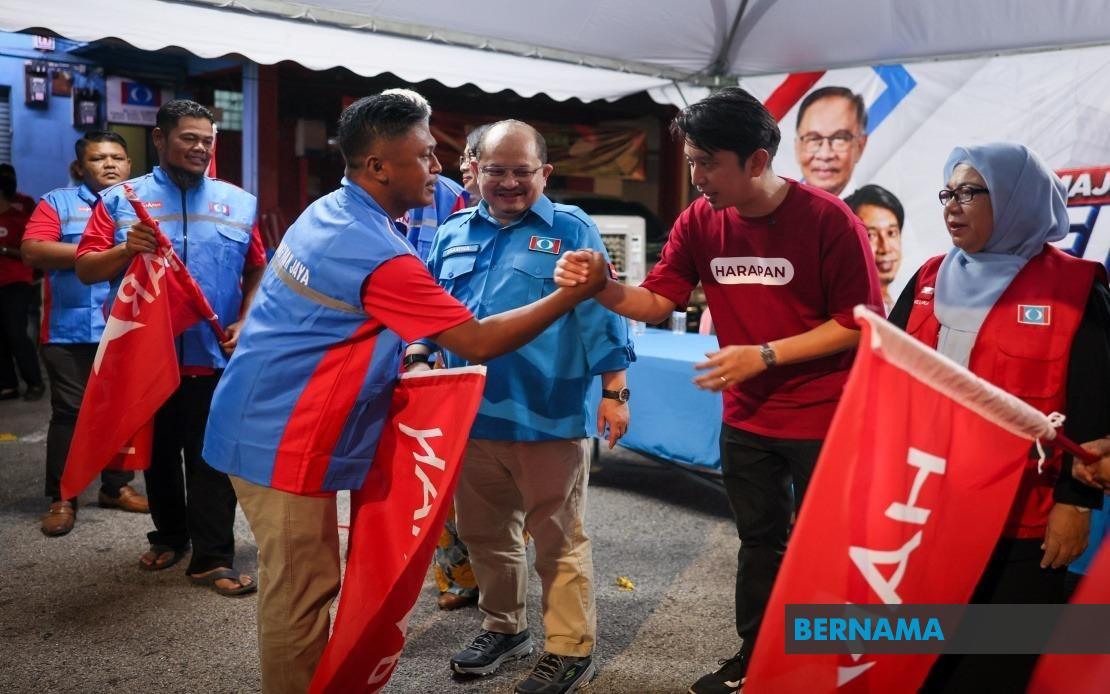
Parti Keadilan Rakyat (PKR) Melaka is moving up its candidate announcement timeline for the forthcoming state election, prioritizing adequate grooming of newcomers and ensuring the party fields a diverse team when voters head to the polls. Acting chairman of the Melaka PKR Leadership Council Adam Adli Abdul Halim emphasized that rushing the candidate announcement has historically created preparation challenges, prompting the party to adopt a more strategic, forward-thinking approach this cycle.
The accelerated schedule reflects PKR's deliberate strategy to inject fresh political talent into Melaka's electoral landscape. By committing to earlier public disclosure of its contenders, the party signals confidence in its pipeline of emerging leaders while simultaneously providing these individuals with extended time to connect with constituents and refine their campaign messaging. Adam Adli, who also serves as Deputy Minister of Higher Education, framed this not merely as a logistical adjustment but as a substantive commitment to strengthening the party's competitive positioning in the state.
The candidate vetting process itself operates through a carefully layered structure designed to maintain party coherence while accommodating diverse viewpoints. Selection begins at branch level, escalates through state-level evaluation, and culminates in centralized deliberation by the party president's office. This tiered methodology ensures that candidates emerge through rigorous internal scrutiny rather than through opaque backroom arrangements, theoretically reducing internal friction and enhancing legitimacy within the broader party membership.
Diversity considerations have become explicit within PKR's selection framework, with leadership deliberately prioritizing gender balance and generational representation. The emphasis on fielding women candidates and younger politicians reflects broader demographic shifts within Malaysian politics and responds to voter expectations for representation that mirrors society's composition. This represents a tactical recognition that electoral appeal increasingly depends on demonstrating commitment to inclusivity beyond mere rhetorical commitment.
Paralleling candidate preparation, PKR is undertaking systematic organizational reinforcement across Melaka's five parliamentary constituencies. The party intends sequential launches of its election machinery across Tangga Batu, Hang Tuah Jaya, Alor Gajah, Masjid Tanah, and Jasin constituencies, establishing grassroots infrastructure independent of specific candidate personalities. This separation between institutional strengthening and individual selection reflects sophisticated campaign management thinking—a party with robust ground organization can accommodate various candidates without structural vulnerability.
Adam Adli articulated a clear sequencing priority: institutional machinery construction must precede candidate announcement. This operational philosophy acknowledges that voter engagement ultimately depends on sustained volunteer networks, community presence, and organizational discipline rather than individual candidate charisma alone. By conditioning candidate selection on established organizational readiness, PKR seeks to prevent scenarios where promising candidates lack adequate support infrastructure.
Coalition dynamics between Pakatan Harapan and Barisan Nasional remain fluid regarding Melaka's state election. While informal discussions have transpired between these historically antagonistic blocs, formal negotiation for electoral cooperation frameworks remains incomplete. PKR election director Datuk Seri Amirudin Shari has initiated contact with Melaka Chief Minister Datuk Seri Ab Rauf Yusof to establish negotiation venues, signaling that coalition partners are at least exploring cooperation possibilities rather than simply dismissing engagement outright.
The strategic calculus underlying PH-BN discussions extends beyond narrow seat-sharing arrangements. Adam Adli framed potential cooperation as contributing to electoral healthiness and reducing the prevalence of acrimonious, personality-driven campaign discourse. This rhetorical framing positions coalition cooperation as serving democratic interests rather than merely expediting power consolidation—a distinction that carries political weight among voters fatigued by inflammatory political rhetoric.
Yet PKR maintains operational independence and contingency planning should coalition talks falter. The party is proceeding with its own election preparations without assuming successful Pakatan-Barisan coordination, effectively hedging against negotiation breakdown. This dual-track approach—simultaneously pursuing coalition partnership while maintaining unilateral readiness—reflects pragmatic Malaysian coalition politics, where agreements frequently collapse unexpectedly and flexibility remains essential.
The Melaka state election represents a significant test for PKR's organizational maturation and strategic acumen. The party's emphasis on early preparation, institutional development, and thoughtful candidate cultivation suggests learning from previous electoral disappointments and organizational shortcomings. For Malaysian political observers, the approach signals PKR's evolution toward more professional campaign management and reduced dependence on last-minute tactical improvisations.
Regionally, Melaka's election carries implications beyond state boundaries. As one of Malaysia's most electorally volatile states, Melaka's outcome often presages national political shifts and tests coalition stability. PKR's candidate-selection discipline and potential PH-BN cooperation framework will inform how opposition and government coalitions structure engagement across other competitive states, potentially establishing precedents for future electoral cooperation or antagonism.

