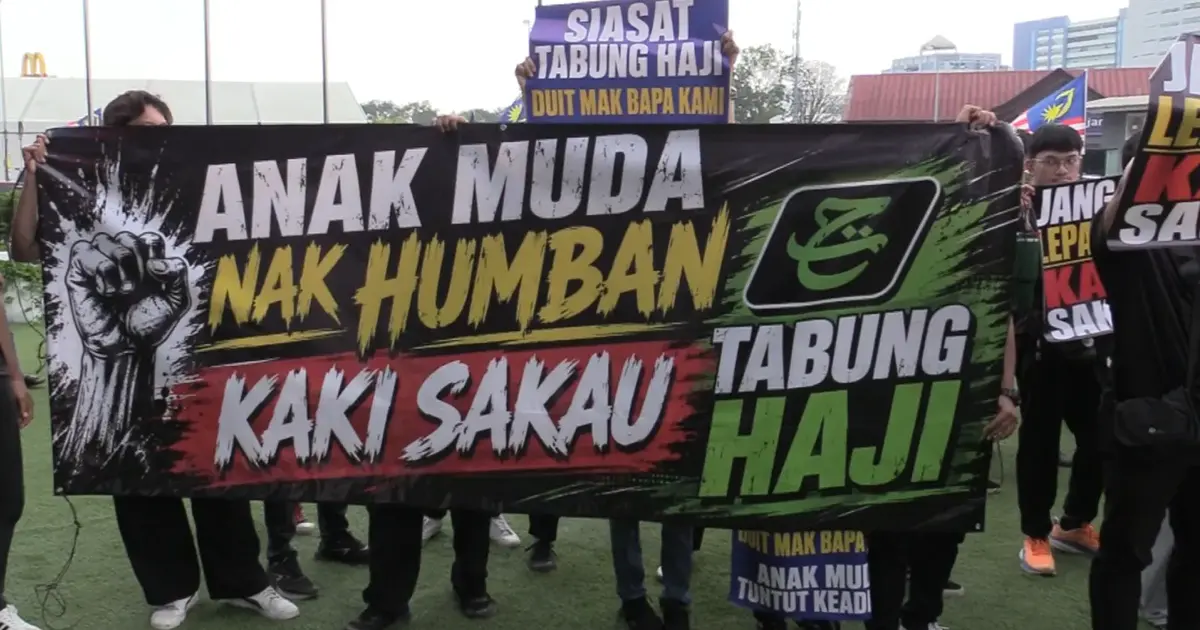
Approximately 250 members of the People's Justice Party from Melaka staged a notable demonstration outside the party's congress venue, pressing party leadership to accelerate an investigation into the Tabung Haji controversy that has gained significant traction among Muslim and Malay communities across Malaysia. The protesters, who assembled outside rather than participating in the main proceedings, articulated their frustration through direct action, signalling deep concern about how the opposition coalition is responding to what many see as a critical governance issue.
The Tabung Haji matter has emerged as a touchstone issue particularly within Muslim-majority constituencies, as the fund serves as the primary savings vehicle for pilgrimage expenses for hundreds of thousands of Malaysian Muslims. The protesters emphasised that the matter resonates profoundly with the spiritual and financial interests of Malays and Muslims nationwide, making it impossible to deprioritise or delay investigation indefinitely. By staging their demonstration at the party congress itself, the Melaka contingent demonstrated that concerns about this issue transcend typical party discipline and loyalty structures.
PKR's handling of the Tabung Haji question reflects broader challenges facing Malaysia's opposition in addressing governance failures from previous administrations while maintaining credibility on Islamic and community issues. The party has positioned itself as a reform-minded alternative, yet internal pressure suggests that grassroots members expect more forceful action on matters directly affecting the livelihoods of their constituents. The demonstration outside the congress underscores a generational and ideological divide within opposition politics regarding urgency and accountability.
The timing of the protest at the party congress venue proved strategically significant, ensuring visibility and forcing the party establishment to confront member dissatisfaction directly rather than through routine channels. This form of activism, though organised within party structures, nevertheless represents a calculated challenge to leadership priorities. The protesters sought to ensure that no internal party discussion or decision-making process could proceed without acknowledging the strength of feeling on this particular issue among the membership.
Tabung Haji's central role in Islamic financial life across Malaysia means that any investigation becomes inherently political as well as administrative. The fund manages approximately hundreds of millions of ringgit in pilgrimage savings, making transparency and accountability paramount. For many Muslim Malaysians, questions about Tabung Haji governance strike at the intersection of personal faith, financial security, and state responsibility. The protesters' framing positioned this not as a partisan political issue but as a matter of fundamental trust and communal interest.
PKR's response to the demonstration will likely influence how the party positions itself on Islamic governance issues ahead of upcoming electoral cycles. Opposition parties have historically struggled to differentiate themselves on matters affecting Muslim communities when government agencies or funds appear compromised. The Melaka members' direct action represents an attempt to force that differentiation, demanding that PKR adopt a more aggressive investigative and advocacy posture than might otherwise emerge through conventional party processes.
The protest also reflects evolving expectations about transparency and accountability within Malaysia's political landscape. Party members increasingly expect their representatives to pursue investigation and remediation aggressively rather than engaging in extended deliberation. This shift in expectation applies particularly to matters involving Muslim community institutions, where perceived inaction can be interpreted as complicity or indifference. The Melaka contingent's decision to protest rather than accept assurances demonstrates how threshold expectations for political performance have shifted.
For PKR, managing this pressure requires balancing multiple constituencies and considerations. The party must demonstrate responsiveness to grassroots concern while navigating the technical and legal complexities of investigating governance issues involving statutory bodies. Simultaneously, it must maintain coalition cohesion with other opposition partners who may have different priorities or risk exposure regarding Tabung Haji matters. These competing pressures explain why internal party activism on the issue persists despite party leadership's likely desire to control the narrative.
The geographical concentration of protesters from Melaka highlights how regional party chapters can mobilise around specific issues that resonate locally. Melaka holds significant symbolic and electoral importance within opposition politics, making member activism there particularly consequential for party leadership. A substantial demonstration from Melaka carries more weight than similar-sized protests from other states, increasing pressure on party decision-makers to demonstrate tangible commitment to resolving the Tabung Haji question.
Looking forward, the protest signals that grassroots pressure on Tabung Haji investigation will likely persist and potentially intensify unless party leadership articulates clear, specific steps and timelines for pursuing accountability. The convergence of religious significance, financial implications, and governance principle makes this issue unlikely to fade from intra-party discourse. Other state chapters may emulate Melaka's tactics if they perceive insufficient leadership response, multiplying pressure on the party establishment to act decisively.
For Malaysian voters observing opposition politics, the Melaka demonstration provides insight into how different parties prioritise issues and respond to member activism. It suggests that opposition coalitions, despite rhetorical commitment to reform and accountability, still grapple with translating principle into concrete action on issues involving Muslim community institutions. Whether PKR can convert this grassroots pressure into substantive investigation and meaningful outcomes will significantly influence its credibility on governance reform and Islamic institutional accountability in coming electoral contests.

