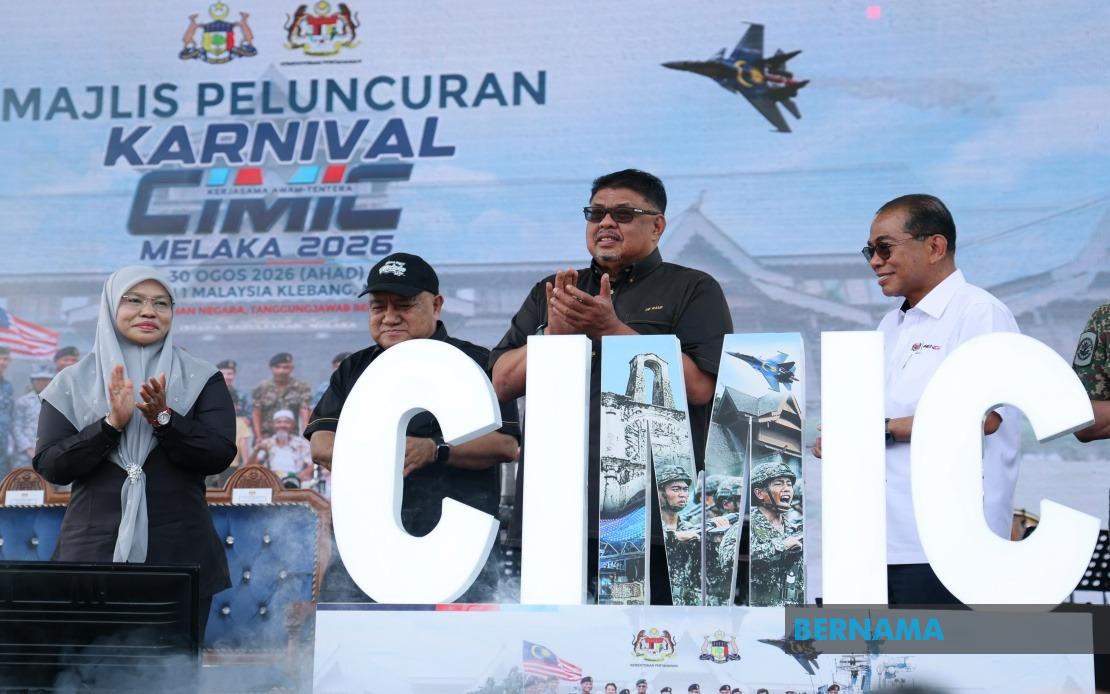
Defence Minister Datuk Seri Mohamed Khaled Nordin has flagged Melaka as a viable future destination for the Langkawi International Maritime and Aerospace Exhibition (LIMA), one of Asia's largest defence and aerospace showcases, signalling a potential shift in how Malaysia presents its military capabilities to the international community. The proposal emerged during remarks made at the Civil-Military Cooperation Carnival held in Klebang, a harbourside district in Melaka state, reflecting government consideration of expanding the exhibition beyond its traditional Langkawi base to venues with stronger accessibility for domestic audiences.
The Defence Minister's rationale centred on geographic and logistical advantages that Melaka possesses over Langkawi, particularly the proximity of the Klebang area to Batu Berendam Airport and established maritime berthing facilities. This combination of air and sea infrastructure would theoretically allow LIMA exhibitors and military vessels to be positioned more efficiently, while simultaneously reducing barriers for Malaysian civilians, corporate representatives, and defence professionals from across the peninsula to attend what remains a niche but high-profile event. Mohamed Khaled acknowledged, however, that transforming Melaka into a world-class exhibition venue of LIMA's calibre would demand substantial capital expenditure from the federal government, effectively placing the proposal's feasibility into the realm of budgetary and strategic planning rather than immediate implementation.
The government's interest in exploring Melaka was sparked partly by the successful integration of six Royal Malaysian Navy vessels into this year's National Day celebrations in the state, demonstrating both operational capability and public engagement potential at the location. This practical demonstration of naval presence in Melaka waters appears to have catalysed thinking within the Defence Ministry about whether the state could accommodate larger, more complex military and aerospace assemblies on a biennial basis. The exhibition, which rotates venues and attracts defence delegations, industry players, and media from dozens of countries, requires not only physical infrastructure but also security protocols, accommodation facilities, and logistical networks—considerations that implicitly underpin the government's caution about readiness.
Melaka Chief Minister Datuk Seri Ab Rauf Yusoh responded to the proposal with measured enthusiasm, indicating state-level willingness to host the exhibition provided thorough assessment of both capacity and tangible benefits materialised. His comments suggest a collaborative rather than competitive dynamic between federal and state authorities, with the implicit understanding that hosting a prestigious international event carries both economic and reputational advantages alongside operational demands. Ab Rauf's emphasis on evaluating capacity hints at existing constraints—whether related to venue size, accommodation infrastructure, security resources, or event management expertise—that would require resolution before Melaka could reliably stage an exhibition of LIMA's international standing.
The rationale for considering relocation also contains a subtle critique of Langkawi's accessibility, which has historically limited domestic attendance despite the island's established convention facilities and international profile. By repositioning LIMA to peninsular Malaysia's west coast, the government theoretically opens participation to broader segments of Malaysia's defence industry, academic institutions, and defence-interested public, potentially increasing the exhibition's domestic economic spillover and strategic visibility. This democratisation of access aligns with broader objectives around civil-military cooperation, as evidenced by the concurrent CIMIC carnival, which aims to familiarise Malaysians with their armed forces and defence sector capabilities.
From a regional perspective, relocating LIMA to Melaka carries symbolic weight given the state's historical and contemporary importance to maritime affairs in Southeast Asia. Melaka's position along one of the world's busiest shipping lanes, combined with its status as a UNESCO World Heritage Site and growing economic centre, positions it as a credible international venue. The move would also reflect Malaysia's deliberate efforts to develop secondary cities beyond Kuala Lumpur and Penang as engines of economic activity and international engagement, aligning with broader national development objectives outlined in various Malaysian development plans.
However, the proposal remains contingent on a series of interconnected decisions regarding federal budget allocation, state-level capacity building, and operational readiness. The Defence Ministry's exploration phase suggests no immediate timeline for transition, instead indicating a longer-term strategic consideration that may materialise only if infrastructure investments proceed and stakeholder consensus solidifies. The careful language employed by both Mohamed Khaled and Ab Rauf—emphasising exploration, assessment, and future discussion—reflects the complexity of repositioning a major international exhibition involving military, defence, and aerospace sectors.
The initiative also underscores evolving approaches to defence diplomacy and public engagement within Malaysian governance, where exhibitions and public-facing military events serve not merely promotional functions but constitute elements of national security communication strategy. By considering venues beyond established locations, the government signals adaptability and regional development consciousness while maintaining alignment with defence and aerospace industry needs. The emphasis on civil-military cooperation, evident in concurrent initiatives like the CIMIC carnival, suggests a broader philosophy wherein defence institutions serve connective functions between government, business, and citizens.
Looking ahead, the success of any transition would depend heavily on infrastructure investment timelines, federal-state coordination mechanisms, and market confidence that Melaka could deliver the technical and diplomatic standards expected by international defence contractors and military delegations. Malaysia's capacity to execute such a relocation would send signals about its institutional competence and long-term commitment to developing secondary venues for high-profile international events, potentially influencing decisions about hosting other major exhibitions and conferences. The Melaka proposal thus represents not merely a venue shift but a broader statement about Malaysia's vision for geographic development, defence sector engagement, and public participation in security matters.

