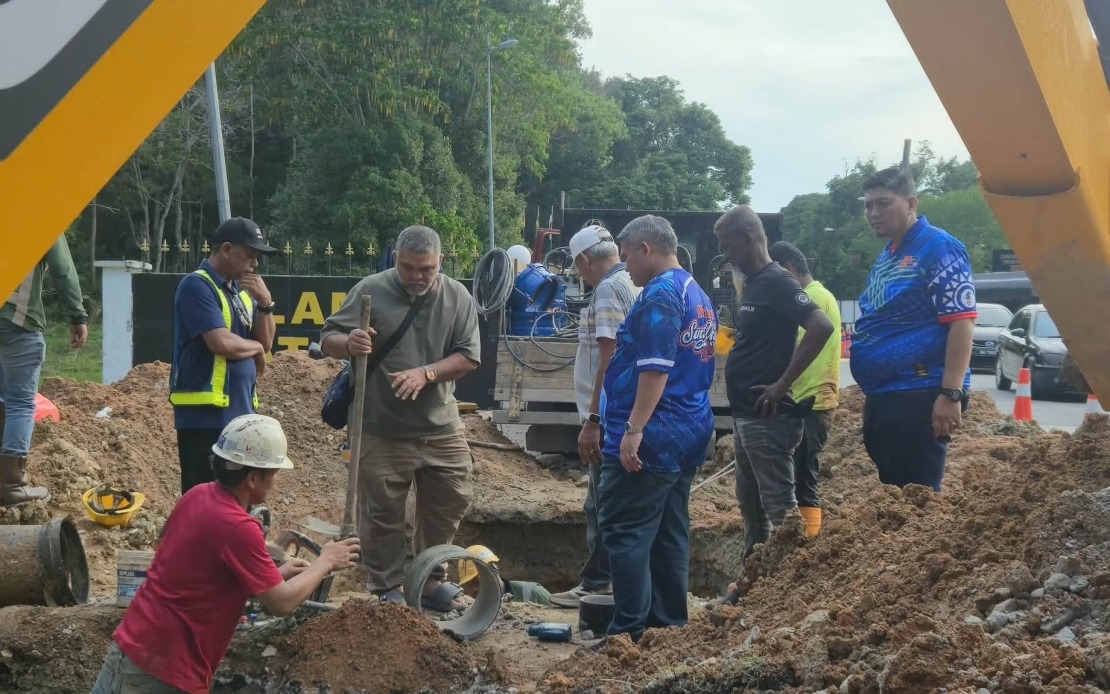
The Melaka state government is moving to tackle persistent water supply problems at Kem Terendak in Sungai Udang by proposing the construction of a temporary water tank as an interim solution. The initiative, spearheaded by Syarikat Air Melaka Berhad (SAMB), aims to provide relief while longer-term infrastructure improvements are completed. Housing, Local Government, Drainage, Climate Change and Disaster Management senior exco Datuk Rais Yasin announced the proposal following a major water crisis that has disrupted services across the military camp over the past week.
The underlying challenge stems from a substantial pipe rupture along Jalan Kampung Payasum in Sungai Udang, which triggered the widespread disruption affecting an estimated 2,000 military personnel and civilian households residing within the camp. Additionally, five educational institutions within Kem Terendak—including a MARA Junior Science College—have experienced service interruptions, disrupting daily operations and educational activities. While repairs to the burst pipe were expected to be completed by the evening of the announcement, full restoration of normal water pressure and supply levels would require an additional one to two days, extending the inconvenience for residents.
Datuk Rais Yasin, who represents Sungai Udang as a state assemblyman, emphasized that the proposed temporary tank represents a pragmatic interim measure while the state awaits completion of a more comprehensive infrastructure project. The Development and Upgrade of the Water Reticulation System initiative at Kem Terendak is scheduled for completion by April 2028, making it a long-term solution that will ultimately modernize the camp's entire water distribution network. Until that project reaches fruition, the temporary tank would help bridge the gap and reduce vulnerability to future disruptions.
However, the proposal's advancement depends on securing formal approval from the Ministry of Defence (Mindef), as the military installation falls under federal jurisdiction. The state government has clarified that while water supply infrastructure typically falls under the Public Works Department and Mindef's purview, SAMB is committed to supporting affected residents and military families by submitting the necessary proposal to the ministry. Officials are simultaneously identifying suitable locations for the temporary facility and preparing to deploy additional mobile water tankers to supplement supplies during the interim period.
To address immediate shortages, SAMB has been delivering 25,000 gallons of water daily using 25 tanker lorries since the crisis began. This emergency response, while substantial, remains inadequate given the scale of demand from 2,000 affected personnel and households. The state has also distributed water containers to schools within the camp to ensure educational continuity and maintain essential services. Despite these measures, Datuk Rais acknowledged the hardship imposed on residents and extended an official apology, reaffirming the state government's commitment to standing alongside affected communities throughout the resolution process.
The ceremony marking the handover of two 5,000-litre water tanks from SAMB to Kem Terendak underscored this commitment. Present at the event were Terendak Garrison Headquarters commanding officer Lt Col Annuar Kaliman and SAMB chief executive officer Datuk Mohd Saleh Jusman, reflecting the collaborative approach being taken across state and federal military authorities. These additional tanks, while modest in capacity, represent incremental progress in stabilizing supply levels during this critical period.
The water crisis at Kem Terendak highlights vulnerability in infrastructure serving military installations and civilian residents, a concern that extends beyond Melaka to other populated military compounds across Malaysia. Pipe bursts and supply disruptions can cascade into broader public health risks if prolonged, particularly in facilities housing large concentrations of personnel including schoolchildren and families. The multi-agency response demonstrates how state governments must coordinate with federal authorities when infrastructure failures affect sensitive installations.
The April 2028 completion date for the comprehensive water reticulation upgrade represents a significant timeline, extending nearly four years from the current crisis. This extended horizon underscores the importance of interim measures to prevent recurrent disruptions that undermine operational readiness and community welfare. The temporary tank proposal, if approved by Mindef, could serve as a model for other military installations facing similar infrastructure challenges, particularly as climate variability increases pressure on existing water systems.
For Malaysian readers, this situation reflects broader infrastructure resilience questions facing the nation. Military camps and their associated civilian communities depend on aging water systems in many locations, and systematic modernization efforts remain essential. The collaborative approach involving SAMB, Melaka's state government, and federal defence authorities offers a template for addressing such issues, though the extended timeline for permanent solutions suggests that interim arrangements will remain necessary across multiple installations for years to come.

