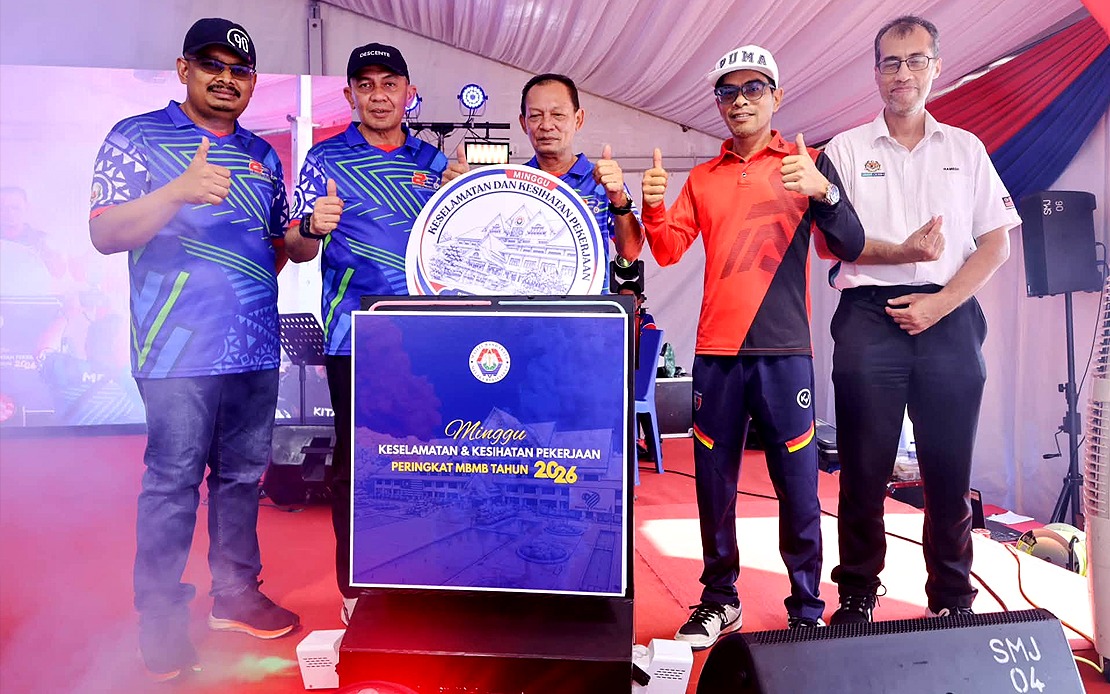
Melaka's occupational safety record for the first half of 2026 presents a concerning picture, with the state's Department of Occupational Safety and Health (DOSH) documenting 277 workplace accidents that resulted in both temporary and permanent disabilities across multiple economic sectors. These figures emerged during the launch of Melaka Historic City Council's 2026 Occupational Safety and Health Week celebration, where state authorities addressed the region's safety challenges and outlined their monitoring strategy moving forward.
The accident toll was accompanied by three confirmed fatalities, a sobering reminder of workplace hazards in the state's key industries. Two deaths occurred within the construction sector, while one was recorded in manufacturing, sectors that typically carry elevated risk profiles due to the nature of operations and equipment involved. These fatal cases underscore the potential consequences when safety protocols are inadequately implemented or monitored, and serve as critical indicators for regulatory review and enforcement priorities.
Ramesh Zakir Shamsul, the director of Melaka DOSH, characterised the overall accident situation as remaining relatively manageable despite the raw numbers. He articulated confidence in the department's ongoing supervision of industrial operations and corporate facilities throughout the state, stressing that continuous oversight was essential to maintaining adequate compliance with established occupational safety and health standards. His remarks reflected an attempt to balance transparency about the incidents with reassurance about regulatory capacity, a delicate communication task when addressing workplace safety concerns.
The legal framework governing these workplace safety obligations is the Occupational Safety and Health Act 1994, commonly referred to as Act 514, which establishes the mandatory reporting requirements for employers and sets penalties for non-compliance. Under this legislation, every accident occurring in a workplace must be formally reported to authorities, triggering formal investigative procedures designed to identify root causes and preventive measures. The act represents Malaysia's primary statutory instrument for protecting worker welfare and establishing employer accountability within the occupational environment.
Ramesh Zakir emphasised that employers bear direct legal responsibility for accurately reporting all workplace incidents and cooperating with subsequent investigations conducted by DOSH officials. This allocation of responsibility is not merely procedural but reflects a deliberate policy choice to position employers as the primary guardians of workplace safety culture within their organisations. The message conveyed was clear: regulatory oversight is complementary to, but cannot substitute for, genuine commitment from business leadership to safety practices and continuous improvement.
The Melaka Historic City Council's involvement in launching the occupational safety week signals recognition that municipal authorities possess an important role in promoting workplace safety awareness and supporting implementation efforts at the community level. The event was officiated by state deputy senior executive councillor for Housing, Local Government, Drainage, Climate Change and Disaster Management Datuk Zulkiflee Mohd Zin, alongside Mayor Datuk Shadan Othman and DOSH deputy director-general (Occupational Health) Ahmad Jailani Mansor, demonstrating coordinated engagement across multiple governmental tiers.
DOSH's stated commitment to collaborative partnerships extends beyond regulatory enforcement to encompass proactive engagement with employers, industry bodies, and local government institutions. The department identifies its strategy as encompassing organised workshops, ceramic talks, and other educational initiatives designed to cultivate greater awareness and understanding of occupational safety principles among workplace stakeholders. This educational component reflects recognition that sustainable safety improvements depend on voluntary adoption and cultural transformation within organisations, not merely compliance through enforcement.
The director articulated a significant point regarding shared responsibility for safety advocacy, contending that DOSH cannot single-handedly achieve occupational safety improvements across Melaka's diverse economic landscape. He specifically commended Melaka Historic City Council for actively supporting safety promotion through its own programming and initiatives, suggesting that municipal-level engagement provides institutional capacity and community credibility that complement state-level regulatory efforts. This collaborative framing acknowledges resource constraints and the reality that workplace safety culture develops through multi-stakeholder engagement.
For Malaysian readers and Southeast Asian observers, Melaka's safety metrics warrant consideration within broader context. The state hosts significant manufacturing facilities, construction projects, and port operations that generate substantial workplace activity. The recorded accident and fatality figures suggest areas requiring targeted intervention, particularly within construction, where the two fatalities occurred. Construction remains a traditionally hazardous sector across the region, often characterised by seasonal workers, subcontracting complexity, and challenging safety culture implementation.
The manufacturing fatality raises questions about specific hazards and whether existing safety protocols adequately address emerging risks in this sector. Manufacturing operations range from labour-intensive assembly work to hazardous chemical processing, creating diverse risk profiles requiring customised safety approaches. DOSH's investigative findings from these fatal incidents will likely inform subsequent regulatory guidance and industry-specific safety standards.
Governance structures revealed through this incident documentation show DOSH operates with both state-level and federal oversight through the deputy director-general position, suggesting hierarchical coordination between federal and state occupational safety frameworks. This multilevel governance reflects Malaysia's federal structure and indicates that occupational safety policy implementation involves coordinated action across governmental tiers, though local context and industry composition shape specific enforcement priorities.
Moving forward, the effectiveness of Melaka's safety management will depend substantially on whether collaborative initiatives translate into tangible workplace practice changes. Workshops and talks must reach frontline supervisors and workers, not merely management. Accident investigation findings must inform concrete improvements rather than becoming procedural formalities. Employer accountability mechanisms must function with sufficient consistency and transparency to create meaningful incentives for safety investment and cultural change across Melaka's diverse industrial economy.

