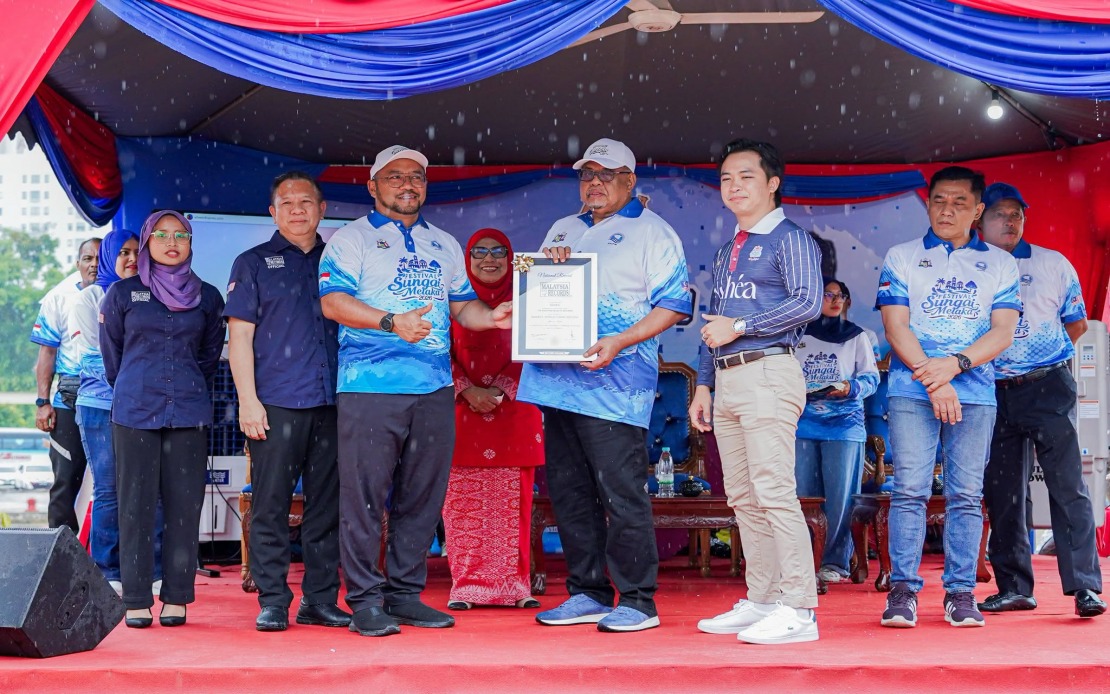
Melaka's tourism sector has reached a significant milestone with four Malaysia Book of Records (MBOR) recognitions secured over the past three years, underscoring the state's growing prominence as a regional destination. The latest achievement adds to a remarkable track record that reflects strategic investment in distinctive attractions and experiential offerings. Chief Minister Ab Rauf Yusoh, speaking at a ceremony honouring the new recognition at Dataran Pengkalan Rama, framed these accomplishments as evidence of the state's capacity to generate tourism ideas with broad commercial appeal and cultural resonance.
The trajectory of Melaka's tourism growth is noteworthy against the backdrop of Malaysia's broader post-pandemic recovery in the hospitality sector. Regional competitors have similarly pursued record-breaking initiatives to differentiate their destinations, making the state's concentration of four accolades within such a compressed timeframe particularly striking. The clustering of these achievements suggests a deliberate organisational approach to tourism product development, one that prioritises both novelty and measurable impact. This strategic positioning places Melaka favourably among Malaysian states competing for both domestic and international visitor numbers.
However, Chief Minister Yusoh stressed a critical distinction between earning recognition and converting it into tangible economic outcomes. His remarks at the ceremony—cautioning against allowing certificates to become mere wall decorations—reflect a growing realisation among Malaysian tourism officials that awards themselves do not guarantee visitor conversion or extended stays. The chief minister's emphasis on creating downstream tourism products and experiences that generate spillover economic benefits for local communities signals an understanding that sustainable tourism development requires layering multiple attractions and value propositions. This approach resonates with evolving international best practices in destination management, where comprehensive ecosystem development outweighs single-attraction reliance.
The Sungai Melaka Festival, now in its 17th iteration, serves as the institutional framework through which Melaka operationalises this philosophy. The festival's expansion across all three state districts with over 30 distinct programmes demonstrates commitment to geographically distributed tourism benefits rather than concentration in a single zone. This decentralisation model has particular implications for smaller towns and kampung areas within Melaka, potentially channelling visitor spending and employment opportunities beyond traditional urban tourism hubs. The festival's evolution from a cultural showcase into a multi-faceted platform encompassing competitive sports, fishing tournaments, and community engagement reflects the state's recognition that modern tourism demands diverse appeal across demographic and interest segments.
The freshwater fishing competition represents a particularly instructive case study in Melaka's tourism methodology. Attracting 1,123 participants from within and beyond the state, the competition mobilised RM30,000 in prize allocations, including a RM10,000 first-place award. The substantial prize purse signals serious intent to establish legitimacy within the fishing community while generating media attention and competitive prestige. That participation numbers exceeded typical expectations suggests latent demand for organised recreational fishing opportunities in the region, a market niche that has received comparatively less attention from regional tourism authorities than other adventure tourism segments. The early morning turnout, according to Yusoh's observations, reflects the dedication of participants who invested in preparation and travel logistics, indicating genuine market commitment rather than casual participation.
Melaka's government has identified the fishing competition as possessing scalability potential for expansion into a standalone tourism attraction. Plans to increase prize allocations, broaden geographic appeal, and enhance overall programme scope suggest confidence in the competitive fishing market's capacity to drive repeat visitation and extended stays. This positioning taps into a growing global trend of experiential and niche tourism, where specialised activities attract high-engagement visitor segments willing to travel significant distances and invest financially for authentic participation. For Malaysia's broader tourism industry, Melaka's approach to fishing tourism could establish a template for other states with comparable freshwater resources and angling traditions.
The involvement of the Melaka River and Beach Development Corporation (PPSPM), represented at the ceremony by CEO Shaharul Azuar Idris, underscores the institutional infrastructure supporting tourism initiatives. Such dedicated development corporations provide operational capacity, funding mechanisms, and stakeholder coordination that individual government departments might struggle to deliver independently. The corporation's participation signals Melaka's commitment to professionalising tourism administration and creating specialised agencies equipped to execute large-scale programmes. This institutional architecture has become increasingly common among forward-thinking Malaysian state governments recognising that competitive destination development requires dedicated expertise and sustained resource allocation.
The broader context of Melaka's tourism strategy involves leveraging its UNESCO World Heritage Site status and historical prominence while simultaneously innovating to appeal to contemporary visitor preferences. The state's willingness to pursue record-breaking initiatives across diverse categories—from replica construction to festival programming—suggests a balanced approach between heritage preservation and contemporary innovation. This combination addresses the challenge facing heritage destinations globally: maintaining cultural authenticity while remaining commercially viable and relevant to younger, experience-seeking demographics. Melaka's four MBOR recognitions collectively reflect this dual positioning.
For Southeast Asian tourism directors and policymakers, Melaka's experience offers several instructive lessons. First, sustained record-breaking pursuits within a defined timeframe create cumulative brand momentum and media interest that single achievements cannot generate. Second, translating recognition into economic impact requires deliberate product development and community integration rather than passive reliance on award prestige. Third, distributing tourism benefits geographically and across demographic segments builds broader stakeholder support and sustainability. Melaka's Chief Minister's insistence that awards catalyse rather than conclude tourism development reflects sophisticated understanding of contemporary destination marketing challenges.
Looking forward, Melaka's tourism sector faces the challenge of maintaining innovation momentum while deepening visitation quality and economic returns. The state's four MBOR achievements demonstrate capability for distinctive product creation, yet sustained competitiveness requires continuous iteration and audience research. The fishing competition expansion and festival programme diversification suggest Melaka's tourism leadership understands these imperatives. Whether these initiatives translate into measurable increases in visitor numbers, length of stay, and per-capita spending will determine whether the current strategy successfully bridges the recognised gap between accolade and economic impact that Chief Minister Yusoh identified.

