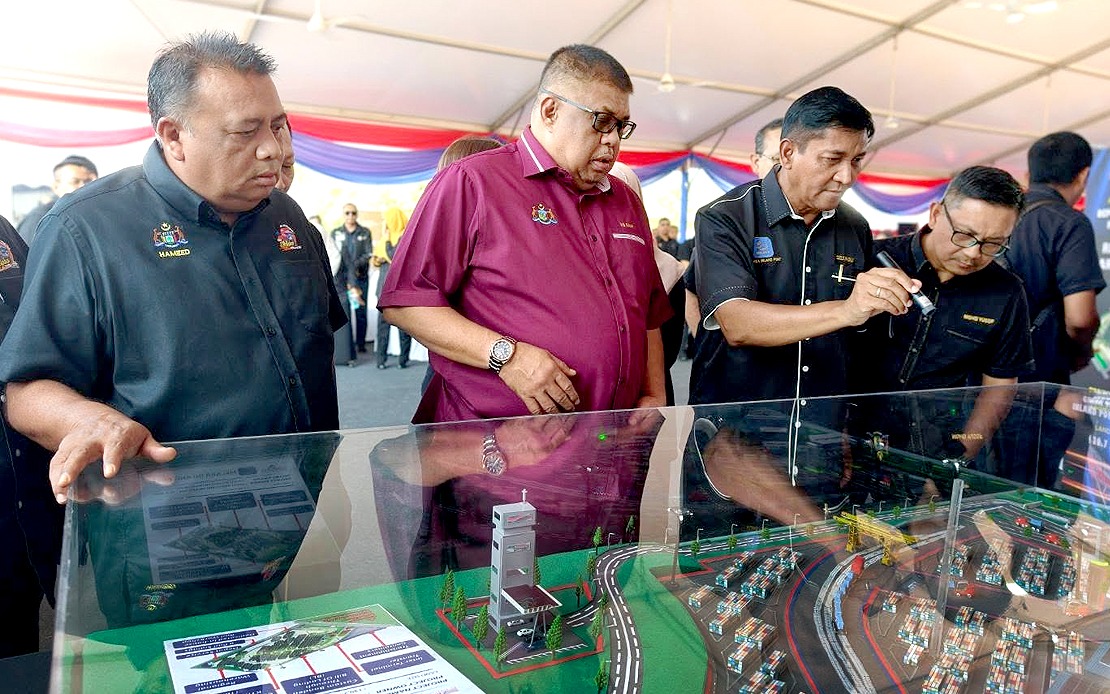
Melaka is embarking on an ambitious infrastructure initiative to reshape its logistics landscape through the construction of a 12-kilometre road valued at RM129 million. The project will establish a direct connection between Kuala Linggi International Port (KLIP) and Ayer Molek, passing through the Melaka Inland Port (MIP) area to create a seamlessly integrated port network. The undertaking represents a substantial commitment to modernising the state's transport infrastructure and reflects growing recognition of Melaka's potential as a regional logistics hub.
Announcing the development at the Melaka Inland Port groundbreaking ceremony, Datuk Hameed Mytheen Kunju Basheer, chairman of the state's Public Works, Infrastructure, Public Facilities and Transport Committee, outlined how the new corridor will fundamentally alter traffic patterns serving the maritime sector. Currently, vehicles moving between the port facilities traverse a circuitous 28-kilometre route, significantly impacting operational efficiency and logistics costs. The proposed road will compress this journey to approximately 12 kilometres, delivering substantial time savings that translate directly into reduced fuel consumption and lower transportation expenses for freight operators.
The project timeline indicates that detailed design work is underway through the Works Ministry, with the formal procurement process scheduled to commence in the coming year. Once contractors are appointed following quotation and tender procedures, construction activities should progress through the middle of the decade. This measured approach allows for thorough planning and community consultation before major earthworks commence, particularly given that the route will traverse populated areas including traditional villages that require careful consideration during infrastructure development.
Beyond the primary KLIP-Ayer Molek corridor, Melaka's broader port connectivity strategy encompasses several complementary initiatives. The state government is pursuing upgrades to existing road networks serving both the Melaka Inland Port and Tanjung Bruas Port, including widening the Tangga Batu to Sungai Udang section. These ancillary improvements ensure that investment in new thoroughfares integrates cohesively with existing transport arteries, creating a unified system rather than isolated segments.
A second major undertaking involves constructing a six-kilometre road linking Telok Gong with Kampung Pulau and Paya Lebar, with an estimated cost of RM49 million. This route similarly connects to the Melaka Inland Port and addresses congestion issues by providing alternatives to village thoroughfares. Currently, the segment from Paya Lebar to Kampung Pulau is undergoing quotation processes, while the Kampung Pulau to Telok Gong alignment remains in design phase. Anticipated completion falls around 2028 or 2029, suggesting substantial overlap with the completion of the primary KLIP road.
These infrastructure investments reflect Melaka's strategic positioning within Malaysia's broader logistics ecosystem. The state's geographic location along major maritime routes, combined with port facilities at Kuala Linggi and Tanjung Bruas, positions it as a natural transshipment and distribution centre. Improving road connectivity directly enhances competitiveness against alternative port facilities in Johor and Selangor, potentially capturing increased cargo volumes and associated economic activity.
For Malaysian logistics operators and shippers, the implications extend beyond simple travel time reductions. Enhanced connectivity reduces the operational friction inherent in navigating fragmented road networks, allowing fleets to operate more predictably and economically. Businesses relocating distribution facilities or establishing regional headquarters seek assurance of reliable, efficient transport corridors, making these infrastructure commitments crucial competitive advantages for Melaka's industrial development.
The comprehensive nature of Melaka's approach—addressing not only primary corridors but also secondary routes and village bypass options—demonstrates sophisticated planning recognition of diverse stakeholder needs. Rather than imposing a single high-capacity solution, the phased strategy accommodates existing communities while systematically removing bottlenecks that constrain port operations. This balanced methodology should generate fewer social disruption issues than more aggressive infrastructure imposed without community consideration.
Regional connectivity implications warrant attention as well. Improved Melaka port access indirectly benefits logistics networks throughout Southeast Asia, as enhanced Malaysian capacity attracts regional cargo flows. Businesses operating across Thailand, Vietnam, and other regional economies view Malaysian ports as alternative gateways to China and India, roles strengthened when supporting road infrastructure approaches international standards. Investment in Melaka port connectivity therefore extends strategic significance beyond state borders.
The timing of these infrastructure commitments aligns with broader Malaysian efforts to modernise port and logistics infrastructure nationwide. Port Klang and Port of Tanjung Pelepas have received substantial investment attention, positioning Melaka's initiatives as part of coordinated national strategy rather than isolated provincial ambition. This systematic approach should encourage private sector confidence in regional logistics infrastructure, potentially attracting foreign investment in distribution and manufacturing operations seeking Southeast Asian bases.
Financial commitments totalling approximately RM178 million for port-related road infrastructure underscore Melaka's conviction regarding long-term logistics potential. Such substantial public investment typically accompanies business case analysis projecting measurable returns through increased tax revenue, employment, and economic activity. Although details regarding expected cargo throughput increases and economic impact assessments remain unavailable, the scale of investment implies sophisticated evaluations supporting the infrastructure spending.
For Malaysian readers and businesses engaged in domestic or regional logistics, these Melaka developments represent concrete evidence of infrastructure progress aimed at reducing operational costs and improving supply chain reliability. As implementation proceeds through design, tender, and construction phases, monitoring project delivery against schedule becomes relevant for businesses evaluating supply chain strategies and facility location decisions. The ultimate success of these investments will be measured not merely in road completion, but in demonstrable improvements in cargo handling efficiency and regional logistics competitiveness that justify the substantial financial commitment.

