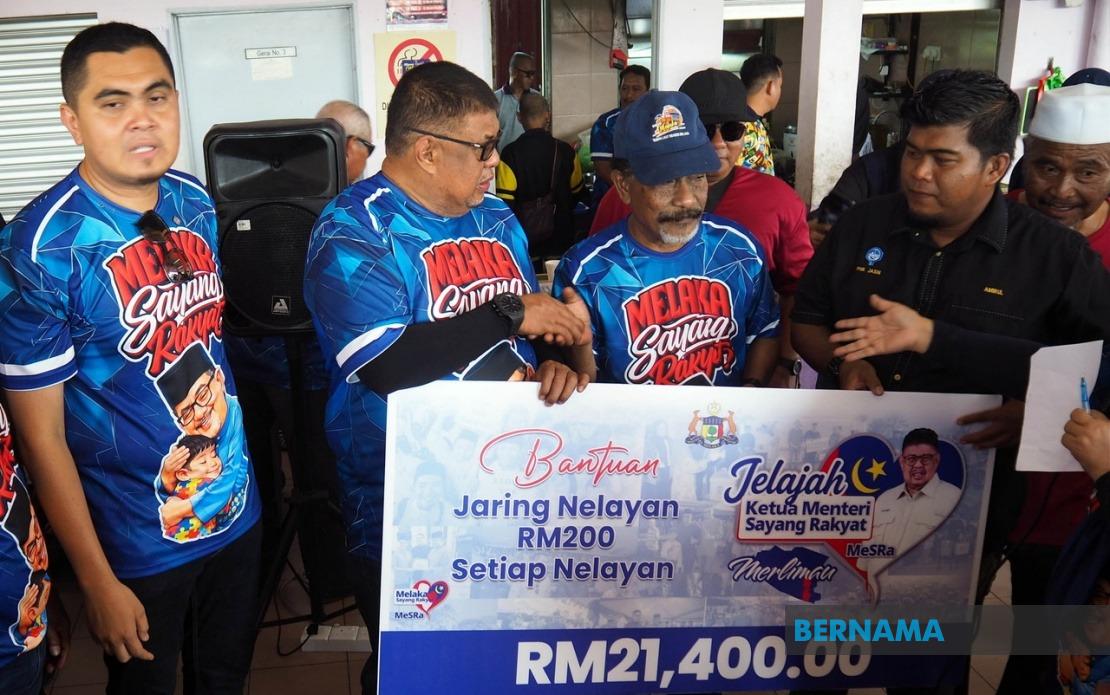
Melaka's Chief Minister Datuk Seri Ab Rauf Yusoh has confirmed that the state government will make no move to fill the administrative posts vacated by Pakatan Harapan members following the coalition's departure from the state Cabinet. Speaking in Jasin on July 17, Ab Rauf indicated that all positions held by PH representatives across various tiers of governance—including state executive council seats, local authority appointments, and Village Development and Security Committee roles—would remain empty throughout the remainder of the current government's term.
The decision to refrain from appointing replacements reflects the pragmatic reality of Melaka's political timeline. With only a limited period remaining before the state's elected term concludes, Ab Rauf reasoned that bringing fresh appointees into roles with such short remaining tenure would offer minimal practical benefit to the state administration. The positions had technically become vacant the moment PH members made their exit official, a consequence he described as automatic rather than a matter of deliberate removal.
Beyond the immediate staffing issue, Ab Rauf's public response underscored an attempt to frame the coalition's departure as an amicable parting of ways rather than a bitter political rupture. He explicitly stated that Melaka's government respected the decision made by PH leadership to withdraw, characterizing it as a legitimate political choice deserving acceptance rather than recrimination. His language carefully avoided the inflammatory rhetoric that often accompanies coalition splits, instead emphasising the importance of maintaining professional boundaries during periods of disagreement.
The Chief Minister articulated a philosophy of political discourse that, while perhaps aspirational, speaks to broader concerns about Malaysian political culture. He argued that differing viewpoints are natural within democratic systems, but such differences should be expressed through channels that maintain public respect and avoid descending into personal animosity. His framing suggested that ideological separation need not translate into institutional hostility or reputational attacks, a principle that carries significance in a political landscape sometimes characterised by sharp personal criticism.
Looking backward, Ab Rauf assessed the cooperative period between Melaka's government and Pakatan Harapan as substantially successful, spanning nearly three years of joint administration. Despite this productive working relationship, he acknowledged that divergent political philosophies and strategic priorities had ultimately created conditions incompatible with continued partnership. This retrospective assessment attempted to credit the arrangement's achievements while explaining why its continuation became untenable.
The immediate catalyst for PH's withdrawal centred on constitutional amendments that the coalition rejected. Pakatan Harapan's leadership, speaking through Melaka PH chairman Adly Zahari, acting PKR chairman Adam Adli Abdul Halim, DAP chairman Khoo Poay Tiong, and Amanah chairman Datuk Ashraf Mukhlis Minghat, had announced their final decision following a meeting with state assembly members. The proposed changes to the Melaka State Constitution Enactment would have introduced appointed state assembly seats, a mechanism that PH representatives determined fell beyond their acceptable boundaries for continued governance partnership.
The question of potential realignment between Barisan Nasional and Perikatan Nasional—following a similar arrangement already established in neighbouring Negeri Sembilan—remains open in Melaka's political calculus. Ab Rauf noted that he had observed no concrete indications of such cooperation emerging in Melaka, though he declined to exclude the possibility outright. This cautious positioning suggests ongoing negotiations or at least exploratory discussions may occur, though the Chief Minister evidently felt constrained from announcing any definitive arrangements at that juncture.
For Malaysian political observers, the Melaka developments illustrate the fluid and transactional nature of coalition governance in Malaysia's contemporary landscape. Unlike the relative stability of federal-level arrangements, state-level coalitions frequently experience recalibration as partners reassess their compatibility or as structural changes to governance mechanisms generate fresh disagreements. The willingness of a ruling coalition to accept a partner's departure without attempting to fill vacancies or launch retaliatory measures suggests an underlying acceptance that such shifts represent legitimate political dynamics rather than betrayals warranting punitive responses.
The implications for Melaka extend beyond the immediate staffing question to considerations of governance efficiency during a shortened final period. With unfilled positions, the state administration may face either reduced capacity in certain functions or increased workload concentration among remaining appointees. Whether this creates practical complications or merely represents an irrelevant interim arrangement depends substantially on the specific roles affected and the time remaining before the next electoral cycle.
From a regional Southeast Asian perspective, Malaysia's pattern of coalition flexibility at state level offers an instructive contrast to more institutionally rigid systems elsewhere. The ability to adjust governmental arrangements between elections, while introducing elements of uncertainty, also permits relatively bloodless political transitions that might otherwise require more disruptive mechanisms. Melaka's handling of PH's exit, at least in its announced form, potentially exemplifies this flexibility working toward relatively civil outcomes despite underlying political differences.
The resolution also carries implications for how opposition parties calculate their participation in state-level coalitions with ruling parties. Pakatan Harapan's apparent prioritisation of constitutional principles—rejecting proposed changes to state assembly composition—over the pursuit of immediate political advantage through retaining government positions suggests a commitment to substantive governance principles. Whether such choices benefit or disadvantage opposition movements in longer-term strategic terms remains a question for subsequent electoral cycles to illuminate.
As Melaka enters its final period of governance under the current administration, the emptied positions serve as quiet reminders of the coalition arrangement's conclusion. The Chief Minister's measured response and commitment to non-vindictive administration offer one particular model for managing such transitions, though whether future coalition dissolutions in Malaysian politics will follow this template remains uncertain.

