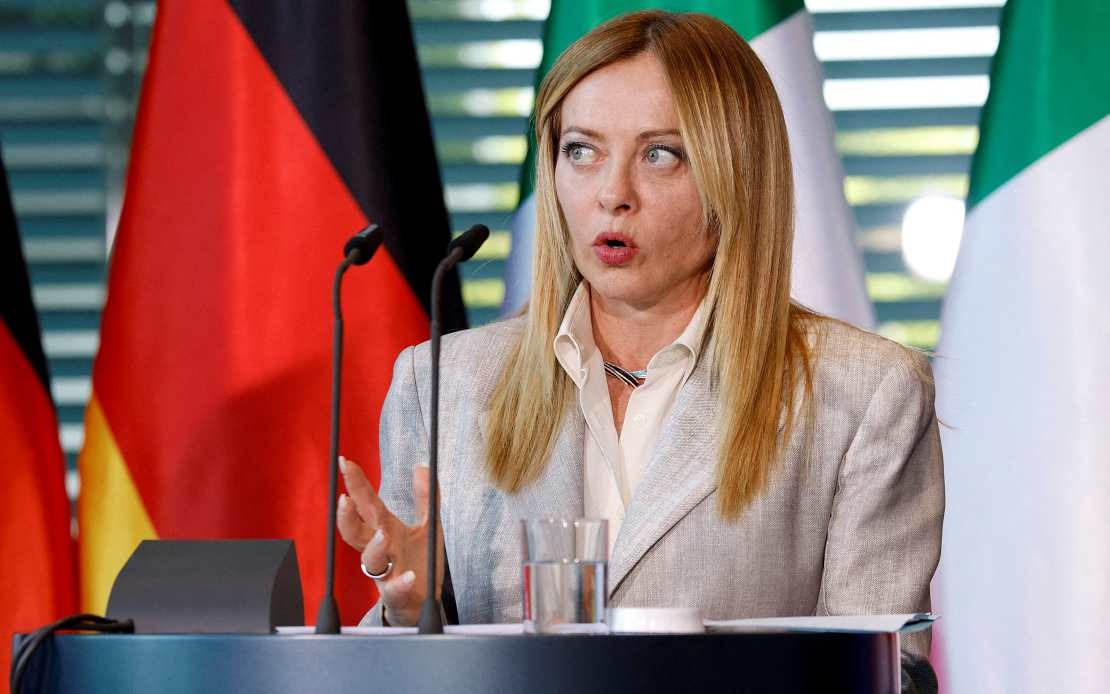
Italian Prime Minister Giorgia Meloni has proposed a strategic pivot in how the European Union handles migration: establishing dedicated processing centres in non-EU countries rather than managing asylum claims within member states. The Italian government intends to make this initiative a central discussion point at an informal gathering of EU home affairs ministers scheduled for Tuesday, where Interior Minister Matteo Piantedosi will represent Rome's position. The framework draws heavily on Italy's existing bilateral arrangement with Albania, suggesting that similar agreements could be negotiated with other third nations by the close of this year, with operational centres potentially launching as early as 2027.
The timing of Meloni's proposal reflects mounting pressure across Europe's southern borders. Late July witnessed an extraordinary migration crisis unfold in Ceuta, the Spanish autonomous city perched on Morocco's coastline. Within a single 24-hour period, approximately 60,000 individuals crossed into the enclave, a figure representing roughly 70 per cent of Ceuta's entire resident population of 85,000. Spanish authorities responded by deploying additional police units, Civil Guard personnel and military troops to prevent further unauthorised entries, underscoring the scale of the challenge facing border states. This crisis has crystallised debate around Europe's immigration management and lent political weight to alternative policy approaches.
Meloni's offshore processing concept has already attracted substantial backing from across the EU. Danish Prime Minister Mette Frederiksen has publicly endorsed the initiative, while a coalition of 22 EU member states collectively submitted correspondence to European Commission President Ursula von der Leyen and European Council President Antonio Costa urging exploration of fresh protective mechanisms against irregular migration. Nations including Austria, Denmark, Germany and the Netherlands have positioned themselves at the forefront of negotiations with African partners. Greece similarly champions the approach and intends to commence its own experiment by 2027, reflecting broader consensus among frontline states that current asylum frameworks require fundamental restructuring.
African nations are progressing furthest along the engagement pathway. Rwanda and Uganda stand closest to concluding comprehensive agreements with their European counterparts, having engaged in sustained diplomatic discussions about hosting processing infrastructure. These nations represent crucial partners in any offshore strategy, as they provide geographic distance from Europe while maintaining international legitimacy. The European Union intends to finance these external centres, effectively externalising both the costs and the political burden of asylum determination while ostensibly maintaining legal compliance with international conventions.
Italy's existing Albania experiment provides an instructive case study of the proposal's practical challenges. Rome has already established migrant processing facilities operating under Italian jurisdiction and funded entirely by the Italian state, where asylum applications are evaluated and undocumented immigrants detained pending expulsion. The programme began with significant ambition but has encountered substantial obstacles. Between May 2025 and mid-July 2026, only 685 individuals were transferred to Albania—representing fewer than 15 per cent of the targeted caseload—and a disappointing repatriation rate of less than 15 per cent emerged. The Gjader centre alone consumed approximately €50 million during 2025, an enormous per-person cost that raises questions about the financial viability of scaled expansion.
Domestic judicial oversight has further complicated Italy's bilateral approach. Italian courts have repeatedly intervened to obstruct detention practices within Albanian centres, issuing orders mandating the return of migrants to Italian territory. These judicial decisions reflect constitutional concerns about individual rights and the applicability of Italian law to foreign detention facilities. Additionally, courts have challenged expedited asylum procedures designed to swiftly process claims from citizens of designated safe countries, creating friction between executive immigration policy and judicial review mechanisms. This tension suggests that scaling such arrangements across multiple third countries would likely trigger similar legal contestation, potentially undermining the operational efficiency that architects of the scheme envision.
For Southeast Asian observers, Meloni's proposal carries significant implications regarding migration management precedents. Malaysia, itself hosting one of the world's largest refugee populations alongside Thailand and Indonesia, has long advocated for burden-sharing mechanisms and international cooperation on displacement crises. The European external processing model could set global benchmarks for how wealthy nations address migration pressures, potentially influencing international frameworks that affect the region. Should offshore processing become normalised within EU practice, it might reshape expectations around responsibility-sharing in asylum determination, with wealthier nations increasingly delegating their humanitarian obligations to developing countries in exchange for financial contributions.
The European Commission faces competing pressures as it evaluates this initiative. Brussels must balance member state demands for enhanced border control against international legal obligations under the Refugee Convention and human rights frameworks. The funding mechanism—whereby the EU treasury subsidises third-country detention infrastructure—raises questions about whether EU member states are effectively outsourcing accountability while maintaining policy influence. Furthermore, the viability of these arrangements depends substantially on sustained cooperation from African partners, whose governments may demand increasing compensation or face domestic political opposition to hosting European asylum-seekers.
The strategic calculus underlying external processing centres reveals how migration has become a defining issue across contemporary European politics. Right-leaning governments including Italy, Austria and Denmark perceive offshore processing as a pragmatic solution that reduces arrivals while deflecting criticisms about humanitarian concerns. By locating processing outside EU territory, governments argue they can implement more stringent security procedures and accelerated determination processes without triggering activist or judicial resistance. This framing appeals to constituencies anxious about demographic change and cultural integration, addressing political demands that have fuelled nationalist electoral movements across the continent.

