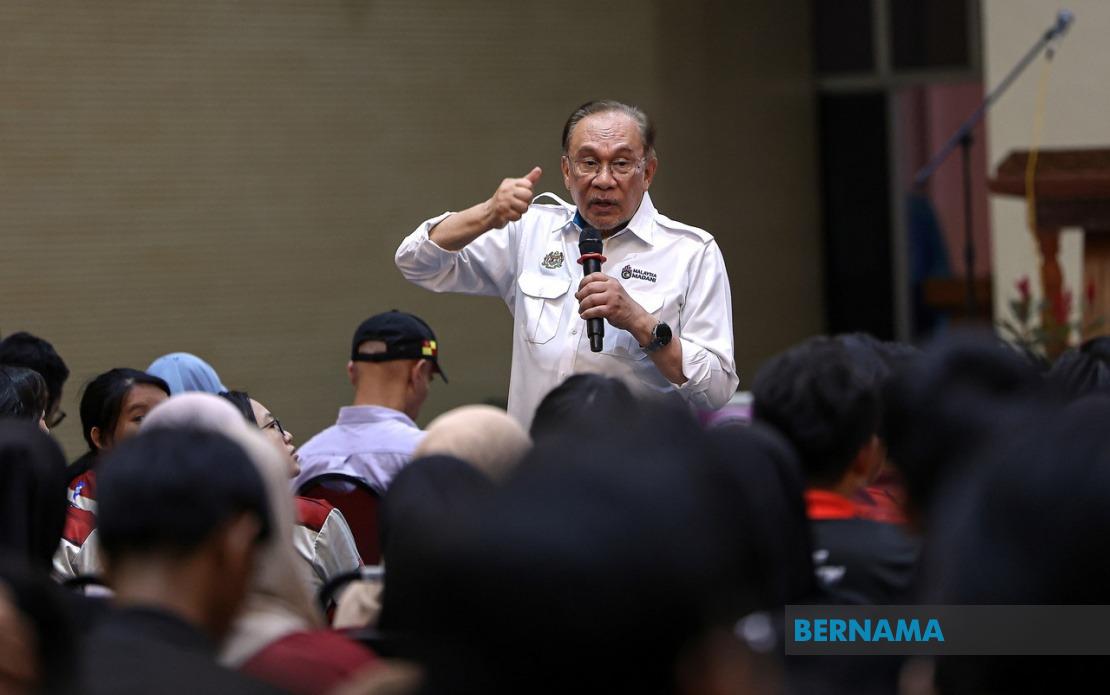
Prime Minister Datuk Seri Anwar Ibrahim has outlined a refined approach to matriculation programme admissions that aims to reconcile two competing educational priorities: recognizing exceptional academic achievement and ensuring equitable access for marginalised communities. Speaking at the Youth and Sports Complex in Paroi, Seremban, on July 22, the Prime Minister detailed how the government intends to navigate the persistent tension between merit-based selection and affirmative action policies that have long characterised Malaysia's post-secondary education system.
The centerpiece of the revised framework is the introduction of an automatic admission pathway for students achieving the highest academic standards in the national school examination system. Students who score 10As in the Sijil Pelajaran Malaysia examination will gain assured entry into matriculation programmes without requiring additional selection criteria or competitive placement processes. Critically, Anwar stressed that this merit-based pathway operates entirely independently of ethnic or racial considerations, explicitly noting that admission would be extended to Chinese, Indian, and Malay students alike based purely on academic performance.
This commitment to race-blind meritocracy in the top tier represents a subtle but significant repositioning of government policy discourse. For decades, matriculation intake has been intertwined with affirmative action mechanisms, with Bumiputera reservations traditionally serving as the primary mechanism for determining admission. By establishing a separate stream that prioritises academic excellence regardless of ethnicity, the administration signals recognition of concerns about educational quality and the need to identify and nurture the nation's highest-achieving students as an investment in human capital development.
Simultaneously, the government has reaffirmed its commitment to maintaining Bumiputera quota provisions within the matriculation system, signalling that the new merit pathway does not represent an abandonment of equity considerations. Anwar explicitly referenced demographic factors and the particular educational challenges faced by students from rural and interior regions, extending this concern to East Malaysian states of Sabah and Sarawak. The dual-track approach thus attempts to preserve constitutional protections and address structural disadvantages while creating space for recognising and advancing the most academically gifted students regardless of background.
The government's framing emphasises that these provisions respond to material circumstances rather than broad-based preferential treatment. Students from underprivileged backgrounds often lack access to quality tuition, study materials, and educational infrastructure available to their urban counterparts. Rural areas across Peninsular Malaysia, Sabah, and Sarawak frequently experience teacher shortages, limited laboratory facilities, and restricted extracurricular opportunities that can impede academic performance even among capable learners. By maintaining quota protections, the administration argues it addresses these systemic inequities rather than making purely ethnic distinctions.
This policy position carries particular significance for Malaysian higher education stakeholders. The matriculation system serves as a primary pipeline into public universities, with approximately 71,000 students annually seeking places across 37 matriculation colleges nationwide. Decisions made at this juncture therefore shape the demographic composition of Malaysia's future professional classes, influencing representation in law, medicine, engineering, and public administration. The outlined approach attempts to balance competing imperatives that have generated sustained public debate among parents, educators, and civil society organisations.
For students from privileged urban backgrounds, the new framework offers a clearly defined pathway: exceptional examination performance guarantees entry regardless of other considerations. This transparency may incentivise academic excellence and reduce perceptions that merit alone proves insufficient for admission. Conversely, students from disadvantaged regions and communities benefit from targeted support mechanisms designed to offset structural barriers encountered during secondary education, acknowledging that raw examination scores may not fully capture potential in circumstances marked by resource scarcity.
The policy articulation also reflects broader regional trends in higher education access. Several Southeast Asian nations, including Thailand and Vietnam, have similarly adopted dual-track systems combining elite merit pathways with equity provisions targeting underrepresented groups. Regional competition for talent and concerns about brain drain have increasingly pushed governments to ensure that academic potential is not squandered due to circumstance of birth. Malaysia's approach aligns with this international momentum while remaining grounded in specific national contexts and constitutional frameworks.
Implementation challenges will prove substantial. Determining which students genuinely qualify as underprivileged requires robust data collection and verification mechanisms to prevent misclassification and ensure resources reach intended beneficiaries. Clear communication to secondary school students and parents about admission pathways is essential to prevent confusion or gaming of the system. Educational authorities must also ensure that quality and resource levels across matriculation colleges remain equitable, preventing the emergence of hierarchical tiers where merit-admitted students concentrate in better-resourced institutions.
The statement was delivered during the "Jelajah Rakan Muda" programme, a youth engagement initiative coordinated alongside Youth and Sports Minister Dr Mohammed Taufiq Johari. This venue selection underscores the government's emphasis on youth participation in education policy discussions and suggests broader efforts to build consensus around the revised approach among younger Malaysians who will either benefit from or navigate these admission pathways.
Education sector observers note that the policy represents incremental adjustment rather than fundamental restructuring. The explicit preservation of Bumiputera quotas indicates continuing deference to constitutional Article 153 provisions protecting Malay-Muslim and indigenous interests. However, the prominent emphasis on merit-based entry for top performers signals willingness to prioritise national competitiveness and recognise individual achievement as legitimate bases for educational opportunity, potentially opening space for future policy evolution as economic development and educational access expand.

