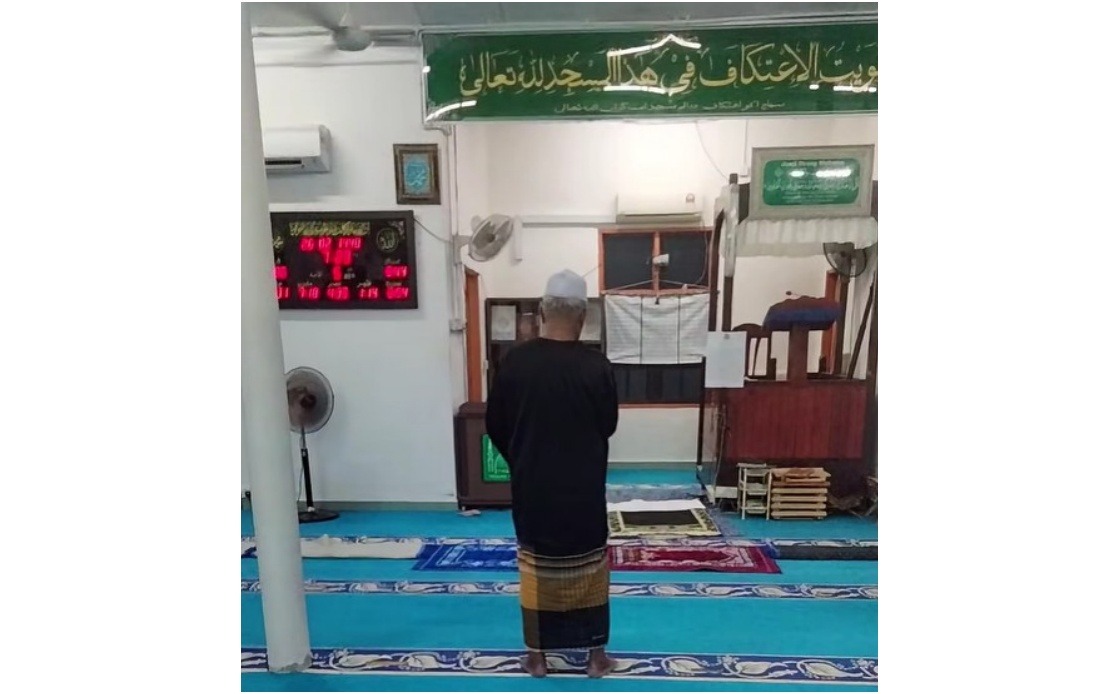
A video circulating across social media platforms has brought unexpected attention to a small mosque in a rural Johor village, highlighting the broader challenge of maintaining active religious institutions in depopulating communities. The 15-second clip, which spread rapidly on Facebook and WhatsApp, captured a solitary worshipper at Masjid Tanjung Resang in Mersing, prompting observers to question the viability and management of the facility. The footage appeared to show the individual simultaneously fulfilling the roles of congregant, imam and bilal, raising eyebrows among those concerned about mosque operations across Malaysia's smaller settlements.
Mersing MP Muhammad Islahuddin Abas, who himself resides in the village, moved quickly to address the online discussion and provide context for the situation. Rather than dismissing the concerns outright, he acknowledged that the congregation's size is indeed constrained by demographic realities affecting the locality. Islahuddin explained that while the residential landscape includes numerous properties, the actual population has contracted significantly as people have relocated in search of employment opportunities or shifted their base elsewhere. This pattern of outmigration is familiar across Malaysia's non-urban areas, where younger and working-age residents increasingly move to cities and industrial centres, leaving behind smaller core populations.
The MP also revealed his own initial surprise upon receiving the viral content, noting that a Kuala Lumpur-based contact had forwarded the screenshot to him via WhatsApp, demonstrating how quickly such material spreads across the country's digital networks. Despite the initially unflattering circumstances, Islahuddin adopted a pragmatic and even positive framing of the episode, suggesting that the unexpected publicity carries an unintended benefit. He characterised the viral moment as having inadvertently served as an advertisement for the mosque to people beyond Mersing's immediate vicinity, introducing an institution that had previously remained relatively unknown outside its immediate catchment area.
One significant challenge the mosque faces is its geographical positioning, situated away from main thoroughfares in a manner that renders it inconspicuous to casual visitors and even to residents of surrounding districts who may not have had occasion to venture into the village proper. This physical isolation, while perhaps offering sanctuary and tranquility for prayer, simultaneously limits its reach and visibility within the broader community consciousness. Islahuddin positioned this apparent liability as an opportunity, arguing that the mosque possesses genuine appeal to diverse visitor categories and maintains welcoming standards for people of all backgrounds. He specifically highlighted the facility's utility to non-Muslim hikers undertaking the challenge of Gunung Arong, a mountain attraction that draws outdoor enthusiasts from the wider region, noting that adequate amenities have been installed to accommodate such visitors' needs.
Abdul Syamil Abdul Fadzil, who chairs the mosque's management committee, corroborated this perspective while providing additional institutional context. He revealed that officials from the Johor Islamic Religious Affairs Department (JAINJ) had contacted him following the video's circulation, signalling that state religious authorities were monitoring the situation and took it seriously. Rather than facing criticism, Abdul Syamil found the departmental response to be constructive and reassuring, as JAINJ representatives demonstrated familiarity with the congregation's actual circumstances and the resource constraints facing the institution. He also clarified a key point overlooked in the viral footage: the solitary figure visible in the clip was actually the mosque's noja, or assistant, engaged in voluntary personal prayer rather than fulfilling formal congregational obligations, a distinction that fundamentally alters the interpretation of what the video appeared to depict.
The mosque chairman was emphatic in correcting the narrative that the footage conveyed, stating definitively that the video presents a misleading snapshot entirely unrepresentative of ordinary operations at Masjid Tanjung Resang. He stressed that the institution maintains an active programme of religious activities conducted on a consistent, regular basis, encompassing the kinds of spiritual education and communal observance that define functioning mosque operations beyond mere prayer attendance numbers. This assertion aligns with Islahuddin's earlier comments about ongoing religious talks, lectures and Yasin recitations that constitute the mosque's engagement with its community.
The episode reveals broader tensions within Malaysia's religious infrastructure as demographic change reshapes settlement patterns across the country. Rural and semi-rural areas face particular pressure as younger residents pursue education and career opportunities in urban centres, fundamentally altering the population composition and economic vitality of smaller towns and villages. These demographic currents inevitably affect institutional sustainability, including religious facilities that historically served as community anchors. For mosques operating in such contexts, maintaining meaningful congregational presence while continuing programming that serves their communities requires creative adaptation and resilient management.
The Mersing situation also illustrates how rapidly social media can amplify localised situations into matters of national conversation, sometimes without adequate context or nuance. A single moment captured on video, divorced from its circumstances and institutional reality, can generate public commentary and concern disproportionate to the actual nature of the issue. In this case, the viral spread prompted clarification from political and religious authorities, who collectively presented a picture of a functional institution facing the common challenge of serving a reduced and geographically dispersed population base.
Looking forward, Masjid Tanjung Resang's experience underscores the importance of maintaining robust mosque management during periods of population change while simultaneously recognising the value that such facilities provide beyond traditional congregational metrics. The mosque's emerging role as a waypoint for outdoor enthusiasts and its documented hospitality to non-Muslim visitors suggests that rural religious institutions can adapt their functions to serve broader community purposes while maintaining their core spiritual mission. The unexpected publicity from the viral video may ultimately prove beneficial if it draws attention to the mosque's existence and encourages wider participation among potential users of its facilities, whether for prayer, spiritual education or purely as a visitor facility along Mersing's tourism circuit.

