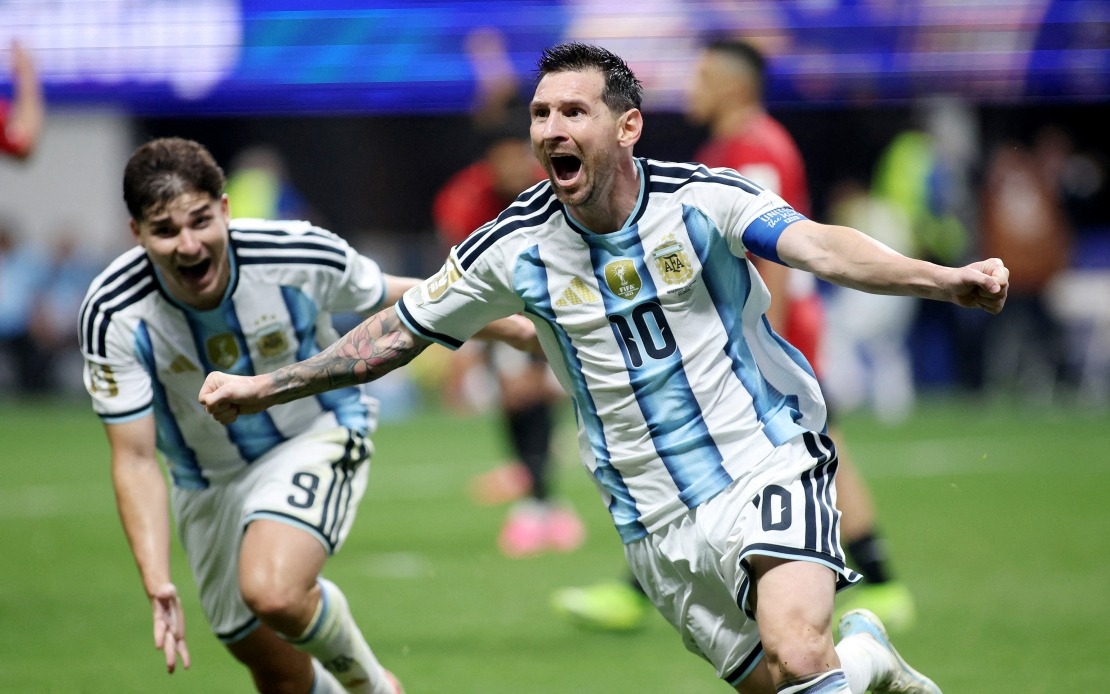
Lionel Messi stands on the verge of another defining World Cup chapter, bringing his extraordinary talents to bear as Argentina pursues glory in North America. The Argentine maestro has already accumulated eight goals in this summer's tournament, matching France's Kylian Mbappé atop the scorer's chart as the competition reaches its decisive stages. At 39 years old, Messi's continued prominence on football's grandest stage underscores a longevity and competitive hunger that defies conventional athletic decline, particularly remarkable given that many expected his competitive retirement following Argentina's triumphant 2022 Qatar campaign.
Messi's 2022 World Cup victory, achieved when he was 35, represented a crowning moment for a player whose earlier tournament showings had often been shadowed by questions about whether he could claim the sport's most prestigious individual honour. That campaign saw him net seven goals, including two in the final as Argentina defeated France on penalties after a thrilling draw. The achievement appeared to carry genuine finality—a sense that the squad's driving motivation had been securing that trophy before Messi's departure from the stage. Yet his decision to continue competing has provided global audiences with an unexpected epilogue to an already legendary career, one that continues to add remarkable chapters to an already bulging record book.
The Golden Boot remains one of the few major accolades absent from Messi's personal collection, a gap that has clearly motivated his continued involvement in international football. In Qatar, Mbappé edged him for that honour, the Paris Saint-Germain striker scoring a hat-trick in the final despite finishing on the losing side. This time, the two players are locked in intense competition, with Mbappé currently holding a marginal advantage through superior assist numbers and fewer minutes played. England's Harry Kane and Jude Bellingham, each with six goals, maintain realistic outside chances, though Erling Haaland's elimination from the tournament has removed another formidable challenger from the race.
Beyond the immediate competition for the tournament's top scorer award, Messi has already cemented his status as perhaps the World Cup's greatest accumulator of goals. His current tally of 21 World Cup goals across multiple campaigns represents uncharted territory in the tournament's history. Yet Mbappé's relentless pursuit—now just one goal behind—suggests that the Frenchman will inevitably eclipse this mark in coming years, positioning himself as the long-term record holder for World Cup scoring. The two players have jointly demolished Miroslav Klose's previous benchmark of 16 goals, a milestone that seemed insurmountable only months ago. Harry Kane has also climbed impressively up the historical rankings with 14 goals, demonstrating that the modern era has produced an extraordinary cohort of prolific international tournament performers.
Messi's longevity at the World Cup stage has become as remarkable as his goal-scoring prowess. He and Cristiano Ronaldo recently achieved an unprecedented distinction by becoming the first male players to participate in six World Cups. Both have now surpassed Lothar Matthaus' long-standing record of 25 appearances in the competition. Messi is poised to extend his personal advantage, having made 33 World Cup appearances to date, positioning him six appearances ahead of Ronaldo. This unprecedented durability speaks to exceptional physical maintenance, mental resilience, and the continued relevance of his technical skills in a sport that has become increasingly athletic and demanding.
Tracing Messi's World Cup journey reveals an arc of growing influence and consistency. His debut came in 2006, when he scored once as Argentina participated in the tournament hosted by Germany. The 2010 edition in South Africa proved more challenging, with Messi failing to find the net during a tournament where he was still developing his tournament presence. Four years later, when Brazil hosted the competition and Argentina made a spectacular run to the final, Messi demonstrated his growing championship credentials by scoring four goals, establishing himself as a central figure in his nation's campaign. His 2018 contribution was more modest by comparison, yielding a single goal, but the 2022 triumph saw an extraordinary elevation in his productivity.
The 2022 Qatar World Cup marked a transformative moment, with Messi scoring more goals in that single tournament than he had accumulated across his previous four World Cup participations combined. At 35 years old, an age when most footballers have long since retired from international competition, he demonstrated a hunger and effectiveness that belied conventional wisdom about athletic aging. His seven goals that summer were substantially boosted by four penalty conversions, though he also experienced the frustration of missing a spot-kick during the tournament. This penalty-taking dimension has become increasingly relevant to his contemporary World Cup performance, introducing an element of variability into his otherwise extraordinary record.
Penalty execution has emerged as an intriguing weakness in Messi's otherwise flawless World Cup portfolio, an issue that has resurfaced during this current tournament in ways that could prove decisive. Across all his World Cup penalty attempts outside of shootout situations, he has converted only four of eight, a conversion rate that falls significantly below elite standards. In the current competition, he sent one wide against Austria in the group stage and had another saved by Egypt's Mostafa Shobeir during the knockout phase, continuing a pattern of inconsistency at the spot. However, his performance in penalty shootouts tells a starkly different story, having succeeded in all three shootouts he has faced—against the Netherlands in both 2014 and 2022, and against France in the 2022 final. This distinction between open-play penalties and shootout situations presents an intriguing psychological dimension to his competitive makeup.
The trajectory from 2006 to the present day illustrates not merely personal evolution but also the changing competitive landscape of international football. When Messi first participated in the World Cup, he was an untested 19-year-old who did not even enter the pitch during Argentina's penalty shootout defeat to Germany in that tournament. The player who now leads global scoring charts at 39 bears little resemblance to that inexperienced youth, having accumulated the experience and technical mastery required to perform at the highest level across three decades of competition. For Southeast Asian football enthusiasts and analysts, Messi's continued presence at this level offers a masterclass in athletic longevity and the importance of mental resilience, factors that transcend the immediate context of scoring goals and winning trophies.
As Argentina moves forward in this tournament with Messi at the heart of their attacking ambitions, the broader narrative extends beyond individual statistical achievement. His quest for a second World Cup title represents both a personal validation of his decision to continue competing and a final opportunity to claim the Golden Boot that has eluded him. The competition between Messi and Mbappé represents a fascinating generational handoff, with the elder statesman and the young challenger locked in a race that will define both their World Cup legacies. For global audiences and particularly for developing football nations in Asia watching how elite players maintain performance and relevance, Messi's continued excellence serves as both inspiration and reminder that football's greatest rewards often come to those who combine exceptional talent with uncommon dedication and competitive hunger.

