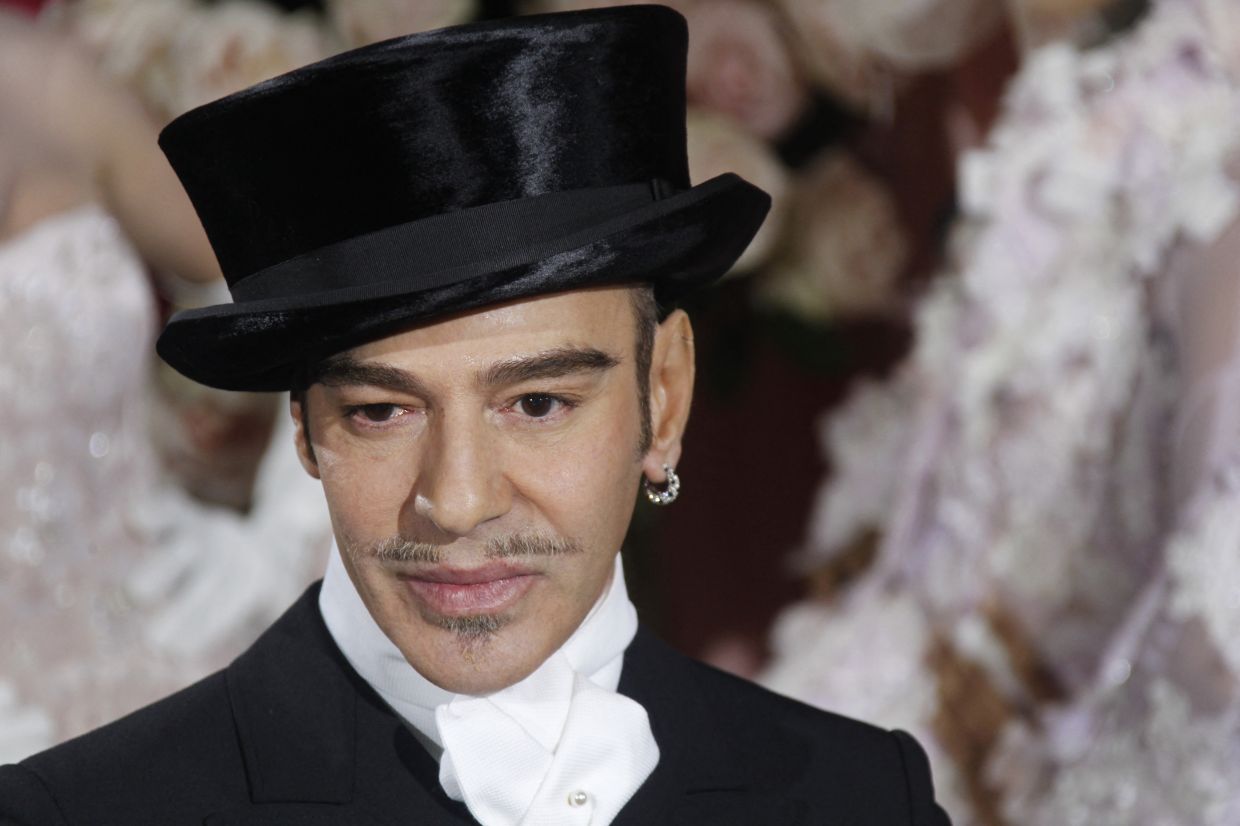
The Metropolitan Museum of Art's Costume Institute has announced that next year's Met Gala will centre on British designer John Galliano, a figure whose career trajectory embodies both the heights of creative achievement and the consequences of serious personal failings. The exhibition represents a deliberate choice by the institution to grapple with one of fashion's most contentious contemporary figures—a designer whose technical brilliance and imagination placed him among the industry's elite, yet whose public conduct fundamentally altered how the world perceives his work.
Galliano's rise to prominence culminated in his appointment as creative director at Christian Dior, arguably fashion's most prestigious position. For nearly fifteen years, he shaped the aesthetic direction of one of the world's most storied luxury houses, producing collections that redefined contemporary haute couture through his distinctive blend of historical reference, theatrical flair, and meticulous craftsmanship. His designs became synonymous with Dior's renaissance in the twenty-first century, establishing him as one of the most influential designers of his generation.
That trajectory halted abruptly when a series of antisemitic and racist comments surfaced publicly in 2010 and 2011. A video in which he made inflammatory remarks, including statements expressing admiration for Adolf Hitler, circulated widely online and sparked immediate condemnation. The subsequent legal proceedings in France resulted in his conviction for public insults based on race, religion, ethnicity, and origin. The scandal forced his departure from both Dior and his own label, effectively ending the most visible phase of his career almost overnight.
The years that followed were marked by deliberate effort toward personal and professional rehabilitation. Galliano underwent treatment for substance addiction, a factor he subsequently acknowledged had contributed to his behaviour. Through both public statements and private engagement with affected communities, he worked to demonstrate genuine reflection on his actions and their impact. This period of comparative obscurity lasted several years, during which many questioned whether his career could recover from such serious reputational damage.
In 2014, Galliano was appointed creative director at the Paris-based luxury house Maison Margiela, a role he held for a decade. This appointment marked a significant moment in fashion history—evidence that, under certain circumstances, serious misconduct need not be permanently career-ending. His work at Margiela, widely praised by critics and fashion observers, suggested that his creative capacities remained undiminished and that his efforts toward accountability and change had earned sufficient credibility within the industry for a second act.
By choosing Galliano as the subject of a solo exhibition at the Costume Institute, the Metropolitan Museum joins a select group of institutions willing to engage seriously with the complexity of separating artistic merit from personal ethics. He becomes only the third living designer to receive this honour, a recognition that underscores the significance of his contributions to fashion, even as the museum explicitly commits to addressing the ethical dimensions of his history.
Museum officials made clear that this exhibition will not attempt to bracket away or minimize the problematic aspects of Galliano's past. In a statement issued on Friday, July 31, the Costume Institute declared that the show would examine "the derogatory conduct that fundamentally altered his career and public reception" alongside his creative accomplishments, framing the exhibition as an opportunity to consider "how artistic achievement should be understood alongside ethical accountability." This approach signals the museum's intention to use the platform not merely to celebrate design excellence but to model serious institutional reckoning.
The exhibition's structure reflects this commitment to complexity. The first section, titled "Bearings," will directly address the rupture caused by his 2010 and 2011 remarks, his dismissal from his positions, his legal conviction, and the subsequent period of his treatment for addiction and public acknowledgment of responsibility. This opening directly confronts visitors with the weight of his misconduct before proceeding to other dimensions of his work. The second section, "Horizons," shifts focus to examine the sources that have consistently animated Galliano's creative vision—his engagement with history, geography, visual art, narrative, and performance traditions. The final section, "Atlas Of Transformation," celebrates his technical innovation, experimental approach, and craftsman's precision.
Preparation for the exhibition proceeded with careful consultation. Museum curators, including Andrew Bolton, who oversees most of the Costume Institute's major exhibitions, met with Jewish community leaders in New York to ensure that the exhibition's approach would be considered thoughtful and respectful. These conversations, which also included Galliano himself and Vogue editor-in-chief Anna Wintour, reflected the institution's recognition that such a project required genuine dialogue with affected communities rather than proceeding unilaterally.
For Malaysian and Southeast Asian readers, this exhibition raises broader questions about how societies and institutions navigate the rehabilitation of public figures whose conduct has caused documented harm. The Met's approach—neither condemning Galliano to permanent professional exile nor glossing over his actions—represents a particular institutional response to a challenge that extends far beyond the fashion world. It suggests that rehabilitation and accountability need not be mutually exclusive, and that meaningful change, when demonstrated over time, may warrant recognition and opportunity without erasing the original harm.
The May 2025 Met Gala itself will inevitably attract intense scrutiny. Fashion's red carpet moments typically emphasize spectacle and celebration, yet this edition will arrive weighted with historical and ethical context. The garments displayed will necessarily be understood not only through the lens of their aesthetic achievement but also through their relationship to a designer who has confronted serious consequences for his conduct and has spent years demonstrating commitment to genuine change. For the fashion industry globally, including in the region, this exhibition may serve as a reference point for how creative institutions handle the complex legacies of their most talented figures.

