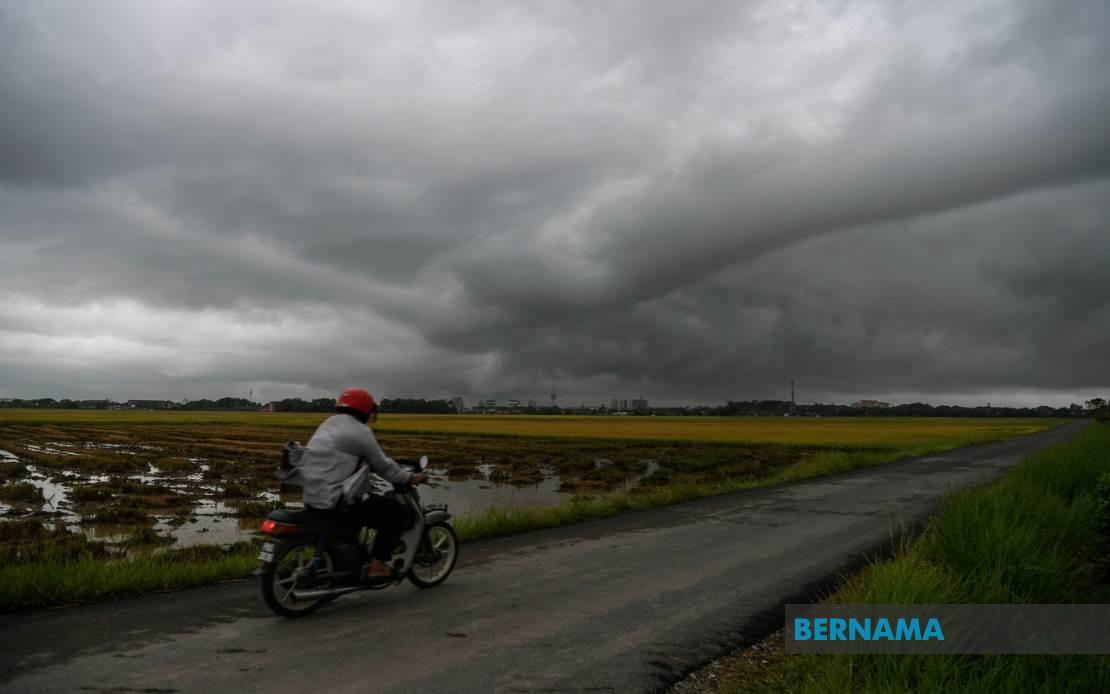
The Malaysian Meteorological Department (MetMalaysia) has issued a widespread thunderstorm alert covering substantial portions of the country, with residents across Peninsular Malaysia, Sarawak, Sabah and the Federal Territory of Labuan advised to exercise caution until 9 pm. The alert encompasses multiple districts where conditions are expected to deteriorate significantly, bringing not only heavy downpours but also strong gusty winds that could disrupt daily activities and pose hazards to the public.
In the northern region, Kedah residents in Kuala Muda, Baling, Kulim and Bandar Baharu face the risk of severe weather, while the Penang alert extends across the Northeast district, all three zones of Seberang Perai (Utara, Tengah and Selatan), placing major population centres and commercial hubs on alert. The geographic spread in these two states suggests a significant weather system moving through the northwest corridor of the peninsula, potentially disrupting transportation routes and economic activity in one of Malaysia's most developed regions.
Perak's exposure is particularly extensive, with the warning covering a north-south swathe that includes Kerian, Larut, Matang and Selama, Hulu Perak, Kuala Kangsar, Kinta, Kampar and Batang Padang. This wide coverage underscores the scale of the atmospheric disturbance affecting the state. Meanwhile, Kelantan stands entirely under the thunderstorm warning, indicating that the entire state faces uniform risk from the impending weather conditions, suggesting a cohesive weather system spanning considerable distance.
On the east coast, Terengganu's affected areas span from the northern districts of Besut and Hulu Terengganu through the central coastal zones of Kuala Terengganu and Marang, extending to the southern districts of Dungun and Kemaman. This comprehensive coverage of the state reflects a major weather development affecting the entire eastern seaboard. Pahang's alert similarly covers a diverse range of geographical areas—from the highland regions of Cameron Highlands and the interior districts of Lipis and Jerantut to the coastal and central zones of Kuantan, Pekan and Rompin.
In the southern region, Johor's warning encompasses a substantial arc of districts including Tangkak, Segamat and Muar in the interior, alongside coastal and border areas such as Mersing, Kluang, Kulai, Kota Tinggi and Johor Bahru. The breadth of this alert suggests that Peninsular Malaysia is experiencing a significant weather event that extends from the far north to the southern tip of the country.
The alert's extension to East Malaysia indicates that Sarawak and Sabah are also experiencing the effects of this weather system. In Sarawak, the warning covers Sibu in the central region, the coastal areas encompassing Mukah with its sub-districts of Matu, Dalat and Mukah proper, Kapit with Song district, Bintulu with Tatau district, and the northern zone of Miri covering Beluru, Miri and Marudi. This pattern suggests that both the inland and coastal regions of Sarawak are vulnerable to thunderstorm activity.
Sabah's alert reflects geographical diversity as well, with the Interior Division experiencing warnings in Sipitang, Kuala Penyu, Beaufort and Tambunan, while the West Coast Division is affected in Papar, Penampang and Ranau. The inclusion of the Federal Territory of Labuan means that shipping activities and maritime operations in that federal territory must also account for deteriorating weather conditions.
Thunderstorm warnings of this geographical magnitude typically indicate the presence of a significant meteorological system, possibly associated with the southwest monsoon patterns or localized convective activity. For Malaysian residents and authorities, such warnings necessitate heightened preparedness across multiple sectors. Transportation networks may experience delays, with heavy rainfall potentially affecting visibility and road conditions, while strong winds could impact loose structures and overhead installations.
Public safety authorities across affected states would typically activate contingency measures during such alerts, positioning rescue teams in flood-prone areas and monitoring water levels in rivers and drainage systems. Farmers, particularly those engaged in time-sensitive harvesting or cultivation, may need to adjust operations. The business and commerce sectors in major urban centres like Kuala Lumpur's vicinity, Penang, Johor Bahru and Sarawak's commercial hubs may experience operational disruptions.
For aviation and maritime sectors, the implications are substantial. Airports across the affected regions coordinate with MetMalaysia to adjust flight schedules, while port authorities implement safety protocols to protect vessels and personnel. The timing of the warning, extending through the early evening, means that commuters returning home during peak hours may encounter hazardous conditions.
MetMalaysia's issuance of such comprehensive warnings reflects the department's commitment to public safety through early notification. The specificity in identifying affected districts enables local authorities and residents to take targeted precautions rather than responding to vague regional alerts. The 9 pm deadline provides a defined temporal boundary, though residents are typically advised that conditions can change and to remain attentive to updates.
Such weather events, while common during Malaysia's monsoon seasons, underscore the importance of maintaining weather monitoring infrastructure and public awareness of storm safety protocols. The simultaneous nature of alerts across such a large geographical area highlights how meteorological systems can affect the entire nation in coordinated fashion, making it crucial for preparedness to be a nationwide consideration rather than isolated to individual states.

