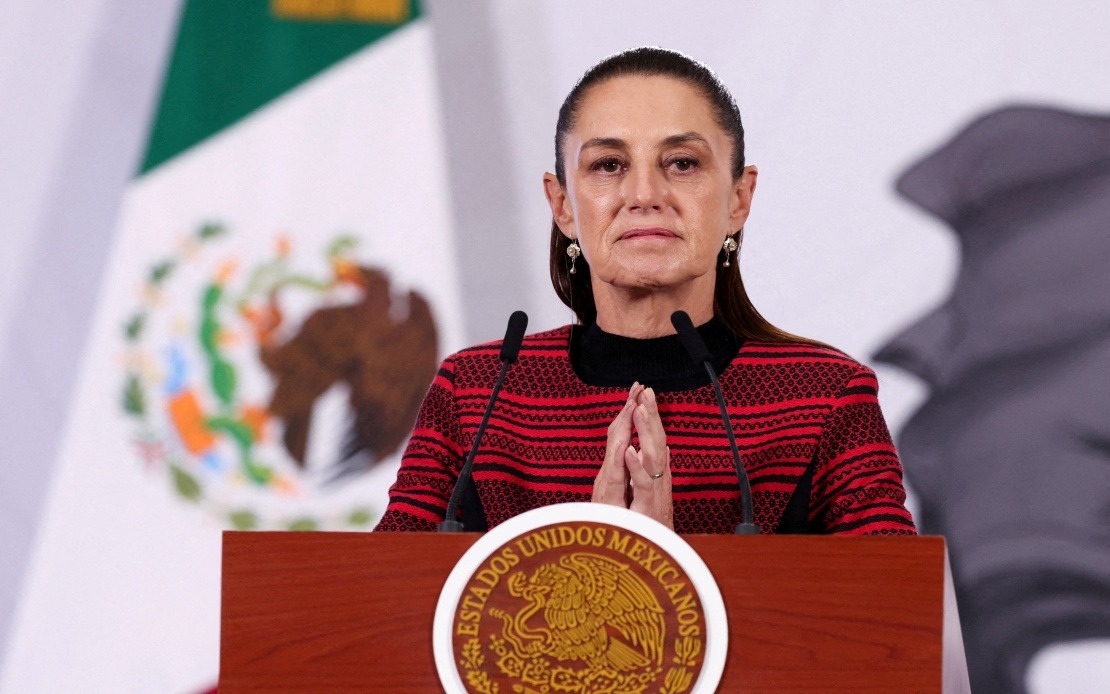
Mexican President Claudia Sheinbaum has made an unexpected diplomatic move by accepting a personal invitation from United States President Donald Trump to attend the World Cup final, according to reports from the German Press Agency. The Mexican leader revealed the development to journalists on Friday, characterising it as a direct overture from the American president. Her attendance represents a significant gesture given the current friction between Mexico City and Washington over multiple contentious issues spanning trade policy and cross-border security challenges.
The invitation carries particular weight considering that Sheinbaum had opted not to attend the opening ceremony of the tournament in her own country just weeks earlier in June. On that occasion, she had voluntarily ceded her ticket for the Azteca Stadium match to an indigenous woman passionate about football, a decision that reflected her stated priorities and public stance at the time. The shift in her participation underscores the diplomatic importance she appears to attach to Trump's direct request, suggesting that the symbolic value of such a bilateral gesture outweighs other considerations.
Canadian Prime Minister Mark Carney will also make the journey to the final, Sheinbaum confirmed, highlighting that all three co-host nations will have high-level representation at the event. The final, scheduled for Sunday between Argentina and Spain, will take place in East Rutherford near New York. Mexican media outlets reported that Sheinbaum has reorganised her schedule in the state of Quintana Roo to accommodate this attendance, demonstrating the priority level assigned to the engagement.
The political backdrop to this acceptance merits careful consideration. Relations between Mexico and the United States have grown strained over trade disputes and security matters in recent months, making diplomatic overtures increasingly significant. By accepting Trump's invitation, Sheinbaum appears to be signalling willingness to maintain official channels of communication and engagement despite underlying disagreements. For Malaysian observers and policymakers in Southeast Asia, this dynamic illustrates how sports diplomacy can serve as a vehicle for maintaining bilateral relations even when fundamental tensions exist over policy matters.
The personal history between the two leaders remains limited. Sheinbaum and Trump have met in person only once previously, during the World Cup draw ceremony in Washington in December. This relatively sparse direct engagement history makes the invitation particularly noteworthy, as it suggests Trump's administration views the World Cup final as an appropriate setting for reinforcing the bilateral relationship and perhaps advancing specific diplomatic objectives during informal interactions.
Spain's royal family will constitute a significant presence at the East Rutherford stadium. King Felipe VI, Queen Letizia, Crown Princess Leonor, and Infanta Sofía plan to attend the match on Sunday to support the Spanish national team. Their presence reflects the traditional role European monarchies play in attending major national sporting events and represents the formal character of such occasions.
In contrast, Argentina's President Javier Milei will deliberately abstain from attending the final in person, citing superstitious beliefs. This decision reveals the cultural particularities surrounding major sporting events in different nations. Argentina has a distinct tradition of superstitious rituals—known locally as certain practices—that some leaders, including Milei, evidently respect and incorporate into decision-making around national team competitions.
For the Malaysian context and broader Southeast Asian perspective, this World Cup scenario demonstrates several important dynamics. Firstly, it underscores how major sporting events transcend their purely athletic dimensions and become platforms for international relations and statecraft. Secondly, it illustrates that even leaders of neighbouring nations with significant diplomatic friction may utilise such events as opportunities to maintain dialogue and demonstrate commitment to ongoing relationships. This principle carries relevance for regional engagement patterns in Asia, where sports diplomacy has similarly served constructive roles in managing bilateral tensions.
The willingness of Mexican leadership to accept such an invitation despite prevailing disagreements suggests both pragmatism and recognition of the value in maintaining high-level communication channels. For smaller nations and those seeking to navigate complex regional relationships, such examples offer lessons about balancing principled positions on substantive issues with strategic engagement opportunities. The ability to compartmentalise disagreements while maintaining formal diplomatic courtesies remains central to effective statecraft in an increasingly multipolar world where cooperation across multiple domains continues to matter substantially.

