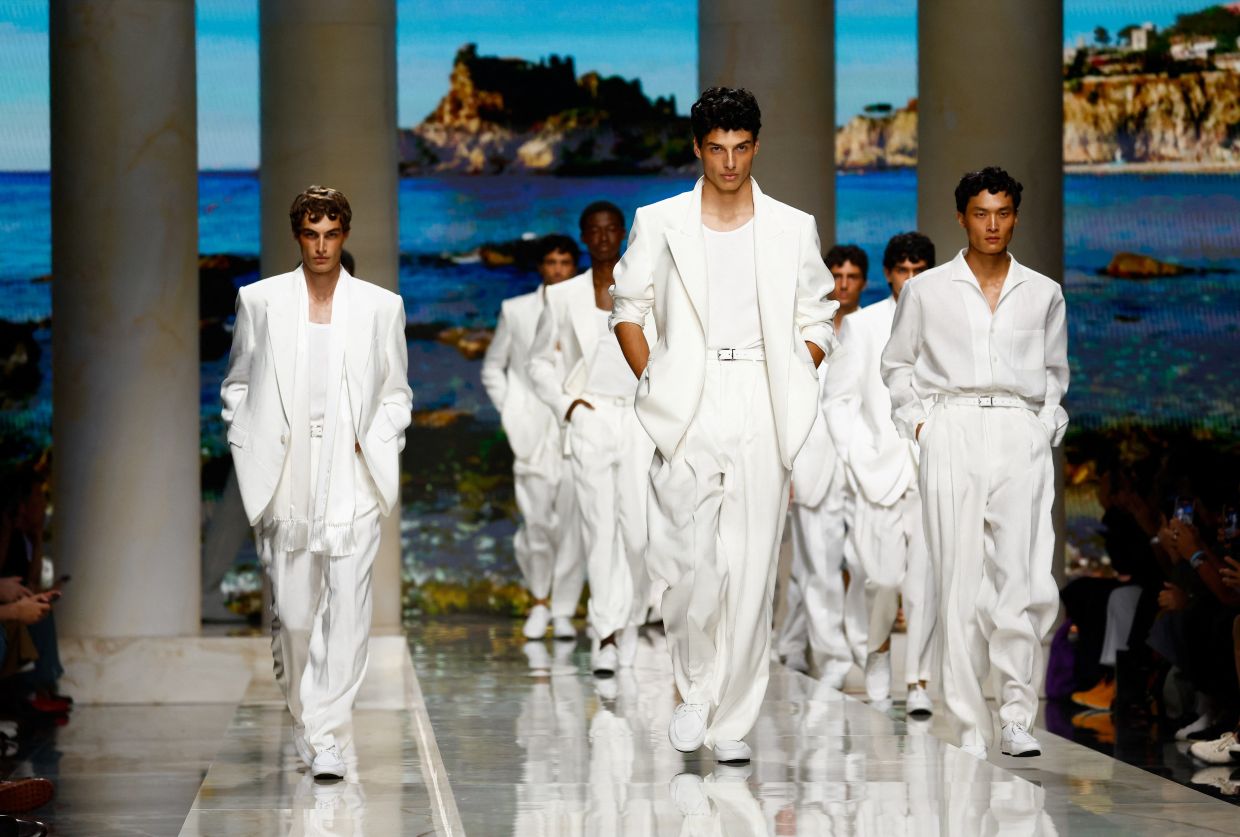
The menswear collections unveiled at Milan Fashion Week this month revealed a striking paradox: as the world grapples with economic uncertainty and geopolitical instability, fashion's leading designers responded by stripping their visions down to fundamentals. The six-day calendar, which concluded on June 22, showcased a collective move toward cleaner silhouettes and considered proportions—a philosophical shift that spoke volumes about the industry's current temperament, even if the execution sometimes contradicted the message.
Prada set the tone for the season through the collaborative vision of co-creative directors Miuccia Prada and Raf Simons, who made a deliberate case for simplicity and the quiet power of reimagined classics. Their argument centred on the idea that restraint itself could be revolutionary, that familiar garments transformed through intelligent proportion and unexpected fabric choices could offer something more compelling than novelty. This philosophy cascaded across the runways, with most major designers embracing a similar vocabulary of reduction, though interpretations varied significantly in execution and material choices.
The most conspicuous challenge facing Milan's designers proved to be an uncomfortable truth: simplicity does not automatically solve the problem of dressing for Mediterranean summer heat. The runways overflowed with leather and substantial knits destined for the next warm season, a somewhat incongruous sight that suggested the world's most celebrated menswear designers operate in climate-controlled spheres far removed from ordinary experience. Whether through necessity or indulgence, the collections hinted that wearing these pieces in actual summer conditions would require either sophisticated air-conditioning, strategic mountain retreats, or relocation to cooler latitudes.
The persistence of leather emerged as perhaps the season's most unexpected through-line. Prada's interpretation drew conceptual inspiration from denim's democratic universality, translating that accessibility into slim five-pocket trousers paired with cropped, flat-pocketed jackets that blurred the distinction between outerwear and shirting. Other designers tackled the same material challenge through innovation: woven and perforated leather techniques created breathability without sacrificing the material's inherent luxuriousness. This technical approach reflected a broader industry acknowledgment that material heritage need not be abandoned—it simply required reimagining.
The tension between luxury and practicality defined much of what unfolded on Milan's runways. After a prolonged period during which oversized silhouettes dominated menswear conversations, there emerged a decisive pivot back toward garments that acknowledged the body's existence. Consensus crystallised around a singular conviction: a properly dressed man remains a man in a suit. The actual challenge lay in engineering that suit for contemporary climate realities. The answer, repeated across countless presentations, was ventilation—dress shirts unbuttoned or rendered transparent, construction methodologies that privileged airflow, occasionally the complete elimination of conventional shirting.
Trousers remained long, a conservative choice that spoke to tailoring's enduring formality, yet the silhouette shifted noticeably toward closer engagement with the body. Dolce & Gabbana pursued this direction most aggressively, introducing microshorts that unapologetically showcased leg musculature, while other brands experimented with partial torso exposure. These choices represented far more than aesthetic adjustment; they reflected a recalibration of what formality might entail in an era of changing climate and social expectations around masculine display.
Tailoring itself underwent subtle but significant transformation across the collections. The construction remained central to Milan's identity, yet designers softened the internal architecture, opened necklines with intention, and selected fabrics and construction methods that prioritised air circulation without abandoning the silhouette's essential discipline. The result was paradoxically both relaxed and formal—tailoring reimagined for rising temperatures yet retaining the codes that signal sophistication and intentionality. Thom Browne's return to Milan for the first time since 2008, now operating under Zegna ownership, exemplified this recalibration through layered suiting that drew heavily on seersucker's inherent summery quality and pleated constructions historically coded as masculine tailoring.
Yet not every designer embraced this restraint narrative. Philipp Plein presented crystal-encrusted denim pieces requiring days of meticulous handwork, while Dolce & Gabbana leaned conspicuously into beaded embellishment evoking coral imagery. If Prada's philosophical position was rooted in reduction, these maximalist counterarguments offered unapologetic glamour and decoration. This stylistic divergence reflected a broader industry recognition that global anxiety does not necessarily dictate uniform aesthetic responses; some designers read the moment as requiring escape into beauty and ornamentation rather than restraint.
A comparatively lighter calendar created unexpected opportunities for emerging talent to secure meaningful visibility alongside established names. Martin Quad made his Milan debut with distinctive tailoring innovations that had already generated attention in Copenhagen, while Domenico Orefice presented a co-ed collection exploring leather and richly textured woven materials. These debuts suggested a season genuinely interested in nurturing fresh voices rather than merely recycling established hierarchies. Japanese designer Shinya Kozuka's Shinyakozuka label similarly made its Milan entrance with collections that prioritised poetic sensibility and summery accessibility, exemplified by striking imagery: a bare-chested model wearing an expansive sheer teal coat with billowing proportions paired with loose white trousers.
The collective message emerging from Milan proved unambiguous: the suit endures as menswear's foundational garment, yet it exists in constant evolution. Designers across stylistic spectrums agreed that formality remains relevant, but they interpreted that relevance through contemporary lenses—environmental awareness, body positivity, climatic realities, and the complex psychology of dressing during uncertain times. Whether through Prada's philosophical minimalism, Browne's technical innovation, or Plein's defiant maximalism, Milan's Spring/Summer 2027 menswear collections articulated a fashion world simultaneously respectful of tradition and genuinely responsive to change. In stripped-back silhouettes and thoughtfully ventilated tailoring, these designers offered not escape but engagement with the world's actual complexities.

