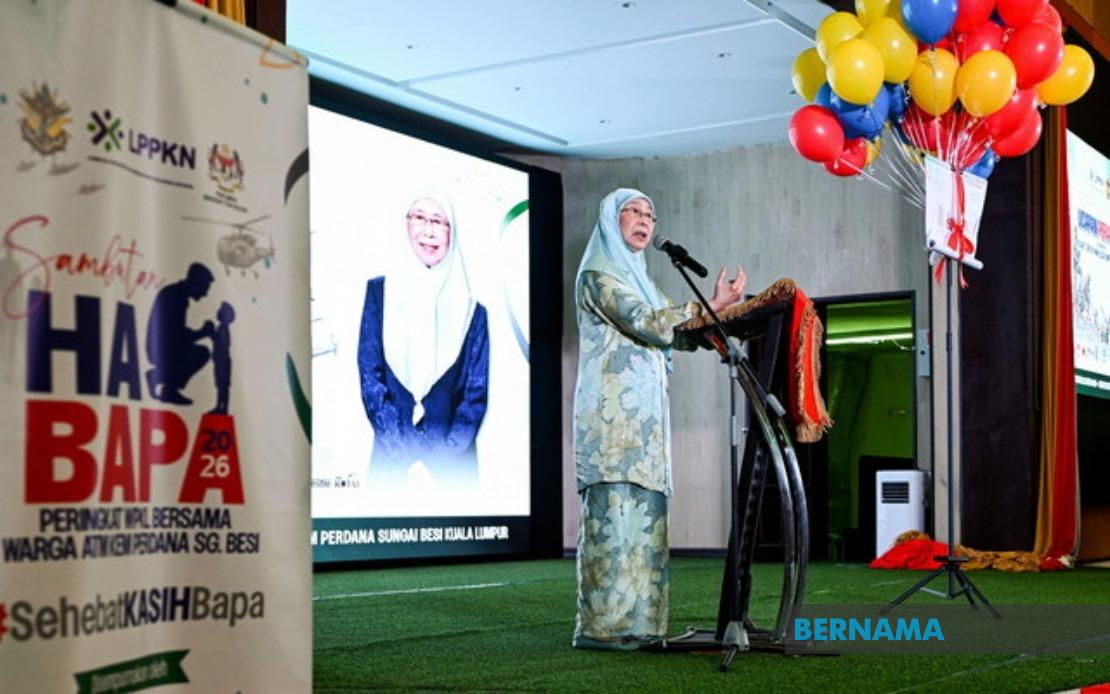
The Prime Minister's wife, Datuk Seri Dr Wan Azizah Wan Ismail, has made a compelling case for enhanced support systems targeting fathers within the Malaysian Armed Forces, recognising the distinct pressures they face in balancing their responsibilities to both country and family. Her comments came during the opening of the 2026 Federal Territory of Kuala Lumpur Father's Day Celebration, an event organised in partnership with the National Population and Family Development Board and the MAF, bringing together approximately 500 participants including military families and government representatives.
Dr Wan Azizah stressed that the empowerment of military fathers represents an investment not merely in individual personnel, but in the broader institutional strength of the armed forces. The demands placed on defence personnel—including extended deployments, high-stress operational environments, and prolonged separation from loved ones—create unique family dynamics that conventional civilian support structures often fail to address adequately. By recognising these specific challenges and implementing targeted interventions, she argued, Malaysia can better support those who sacrifice personal time and family stability in service of national defence.
The government's National Family Compassion Policy (DKKN) emerged as a centrepiece of this support framework, serving as a comprehensive initiative designed to ease the burden on military families during periods of separation and operational deployment. This policy framework acknowledges that defending national sovereignty carries costs beyond the individual soldier, extending into household economics, child development, spousal wellbeing, and long-term family cohesion. By providing structured support mechanisms, the DKKN bridges the gap between military obligation and domestic responsibility.
Central to Dr Wan Azizah's advocacy is the argument that strengthening fatherhood directly reinforces family institutions across society. Fathers occupy a foundational role within family structures, serving not only as breadwinners but as emotional anchors and primary role models for children during critical developmental years. When military fathers are adequately supported in fulfilling these roles despite operational demands, broader societal benefits ripple outward—including improved child outcomes, stronger spousal relationships, and enhanced psychological resilience among service members themselves.
The emphasis on recognising fathers as leaders within their families represents a deliberate cultural shift in how Malaysia conceptualises paternal involvement. Rather than viewing fatherhood as a secondary or supplementary family function, the initiative positions it as a pillar of family stability equivalent in importance to other institutional supports. This reframing carries implications for workplace policies, leave entitlements, mental health services, and social messaging across government agencies and the private sector.
The National Population and Family Development Board (LPPKN) has operationalised this vision through concrete programmes including the Fatherhood Module, which delivers structured training in parenting skills and child development theory, enabling fathers to maximise the quality of limited time spent with children. Complementing this initiative is the Men Empowerment Network (MEN), designed to create peer support communities where military fathers can share experiences, exchange practical parenting strategies, and collectively address challenges inherent to their service.
For Malaysian Armed Forces personnel specifically, the timing of such support initiatives proves particularly relevant. Defence operations in Southeast Asia—including maritime security responsibilities, regional peacekeeping contributions, and border protection duties—frequently require extended deployments that can stretch from weeks into months. The psychological toll of extended separation, compounded by operational stress, can impact service member wellbeing and family stability. Targeted support systems help mitigate these downstream effects.
From a broader policy perspective, the emphasis on supporting military fathers reflects evolving international best practices in military human resources management. Armed forces globally have increasingly recognised that personnel retention, morale, and operational effectiveness correlate directly with quality-of-life support systems and family welfare provisions. By positioning fatherhood support as integral to military preparedness rather than peripheral social provision, Malaysia aligns itself with contemporary defence management approaches.
The event itself served multiple functions beyond ceremonial acknowledgment. By convening military families, government representatives, and civil society organisations around the theme of fatherhood, it signalled government commitment to the issue while creating spaces for knowledge-sharing and programme feedback. The participation of spouses and children of MAF personnel provided direct input into how support services might be refined and expanded.
Looking forward, Dr Wan Azizah's remarks suggest potential for policy evolution in several directions. These include expanded parental leave provisions for military fathers, enhanced mental health counselling services addressing family separation stress, financial literacy and family budgeting support during deployment periods, and childcare solutions enabling mothers to pursue employment or education during partner deployments. Such measures would represent meaningful investment in military family wellbeing.
The political and social significance of elevating fatherhood support in military contexts extends beyond defence personnel themselves. It establishes a precedent for recognising unpaid care work and family responsibilities as legitimate areas for institutional support. As Malaysia navigates demographic transitions and evolving workforce participation patterns, the principle that fatherhood deserves structured support resonates across civilian sectors as well.
Ultimately, Dr Wan Azizah's advocacy reflects a sophisticated understanding of state responsibility. Nations that demand sacrifice from service members—including separation from families and exposure to danger—incur corresponding obligations to support those individuals in fulfilling their non-military roles. By strengthening the family institution through targeted father-focused programmes, Malaysia enhances both military effectiveness and societal wellbeing simultaneously.

