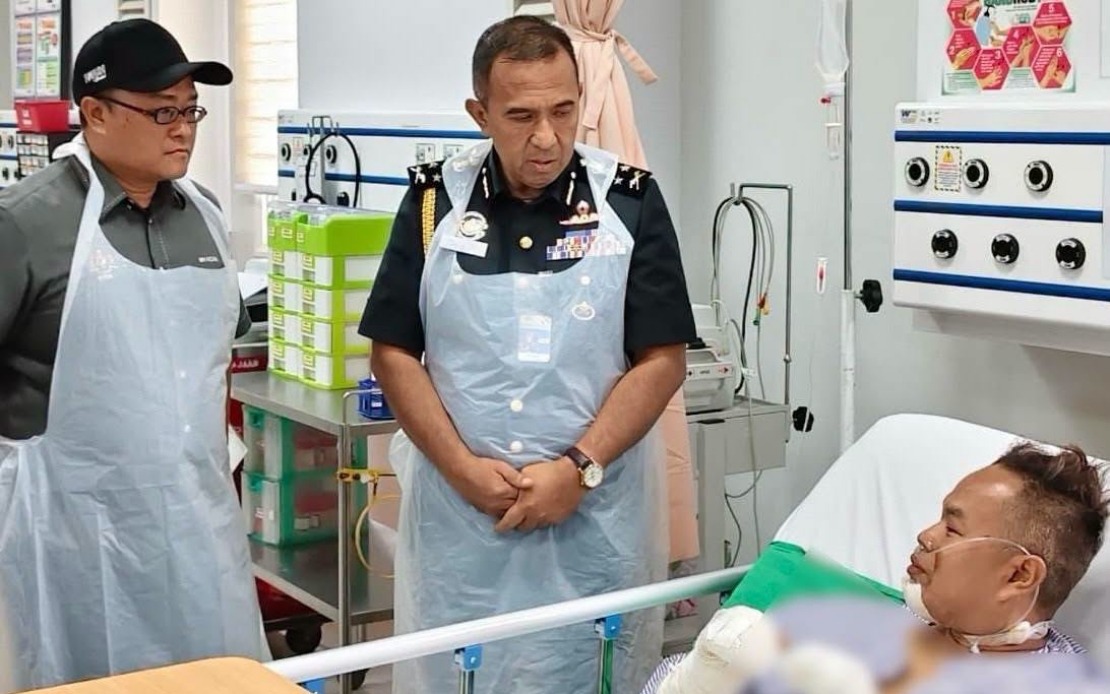
Two enforcement personnel from the Domestic Trade and Cost of Living Ministry (KPDN) suffered injuries while participating in enforcement activities in Selangor on Sunday. The incident occurred during Ops Tiris 4.0, a focused campaign designed to dismantle networks involved in siphoning and illegally repackaging subsidised liquefied petroleum gas, a common practice that undermines government subsidies and creates safety hazards for consumers.
Minister Datuk Armizan Mohd Ali identified the injured officers as Assistant Enforcement Officer Mohammad Fauzi Baharuddin, who sustained more severe injuries, and Enforcement Assistant R. Yoghanath, whose injuries were characterised as minor. Mohammad Fauzi remained hospitalised and undergoing treatment at the time of the statement, while Yoghanath was discharged following initial medical evaluation. In a social media statement, Armizan conveyed his personal prayers for Mohammad Fauzi's recovery and extended sympathies to the officer's family during what he acknowledged would be a challenging period.
The incident underscores the inherent dangers that KPDN enforcement teams encounter during their routine operations. These officers work in unpredictable field conditions, often confronting individuals engaged in illegal activities who may resist enforcement action. The operation that resulted in the injuries specifically targets the decanting of LPG—the practice of transferring subsidised gas from official cylinders into unofficial containers for resale on black markets. This illicit trade diverts substantial amounts of government subsidy allocations and creates serious consumer safety risks, as improperly handled gas containers can cause explosions and leaks.
Armizan's statement reflected broader institutional recognition of the occupational hazards faced by enforcement personnel. He emphasised that behind each raid and operational deployment lies a dedicated officer who has left their family to perform duties in circumstances that remain largely unpredictable. The minister noted that KPDN enforcement staff frequently place themselves in situations where their personal safety is jeopardised to safeguard public interests and national resources. This framing positions enforcement work not merely as administrative compliance but as a form of public service requiring considerable personal sacrifice.
Ops Tiris 4.0 represents part of the government's broader strategy to tighten control over subsidised LPG supplies. The operation's emphasis on detecting and disrupting decanting networks reflects escalating concerns about the scale of illegal repackaging operations. Every tonne of subsidised LPG diverted through decanting represents foregone economic benefit and potential consumer harm. The targeting of this practice has become increasingly prominent in KPDN's enforcement portfolio, suggesting that illegal distribution channels continue to proliferate despite previous intervention efforts.
For Malaysian consumers, the implications of unchecked LPG decanting are considerable. Subsidised gas cylinders are intended to serve household cooking and heating needs at affordable rates, particularly benefiting lower-income families. When substantial volumes are diverted through black market channels, the effective benefit of government subsidies diminishes. Additionally, gas transferred into unofficial containers typically lacks proper safety certification, pressure regulation, and inspection protocols, placing users at genuine risk of accidents that can damage homes and endanger lives.
The minister's acknowledgment of enforcement officer vulnerability also carries implications for civil service morale and recruitment. Enforcement work in resource protection and consumer safety has become increasingly confrontational, with officers facing potential violence when disrupting illegal operations. Public recognition of these hazards and ministerial support may help sustain recruitment and retention in KPDN's enforcement divisions, though systemic improvements in officer safety training and support would likely be necessary to address underlying concerns comprehensively.
Armizan's statement collectively served to acknowledge institutional risk, express solidarity with affected personnel and their families, and reinforce the government's commitment to the enforcement agenda. The expression of prayers and sympathy functioned both as genuine pastoral concern and as a public signal of ministerial engagement with frontline operations. By explicitly recognising the sacrifice of enforcement personnel, the minister elevated the profile of operational work that often proceeds without significant public awareness or appreciation.
The broader context reveals ongoing tensions between government subsidy systems and enforcement capacity. Malaysia's subsidised LPG programme, designed to ensure affordable fuel access, creates economic incentive structures that encourage illegal profit extraction through decanting. As long as price differentials exist between subsidised and market rates, black market operations will likely continue unless enforcement presence becomes prohibitively costly to illegal operators. Ops Tiris 4.0 thus represents an attempt to shift these cost-benefit calculations by increasing the frequency and intensity of enforcement activities.
Looking ahead, the incident may prompt review of officer safety protocols during enforcement deployments. KPDN may consider whether additional training, equipment, or tactical adjustments are warranted to reduce injury risks when confronting resistance from individuals protecting illegal operations. The apparent willingness of some individuals to injure enforcement officers when confronted suggests escalating conflicts between subsidy enforcement and informal economic networks dependent on illegal redistribution.
The injuries to Mohammad Fauzi and Yoghanath ultimately illustrate that resource protection and consumer safety enforcement carries real human costs. While both officers survived and are expected to recover, the incident serves as a concrete reminder that KPDN enforcement work involves genuine occupational hazards. Armizan's response demonstrates ministerial acknowledgment of these realities and commitment to supporting personnel who sustain injuries while advancing government policy objectives.

