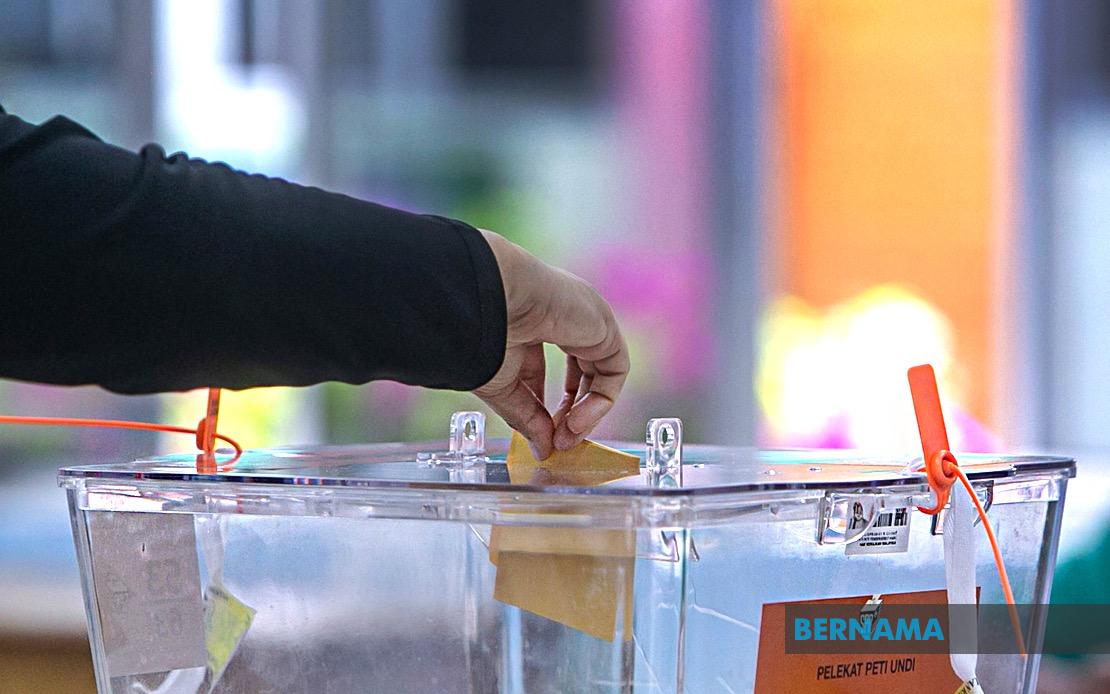
The Ministry of Youth and Sports (KBS) has moved to remove barriers preventing students at vocational training institutions from exercising their constitutional right to vote. On July 7, the ministry issued formal direction to all Youth and Sports Skills Training Institutions (ILKBS) across the country to establish mechanisms for granting special leave to enrolled students who require time away to participate in General Elections, State Elections, or by-elections. This directive represents an acknowledgment that democratic participation should not be compromised by institutional scheduling constraints, a principle increasingly recognised across Southeast Asian democracies.
The decision flows from guidance issued by KBS's Youth Skills Development Division (BPKB), which distributed notification letters to all ILKBS directors outlining procedures for implementing the special leave policy. Rather than imposing a blanket mandate, the ministry has opted for a flexible framework that permits institutions to assess applications on a case-by-case basis. This approach reflects an understanding that training schedules vary significantly across different ILKBS facilities and that coordination between student needs and institutional capacity requires contextual judgment rather than rigid compliance.
The underlying philosophy animating this policy is straightforward yet fundamental: electoral participation constitutes a civic responsibility that training commitments should not eclipse. By framing voting as a duty rather than an inconvenience to be accommodated reluctantly, KBS positions democratic engagement as integral to national development. The ministry's statement explicitly connects individual voting decisions to collective nation-building, suggesting that a generation of engaged young citizens strengthens democratic institutions and contributes to sustainable development outcomes. This messaging proves particularly significant in Malaysia's political context, where youth voter turnout and engagement remain ongoing policy concerns.
To operationalise this framework, KBS has established clear criteria for evaluating applications. Student requests for special leave will be assessed by individual ILKBS directors based on several practical considerations: the distance between the training institution and the relevant polling centre, the reasonable time required for travel to the voting location, and the feasibility of rescheduling or suspending training activities without compromising learning outcomes. This multi-factor approach prevents arbitrary rejections while maintaining institutional coherence and ensures that only genuinely justified absences receive approval. The emphasis on "reasonable travelling time" acknowledges geographic realities in Malaysia, where substantial distances between urban training centres and students' registered polling areas in hometowns necessitate extended leave periods.
Crucially, the ministry has imposed a procedural requirement that students submit applications for special leave in advance rather than requesting leave retroactively or immediately before polling day. This forward-planning mechanism serves multiple purposes: it enables ILKBS management to maintain systematic attendance records, allows institutions adequate time to coordinate alternative training arrangements or schedule flexibility, and facilitates students' travel planning. Early notification also reduces the administrative burden on institutions by preventing last-minute scrambling and demonstrates respect for the structured environment that vocational training requires. By pushing the timeline backward, the policy acknowledges that institutions cannot absorb sudden, unexpected absences without disruption.
The ministry has simultaneously placed responsibility on ILKBS administration to proactively inform eligible student voters about this opportunity well before elections are scheduled. Rather than waiting for students to discover the policy independently, institutions must reach out to eligible voters, explain the application process, and encourage participation. This outreach obligation recognises an information asymmetry: many young voters may not know that special leave policies exist, particularly at training institutions where the focus typically emphasizes skills acquisition rather than civic engagement. Systematic notification ensures that eligibility does not translate practically to exclusion simply because students remain unaware of their options.
The policy reflects evolving perspectives on youth political participation in Malaysia. Training institutions have historically prioritised curriculum completion and skill development delivery, sometimes treating electoral periods as scheduling inconveniences rather than recognising them as opportunities for democratic engagement. By issuing this directive, KBS signals that skills development and democratic participation need not conflict—indeed, that fostering engaged citizens capable of voting represents part of the broader development agenda these institutions serve. Young people equipped with technical skills but disconnected from democratic processes represent incomplete human development from the state's perspective.
For ILKBS students specifically, this policy removes a genuine dilemma that has historically confronted young voters in vocational training programmes. Previously, students faced pressure to sacrifice voting rights to maintain perfect attendance records or to avoid requesting leave that might jeopardise assessment outcomes. This policy legitimises voting as grounds for absence, placing it on equal footing with other recognised causes for leave. The relief this provides extends beyond the mechanics of voting itself—it acknowledges young people's identity as citizens, not merely trainees, and their corresponding entitlement to participate in governance structures affecting their futures.
Implementation challenges remain, however. ILKBS directors retain ultimate approval authority over applications, which theoretically permits restrictive gatekeeping despite the ministry's liberal intent. Institutions facing tight training schedules or resource constraints might interpret the criteria narrowly, approving only leave requests from students whose polling centres lie relatively close to training facilities. Communication gaps between central ministry directives and institution-level practices could result in inconsistent application across different ILKBS facilities. Students uncertain about whether their particular circumstances justify approval might simply refrain from applying, achieving the same outcome as formal rejection but with less institutional accountability.
The broader implication of this directive extends beyond institutional mechanics to encompass Malaysia's ongoing commitment to youth engagement and democratic renewal. As the electorate becomes younger and training institutions expand to serve increasing numbers of school-leavers, policies determining whether young people can actually participate in elections carry significant consequences for voter demographics and generational representation. By removing barriers to voting for one substantial cohort of young Malaysians, KBS acknowledges that democratic participation should not remain accessible only to those with flexible schedules or residence near their registered polling centres.
Regional context matters here as well. Throughout Southeast Asia, younger populations and increasingly competitive electoral environments have prompted various countries to examine mechanisms either encouraging or restricting youth participation. Malaysia's approach—actively facilitating youth voting through leave policies—contrasts with jurisdictions where institutional barriers subtly discourage young voter participation. This policy sends a message that the Malaysian state values young people's electoral engagement and is willing to adjust institutional rules to enable participation rather than expecting citizens to subordinate civic duties to administrative convenience.

